
Turf Mission
We started TNT Turf because Houston families deserve better than losing weekends to mowing and watering. Our mission is simple, give you a lawn you can enjoy every day, all year long, without the work that usually comes with it.
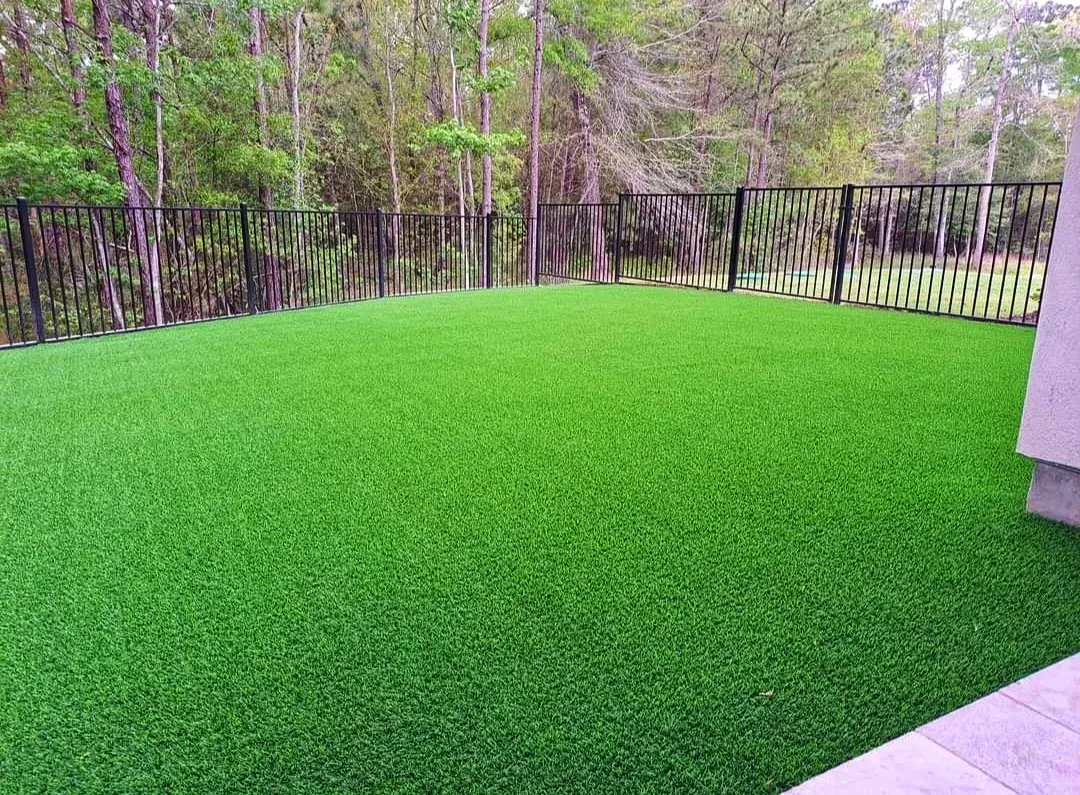
A boarding run takes more urine per square foot in a week than a back yard takes in a year. We install turf run flooring for Houston boarding kennels, doggy daycare yards, vet clinics and breeder facilities: a flow-through surface over a floor built to drain, so your staff can pick up, rinse and disinfect between groups instead of fighting mud and smell.
Kennel flooring is the part of your building that staff fight every single day. Dirt and gravel runs soak up urine and never really come clean. Bare concrete hoses off, but it is hard on older dogs and it holds heat in an uncovered run. Rubber mats feel kind underfoot until somebody lifts one and finds what is living under it. Houston makes all of that worse, because heat and humidity speed up ammonia off-gassing, so a run that smells fine in February does not smell fine in July on the same cleaning schedule.
We build the floor, not just the top layer. On open ground we excavate, lay geotextile, compact an aggregate base over drain rock, slope it to a low point, and tie that point into an area drain or a French drain, because Houston gumbo clay will not take the water on its own. Over an existing slab we check the fall and the drain first, then set a drainage layer under the turf so liquid keeps moving toward the outlet. The surface itself is a pet-grade turf with fully perforated flow-through backing, seamed tight, anchored down the full panel line, and filled with a deodorizing infill such as zeolite. You get a written spec, a phasing plan so you can keep boarding dogs while we work, and a cleaning protocol your staff can actually follow. Everything we install is backed by the manufacturer's warranty.
Pick up solids, rinse the run down, then apply your disinfectant exactly the way its label says and let it sit for the full dwell time before you rinse again. Skipping the rinse is the usual mistake, because a disinfectant cannot work through a film of waste. Most facilities use a quaternary ammonium product or an accelerated hydrogen peroxide product, and both are used on synthetic turf, but strength and dwell time are set by the label and not by us. Check chemical compatibility with the turf manufacturer before you standardize on a product, because harsh or undiluted chemicals can damage yarn and backing and can affect your warranty coverage. What turf gives you is a non-absorbent surface you can flush and sanitize on a documented schedule, which dirt, gravel and mulch never allow. It supports your cleaning program. It does not replace your vet and vaccination protocol.
It works indoors, but only when the floor underneath can already move water. An outdoor run drains into a base we build over soil. An indoor run has no soil at all, so everything depends on the slab: it needs a seal, a slope toward a floor drain or a trench drain, and a drainage layer between the slab and the turf so liquid keeps moving instead of sitting in the backing. Ventilation matters just as much, because an enclosed room holds humidity and ammonia that an open yard sheds. We will walk the room with you and tell you straight if the slab needs saw-cut drainage or a new drain first. We would rather send you to a concrete or plumbing contractor than lay turf over a floor that cannot drain.
Yes, and retrofitting an existing slab is most of the kennel work in Houston. Three things get checked first: which way the slab falls, where the existing drain sits, and whether the fall is enough to actually carry liquid to it. If it is, we set a drainage mat or a shock pad over the slab, run fully perforated flow-through turf on top, and terminate the edges so nothing lifts at the panel foot or the gate. The pad also gives the dogs cushion that bare concrete never has. If the slab is dead flat or drains toward the building, it needs saw-cut channels or a new drain before the turf goes down, and we say so at the walk-through rather than after the install.
The edge is where a dog beats a turf floor, so the edge is where the build has to be strongest. Seams are joined and secured so there is no loose flap for a nail to catch, and the perimeter is anchored down the full panel line rather than tacked at the corners. Where a digger is expected we add a dig guard at the panel foot so there is nothing to start on. On a slab retrofit the perimeter is bonded to the concrete instead of pinned into soil. If a dog does get through, the repair is local: we cut out the damaged piece and seam in a new section from the same roll, so you are not replacing the whole run. Ask us to hold back offcuts from your install for exactly that reason.
These are the facilities where the floor is a daily labor cost, not a landscaping choice. If you run one of them, a rinseable surface changes what your staff spends the morning doing.
Serving homeowners, businesses, and property managers across Greater Houston with artificial turf built for our climate. From backyard putting greens and pet runs to courtyards, playgrounds, and commercial grounds, every install is measured on site, graded for drainage, finished by our own crew, and backed by a warranty we put in writing.
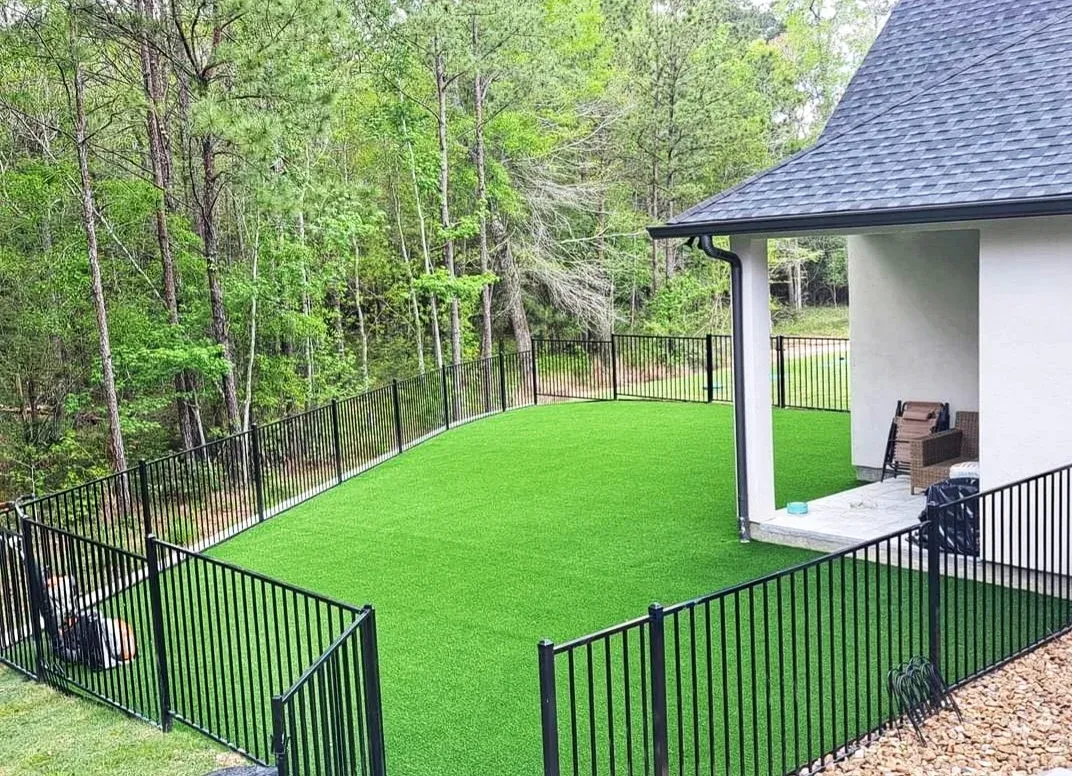
Fenced backyard turf, a metal-fenced dog run and a side-yard practice green installed across Tomball properties.
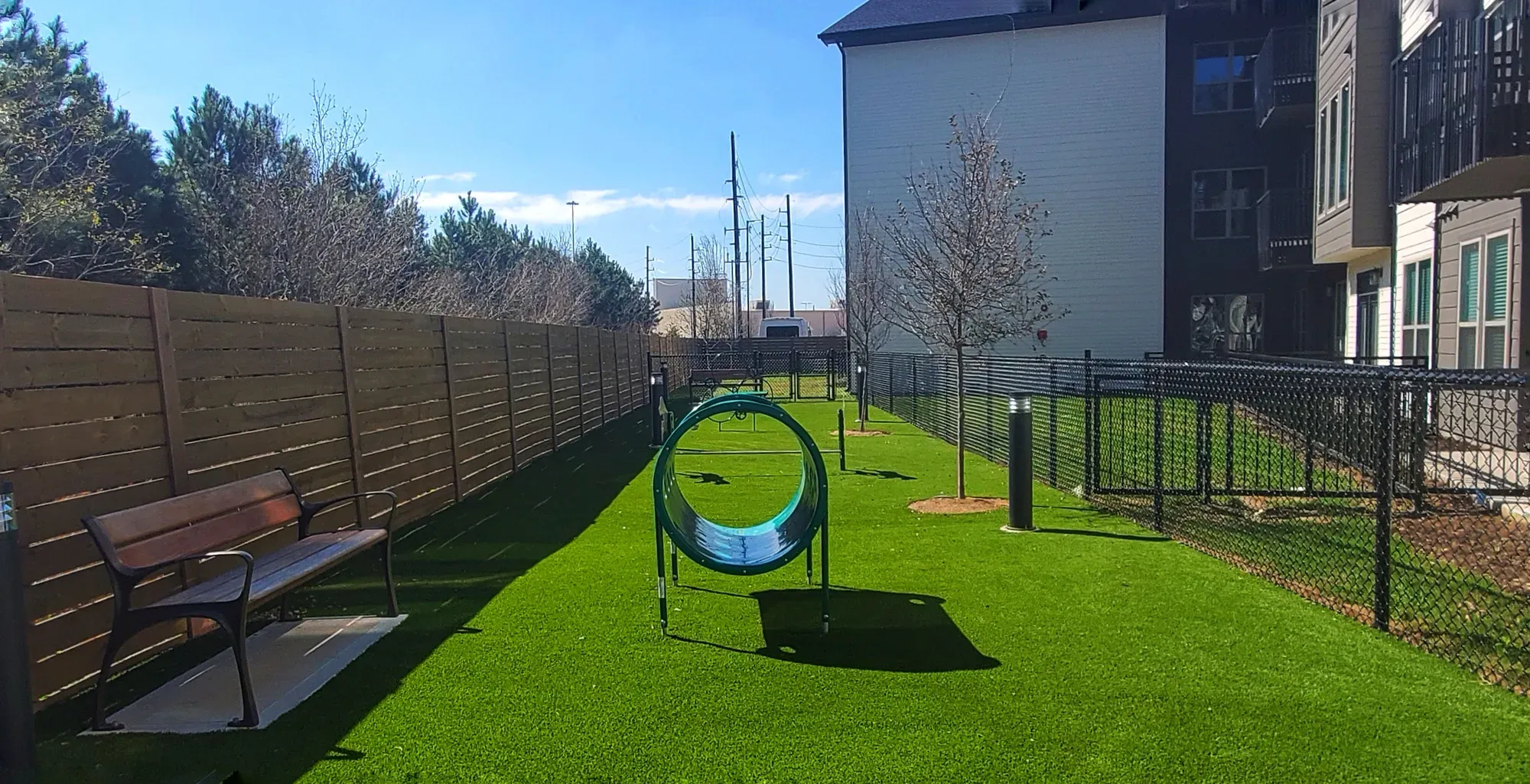
Pet-rated artificial turf in Katy — a fenced dog agility run, dog lawns, stepping-stone paths and a backyard practice green.
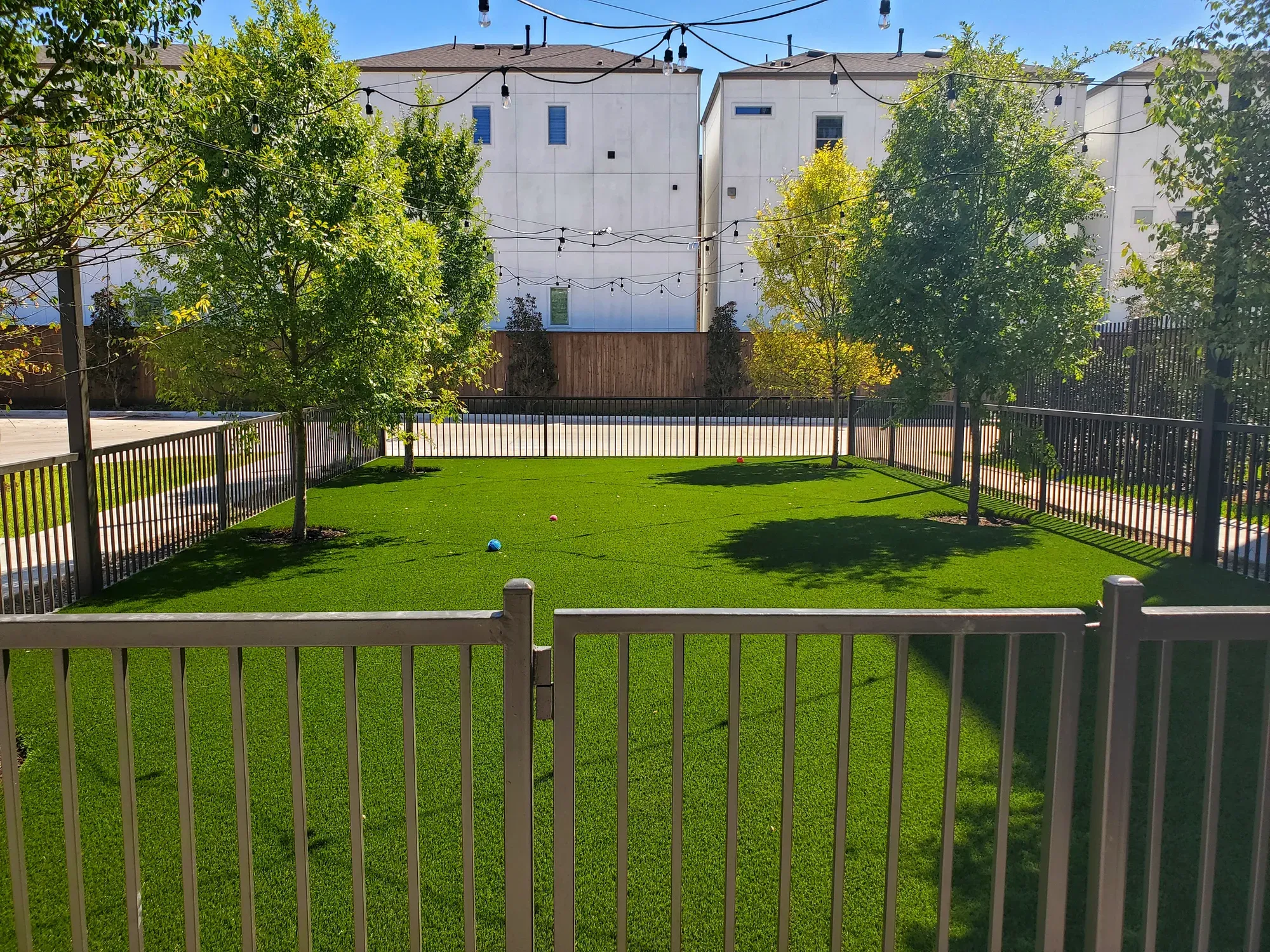
An enclosed, fenced dog lawn for residents at a Medical Center property in Houston, built on a pet-rated draining base.
Our proven installation process ensures every project is completed efficiently with exceptional attention to detail.
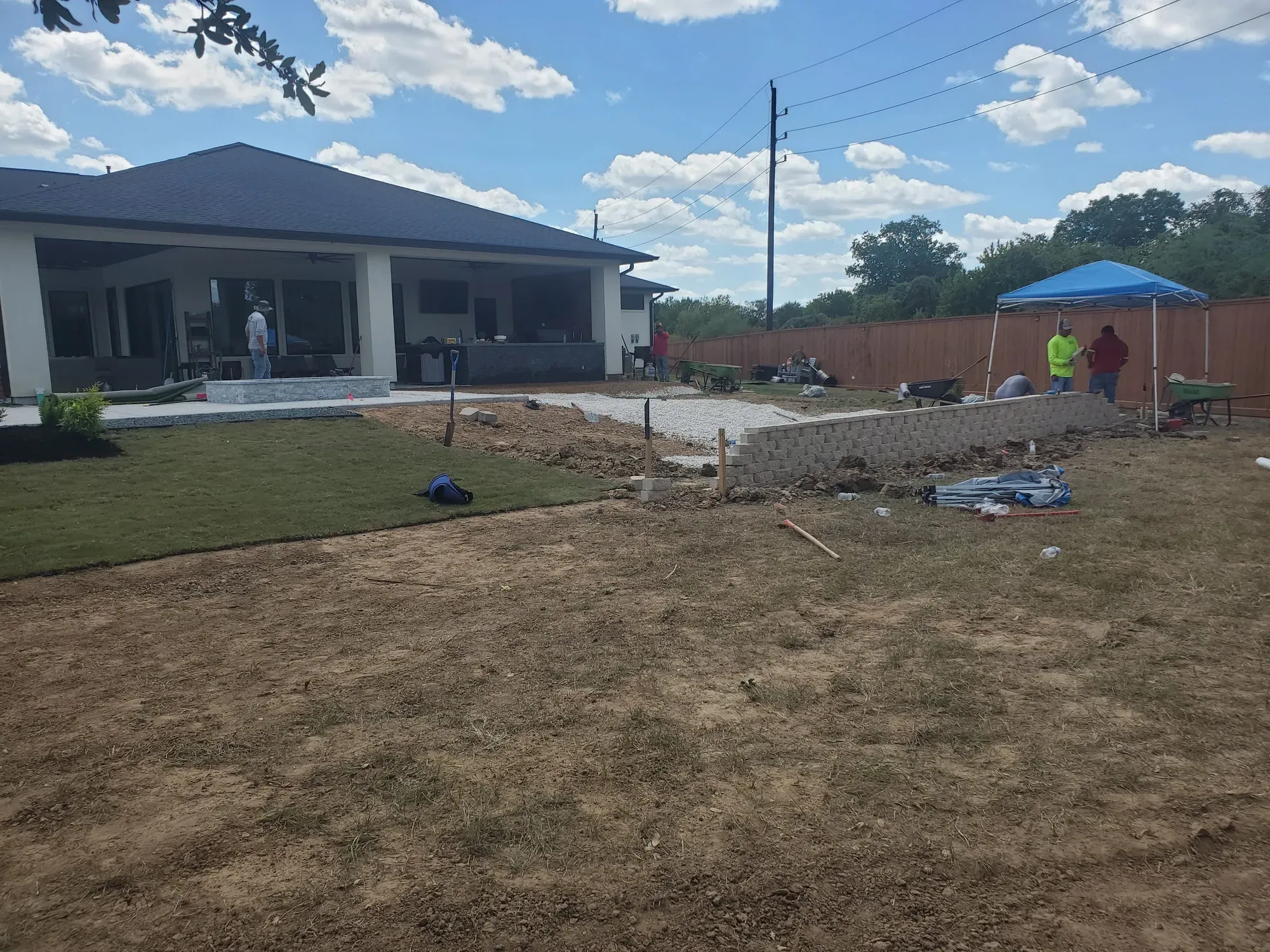
We strip the existing lawn and excavate down to a clean, stable sub-grade. Old roots, thatch, and loose topsoil all come out, because anything organic left behind will settle later and telegraph through the finished turf.
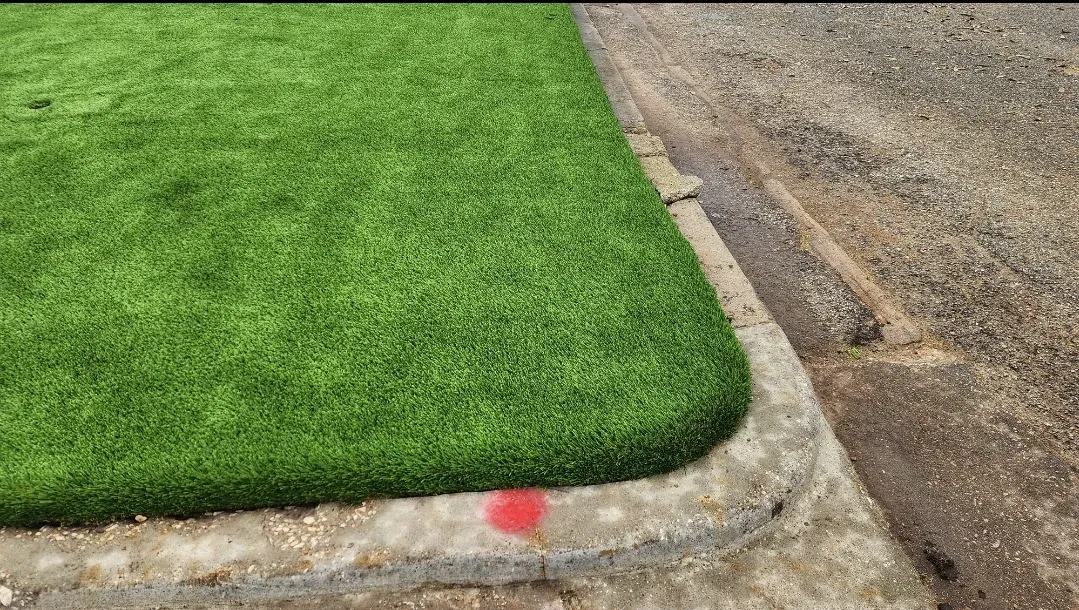
Flexible poly board is staked around the entire perimeter to lock the base in place. It holds your shape through curves and radii, keeps the aggregate from migrating into beds, and gives the turf a clean edge to be fastened to.
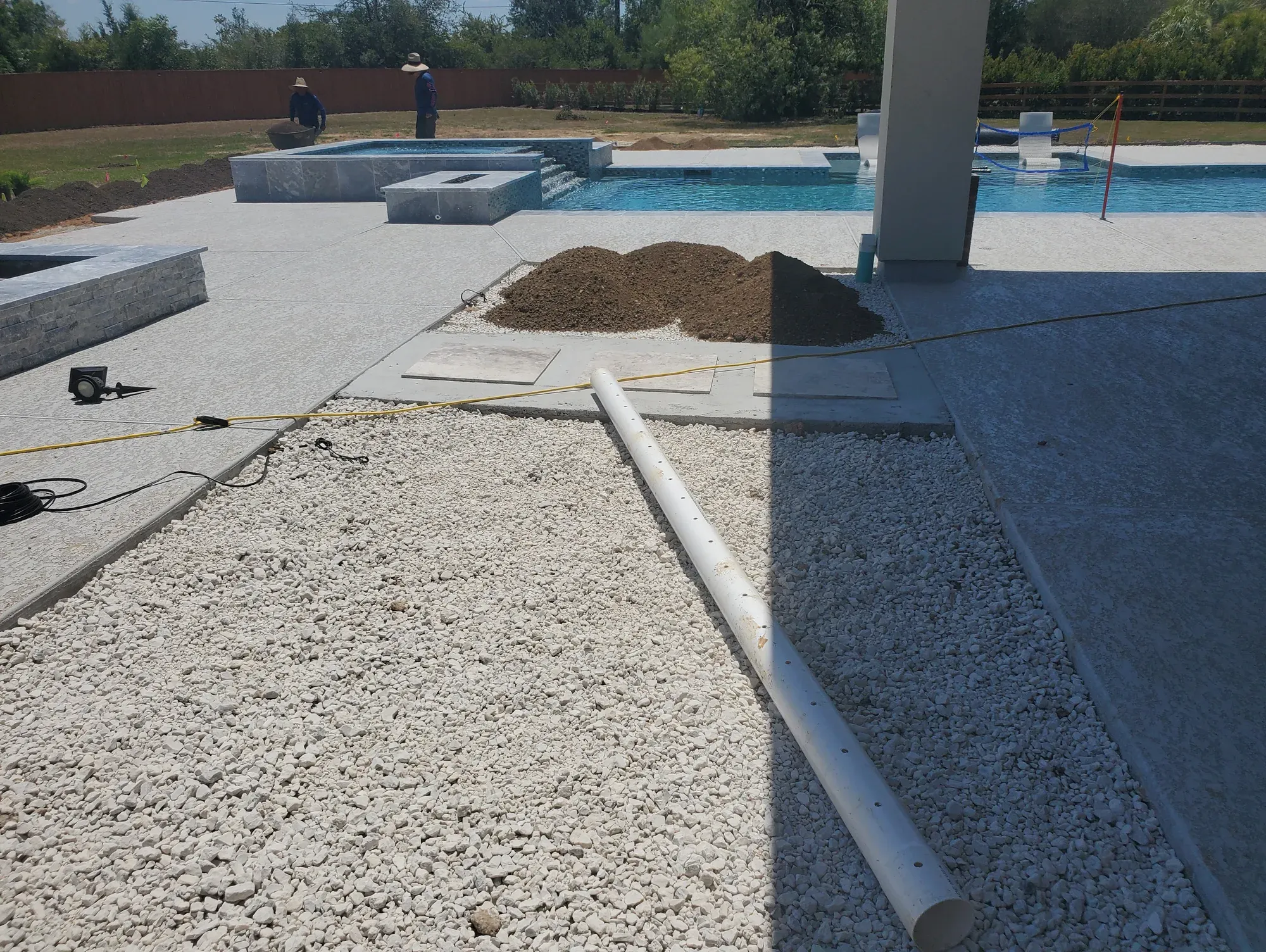
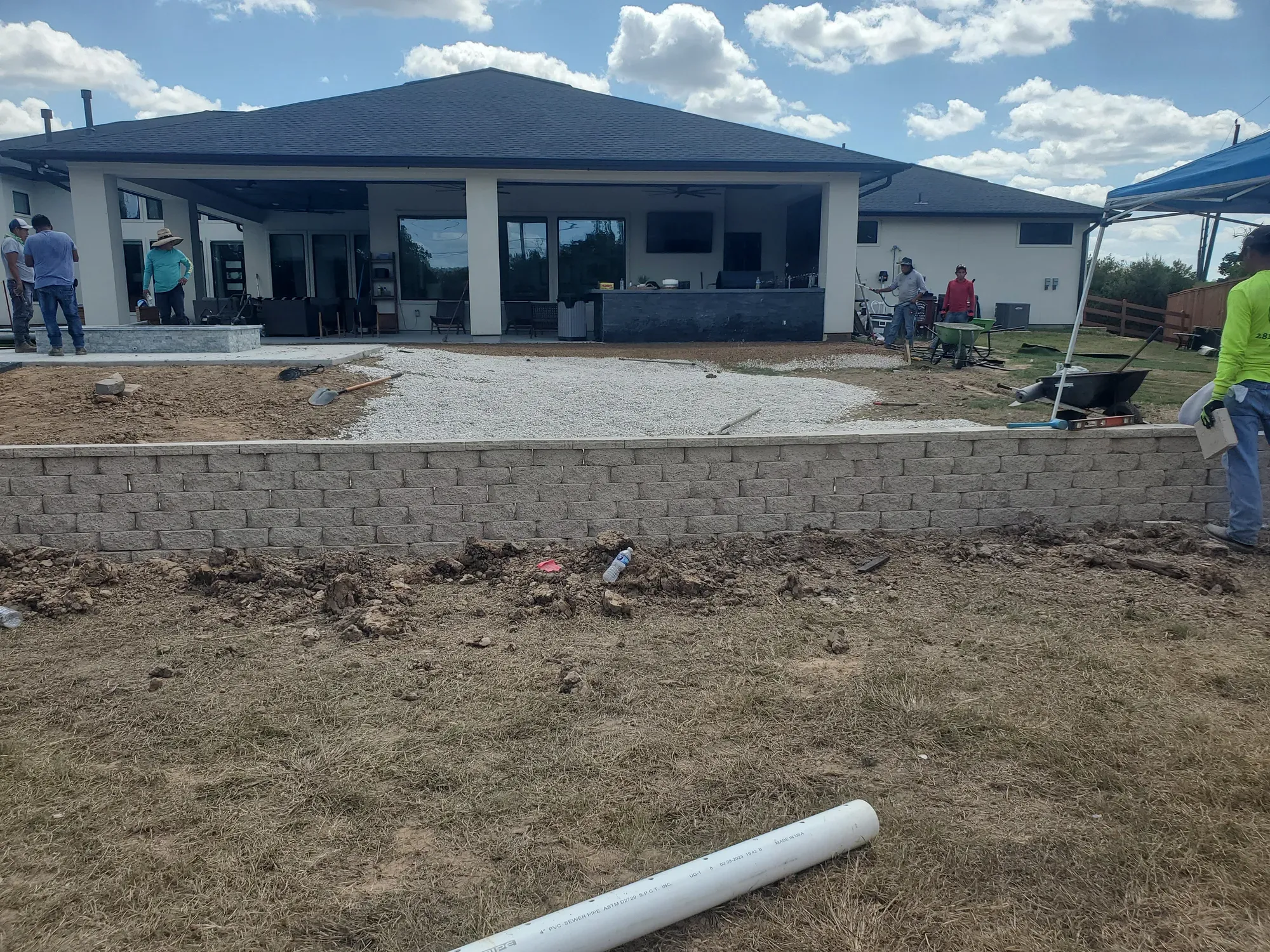
The first base layer goes down and is graded for drainage. This is the load-bearing course that carries foot traffic and keeps the surface from rutting, and it is where the finished contours of the yard are established.
A second, finer layer is screeded over the first to true the surface. Two layers instead of one is what separates a lawn that stays flat for years from one that dips and waves after the first wet season.
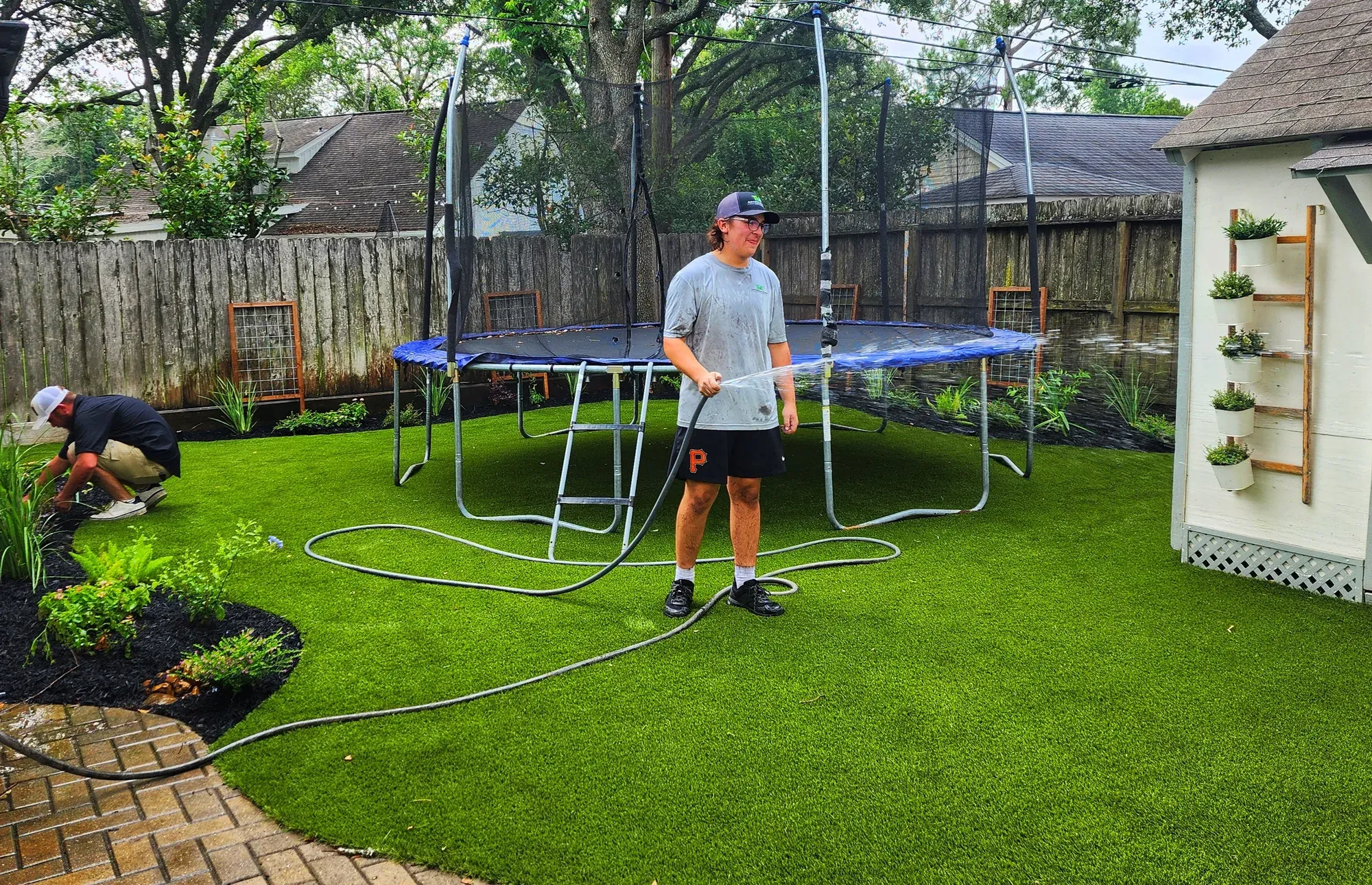
The base is plate-compacted to spec, then the turf is rolled out, allowed to relax, and cut to the yard. Seams are aligned to a single blade direction and joined so they disappear, and the turf is nailed off along every edge.
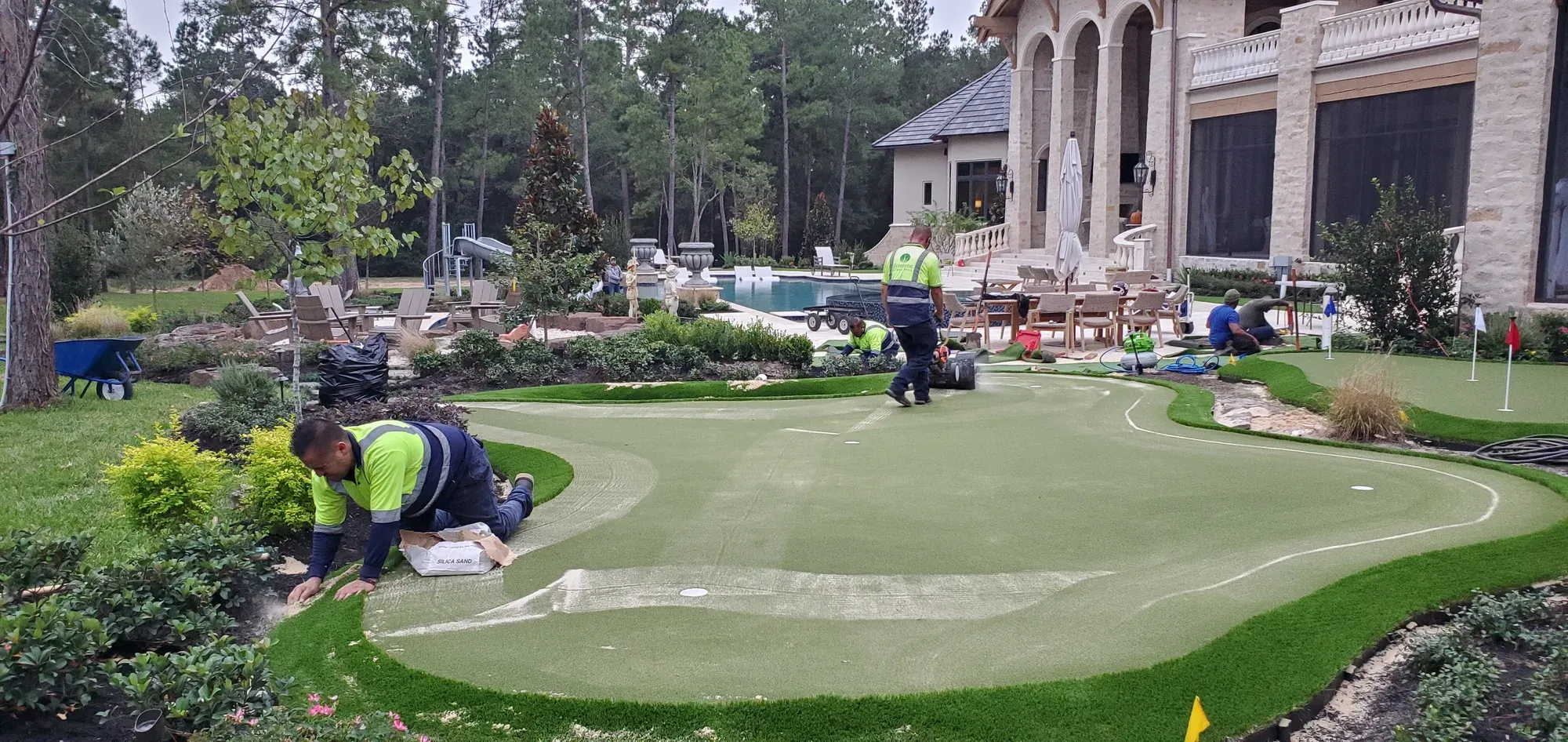
Silica infill is spread and worked in with a power broom, lifting every blade upright as it goes. Infill is what gives the lawn its ballast, its underfoot feel, and its ability to stand back up after traffic.
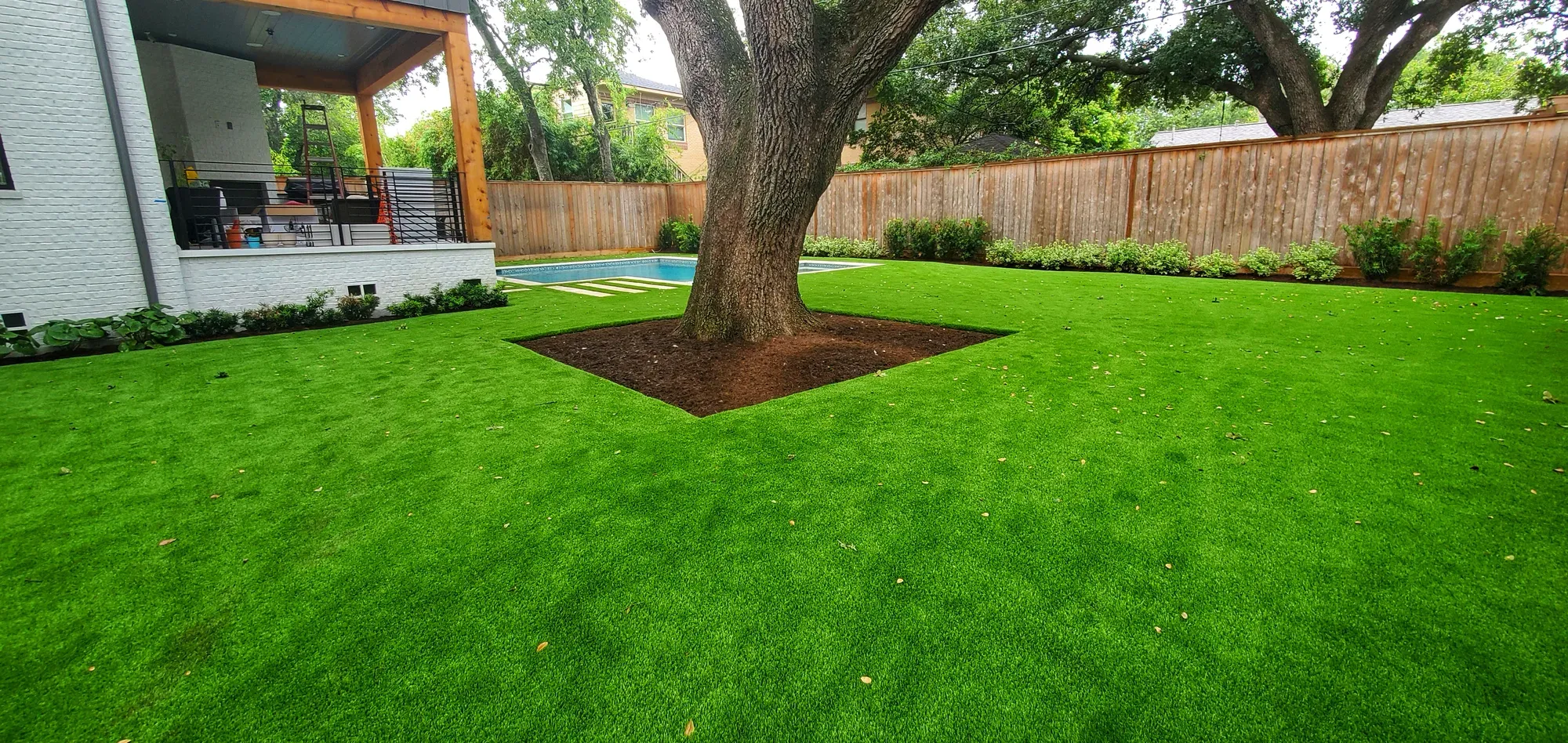
We do a final groom, clear the site, and walk the finished yard with you edge to edge. What you are left with is a lawn that looks cut every day of the year, with no mowing, watering, or seasonal brown-out.
TNT Turf is on a mission to transform Houston homes and businesses with premium synthetic turf, delivering lasting quality, honest service, and yards our customers are proud to look at everyday.
We started TNT Turf because Houston families deserve better than losing weekends to mowing and watering. Our mission is simple, give you a lawn you can enjoy every day, all year long, without the work that usually comes with it.
Every yard we install gets measured twice, leveled right, and finished like it’s our own backyard. If a job isn’t done the right way, it’s not a job we’re willing to put our name on, plain and simple.
By 2030, we want to help turn 10,000 Houston backyards into low-water, low-maintenance green spaces. It’s our way of making Houston greener and more sustainable, giving families more time to enjoy their yards instead of maintaining them.
From your first quote to the final walkthrough, we keep pricing fair, communication honest, and show up when we say we will. It’s our way of making sure every customer feels taken care of, not just sold to.
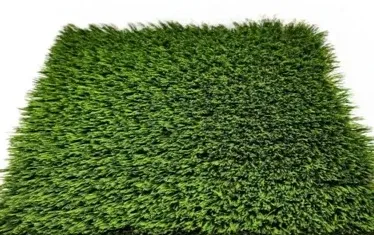
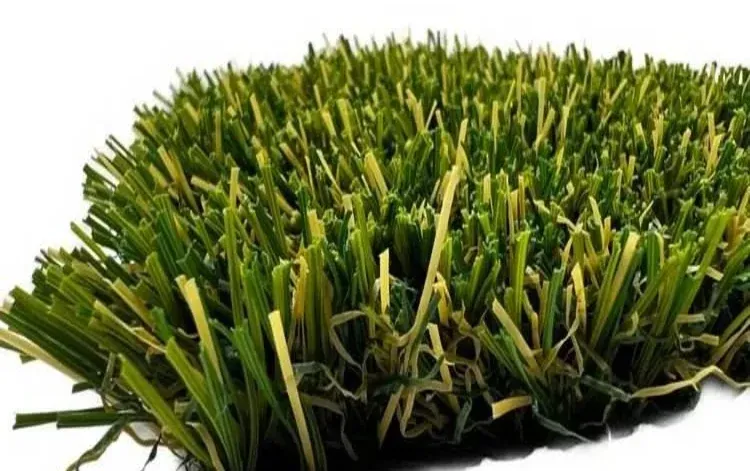
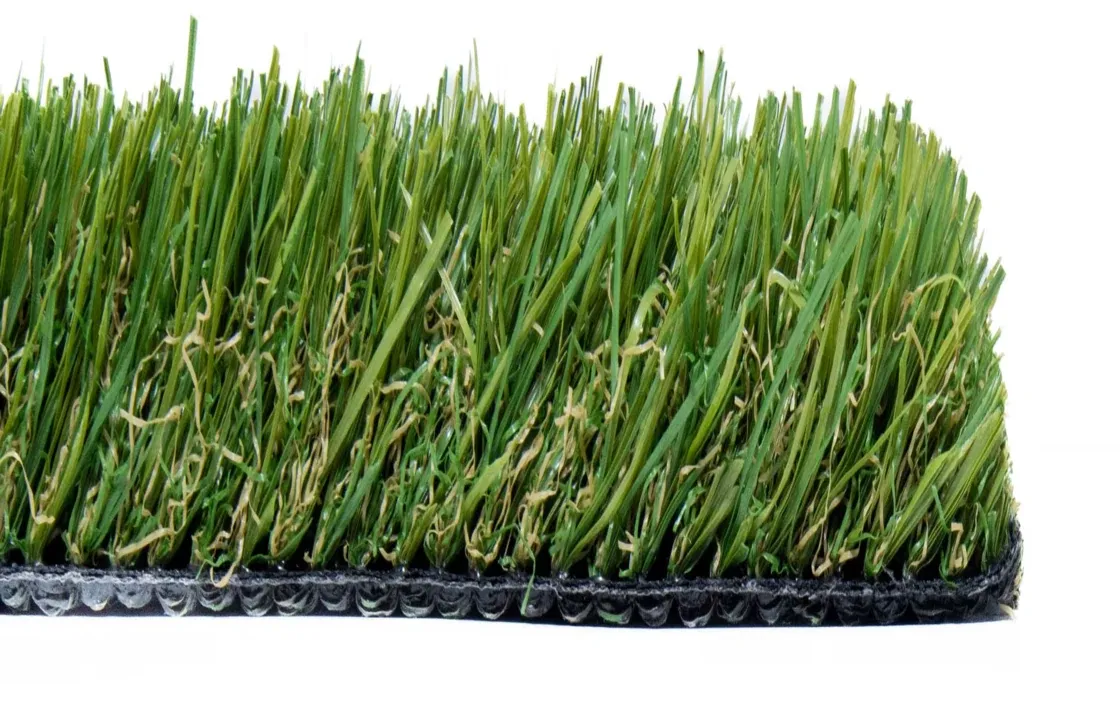
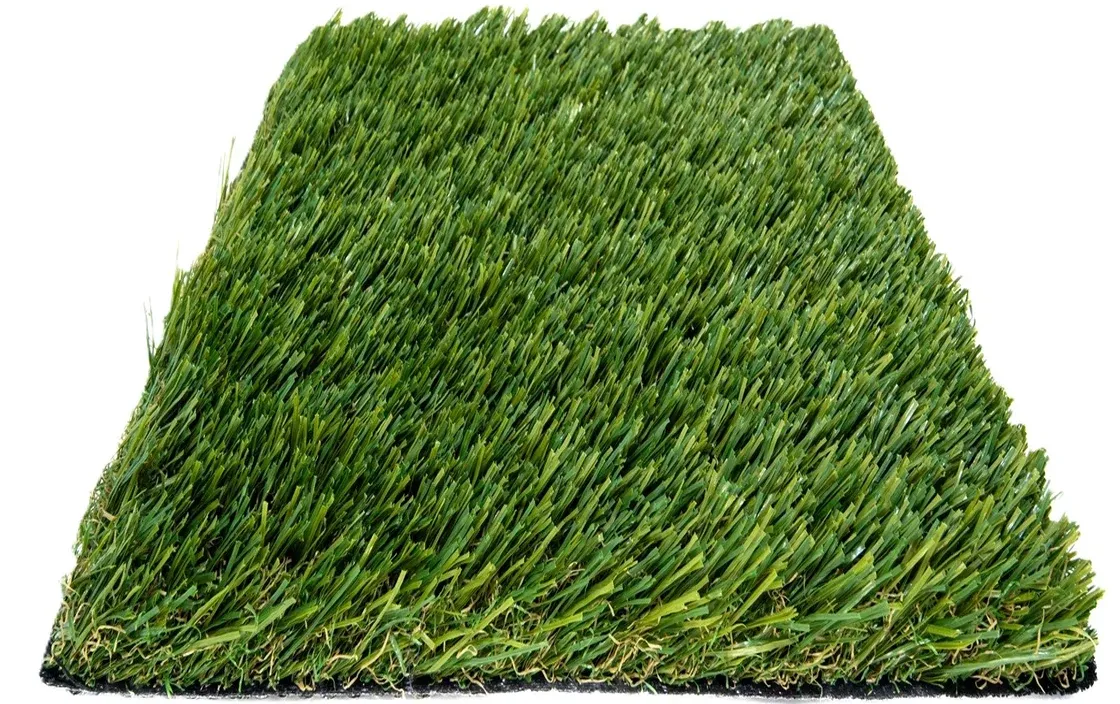
Explore a selection of our preferred artificial turf products, chosen for their appearance, durability, and performance across residential lawns, pet areas, playgrounds, and putting greens.
Kennel runs cost more per square foot than one open daycare yard, and both get priced off the site rather than over the phone. A row of narrow runs packs more edges, more seams and more drain tie-ins into a small footprint. One big play yard spreads the same base and drainage work across far more square feet, so the per-foot number comes down. A retrofit over an existing slab is priced differently again, because what you are buying there is the drainage layer and the edge work, not excavation.
We measure on site, count the runs, and check where your water already goes before we put a number on paper. The visit and the written quote are free. If you are also weighing an open bark park or a resident amenity yard, our commercial pet parks and runs page covers the wider category.
Get a Free On-Site QuoteFree
on-site measure and written quote
What drives your number
Turf laid over a base built to drain is the best flooring for most dog kennel runs, because it moves liquid away fast, rinses clean, and is easy on paws and joints. Bare concrete hoses off but is hard on older dogs and soaks up heat in an uncovered run. Rubber matting cushions well and then holds urine underneath it. Plastic slat and raised deck panels drain, but they pinch nails and have to be lifted to be cleaned properly. Pea gravel, decomposed granite and plain dirt all hold odor in the fines and get tracked straight into your building.
You keep it clean with a short written protocol your staff runs every shift, not with one big wash-down on Fridays. Pick up solids on sight, rinse the surface down daily through the Houston summer, and put an enzyme cleaner on a set schedule so urine residue gets broken down instead of covered up. Post the steps on the wall of the run area, put a name against each one, and the yard stays usable between boarding groups.
Pick up solids the moment you see them, then rinse the whole run at the end of the day. In a Houston summer add a rinse between groups, because ammonia off-gasses faster as heat and humidity climb, and a run that smelled fine in February will not in July on the same schedule.
Walk the full surface, deep rinse it, and run your enzyme cleaner so organic residue is broken down rather than masked. Clear hair and debris out of the drain inlets while you are there, and brush the fibers back upright in the lanes that take the most traffic.
Check the infill level and top up the deodorizing fill where traffic has thinned it. Then inspect the seams, the panel line and the gate edges for any lifting, and log it. Catching a loose edge in a monthly walk-through is a patch, not a re-lay.
Open bark parks and shared amenity yards, sized to the community and built to drain after a Gulf Coast storm.
The hardware side of a clean run: deodorizing infill, flush and drainage layers, and retrofits for a yard you already have.
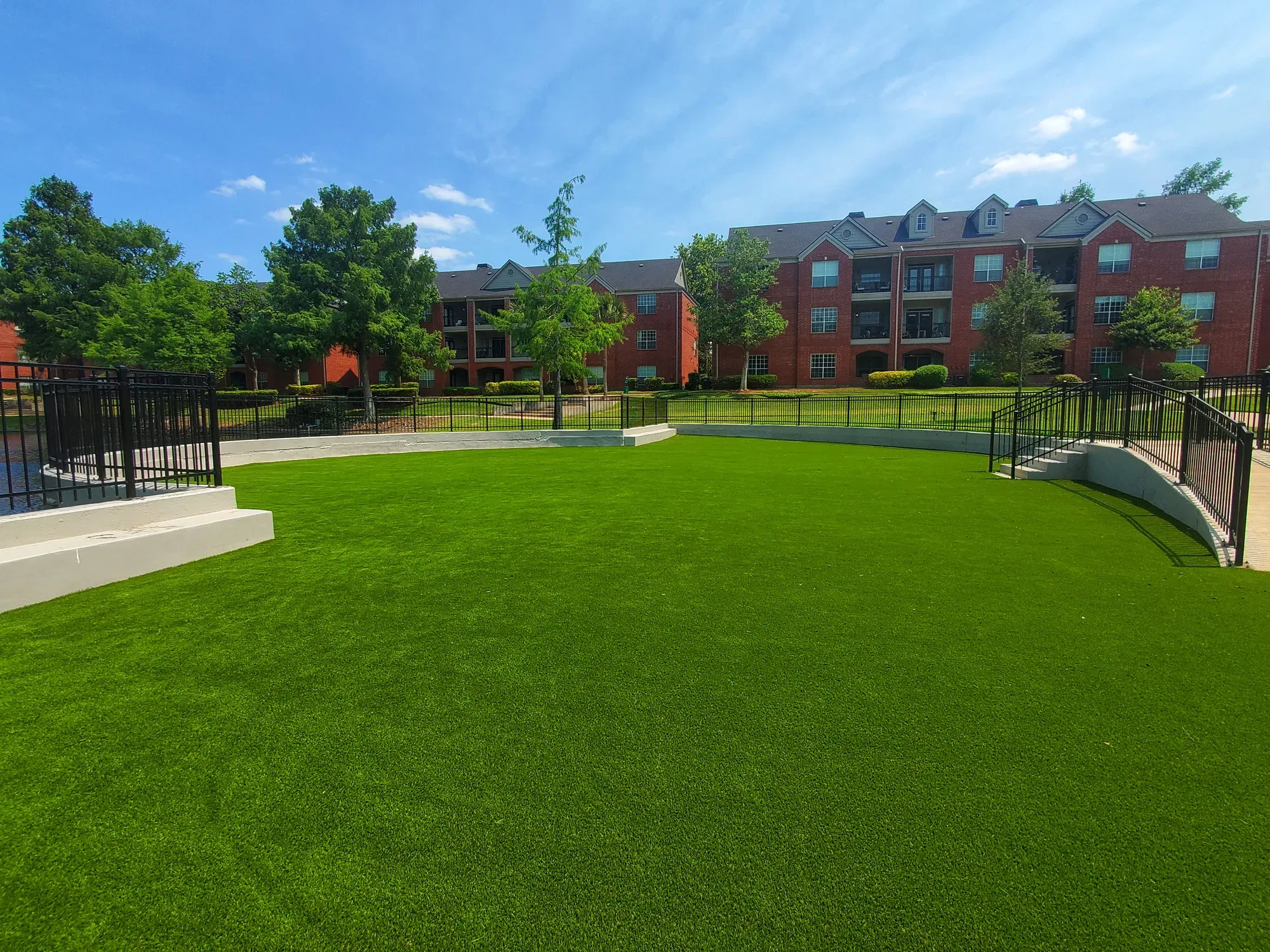
The full commercial pet category, from apartment dog parks to vet clinic relief areas and municipal bark parks.
Most residential projects are complete in 2–4 days. Larger commercial installs typically take 1–2 weeks.
Every install carries the manufacturer's product warranty against fading and wear, plus our own workmanship coverage on seams, edging, and base. Full terms come with your proposal.
Yes. We install lead-free, non-toxic turf over a permeable base that drains quickly, and we can add an antimicrobial infill for pet areas to keep odours down.
A rinse now and then and an occasional cross-brush of the high-traffic paths. No mowing, no watering, no fertiliser, and no seasonal brown-out.
Turf runs warmer than a natural lawn in direct sun. We specify cooler yarn and lighter infill where a yard gets full afternoon exposure, and a quick rinse brings the surface temperature straight back down.
Pricing depends on square footage, the turf you choose, and how much prep the site needs. We measure on site and give you a fixed written quote before any work starts.