
Turf Mission
We started TNT Turf because Houston families deserve better than losing weekends to mowing and watering. Our mission is simple, give you a lawn you can enjoy every day, all year long, without the work that usually comes with it.
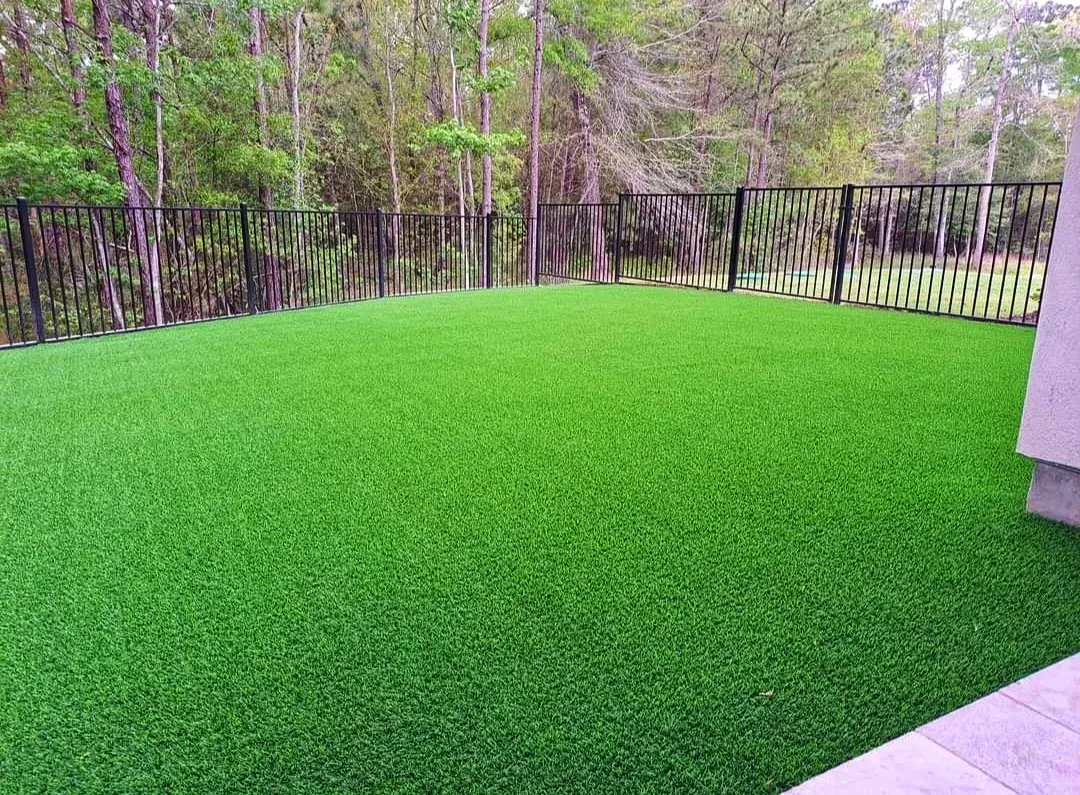
When rinsing stops working, the problem is below the fibers. Turf extraction flushes the infill and backing with water and cleaning solution, then pulls the dirty water back out under suction. The urine residue leaves your yard instead of washing down into the base.
A normal rinse pushes water down through artificial turf. That moves some of the smell, but it also carries urine residue deeper, into the infill, the backing and the base below. Turf extraction works the other way. We push water and a cleaning solution down into the pile and pull it straight back out under strong suction, so the residue comes up and leaves with the water.
Extraction is the deep tier of artificial turf cleaning, and it is built for dog yards. If your yard smells again a day after you hose it, if the infill feels sticky or crusted in the dog's favorite spots, or if you see yellow or brown stains in the fibers, a surface clean will not reach the cause. We check the yard first and tell you which visit you need. Deep turf extraction is only the answer when it will actually work.
Turf extraction is a deep cleaning method for artificial grass. We push water and a cleaning solution down through the fibers, the infill and the backing, then pull it straight back out under strong suction. The urine residue, dirt and buildup come up with the water and leave your yard. It is the same idea as extraction carpet cleaning, built for turf.
A regular turf cleaning works on the surface: it clears, brushes, rinses and deodorizes the fibers and the top of the infill. The rinse water drains down into the base, and whatever it carries goes with it. Extraction reaches the full depth of the infill and pulls the dirty water back up and out. For most yards a cleaning is enough. For a dog yard that smells again a day after a rinse, extraction is the step made for that problem.
Often, yes, if the residue is in the infill and backing. That is exactly where extraction works. But we will be straight with you about the limit. If urine has soaked into a base that was never built to drain, nothing done from the top will reach it, extraction included. That yard has to come up so the base can be rebuilt. We flood-test the yard on the first visit so you know which one you have before you pay for anything.
No. Nothing comes up. The word extraction refers to pulling the dirty water and residue out of the turf, not pulling the turf out of the ground. Your lawn stays exactly where it is. If your turf is past saving and does need to be replaced, that is a different job, and we can talk you through it on the same visit.
These are the yards where the smell has moved below the surface. If one of them sounds like yours, another rinse will not fix it.
Both are good visits. They just reach different depths. Here is how they compare, side by side.
| Standard Turf Cleaning | Deep Turf Extraction | |
|---|---|---|
| What it reaches | The fibers and the top of the infill | The full depth of the infill and the backing |
| How it works | Clear, power brush, rinse, sanitize and deodorize | Flush water and cleaning solution down, then pull it back out under suction |
| Where the dirty water goes | Down through the turf into the base | Back up into the machine and out of your yard |
| What it removes | Leaves, dust, pet hair, surface solids and surface smell | Urine residue and buildup packed into the infill and backing |
| Best for | Routine care for any artificial turf | Dog yards where the smell comes back after a rinse |
| If it is not enough | Move up to extraction or new infill | New infill, drainage work, or rebuilding the base |
Not sure which one your yard needs? Read about our standard artificial turf cleaning, or book a free assessment and we will tell you on site.
Serving homeowners, businesses, and property managers across Greater Houston with artificial turf built for our climate. From backyard putting greens and pet runs to courtyards, playgrounds, and commercial grounds, every install is measured on site, graded for drainage, finished by our own crew, and backed by a warranty we put in writing.
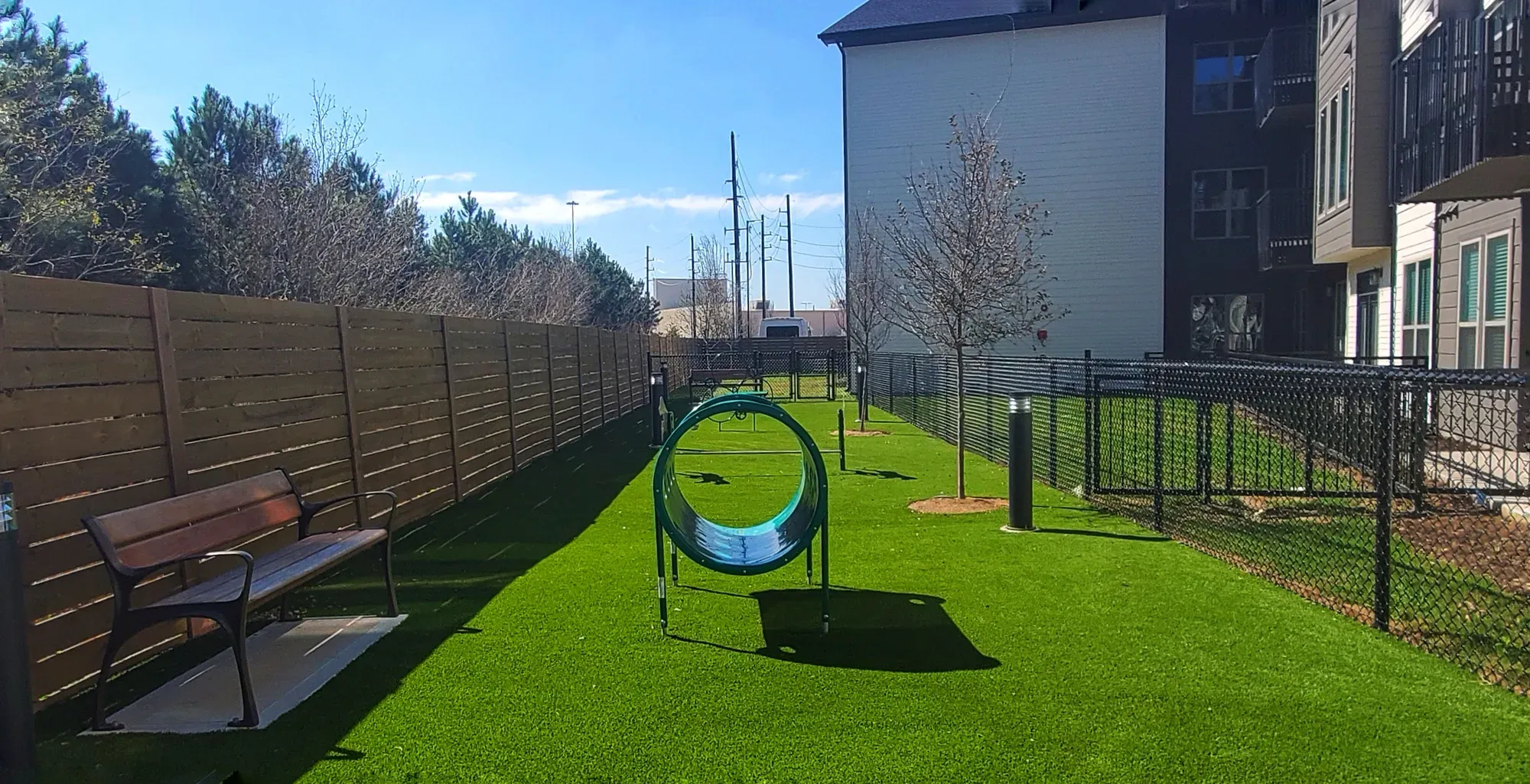
Pet-rated artificial turf in Katy — a fenced dog agility run, dog lawns, stepping-stone paths and a backyard practice green.
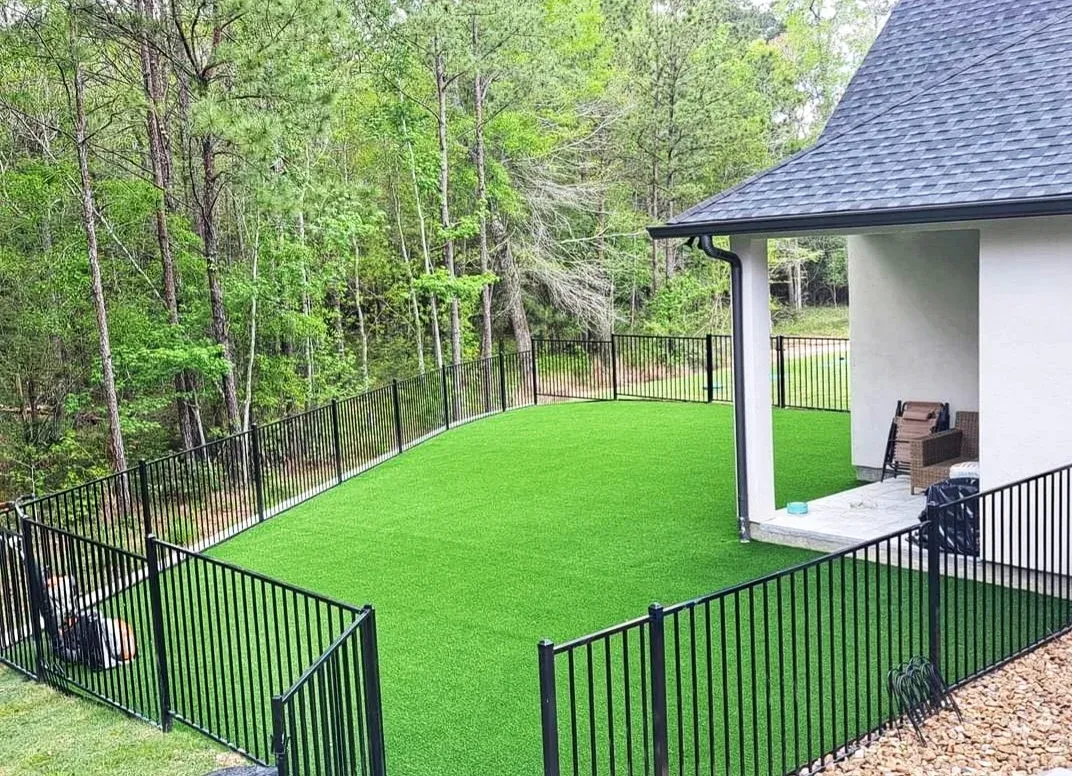
Fenced backyard turf, a metal-fenced dog run and a side-yard practice green installed across Tomball properties.
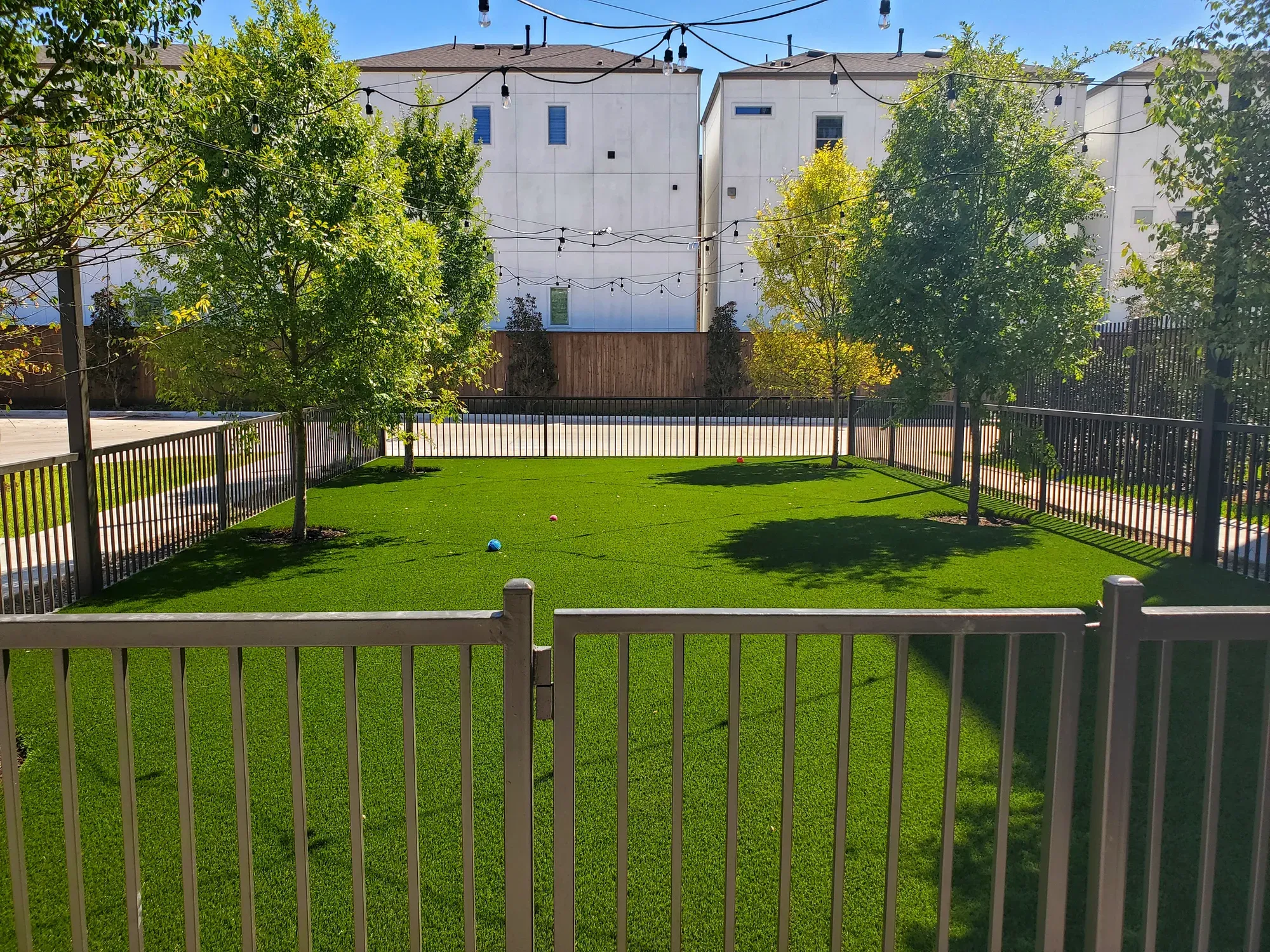
An enclosed, fenced dog lawn for residents at a Medical Center property in Houston, built on a pet-rated draining base.
Five steps, in this order. The extraction itself is step four. Everything before it makes it work better, and everything after it makes the result last.
We find the dog spots, flood-test a patch to see how fast water drains, and check the infill and backing. That tells us whether extraction will work before you pay for it.
Solids, hair and debris come off first. Then we power brush the pile to open it up, so the water can reach down into the infill instead of running across the top.
The heaviest spots get an enzyme treatment made for turf, and we give it time to work. This loosens the urine residue before the extraction passes.
We push water and cleaning solution down through the infill and backing and pull it straight back out under suction. Dog spots get pass after pass. Then we work the rest of the yard.
We deodorize, brush the fibers up and level the infill. We flood-test again to make sure water leaves, flag any fill that is spent, and leave you a care routine in writing.
TNT Turf is on a mission to transform Houston homes and businesses with premium synthetic turf, delivering lasting quality, honest service, and yards our customers are proud to look at everyday.
We started TNT Turf because Houston families deserve better than losing weekends to mowing and watering. Our mission is simple, give you a lawn you can enjoy every day, all year long, without the work that usually comes with it.
Every yard we install gets measured twice, leveled right, and finished like it’s our own backyard. If a job isn’t done the right way, it’s not a job we’re willing to put our name on, plain and simple.
By 2030, we want to help turn 10,000 Houston backyards into low-water, low-maintenance green spaces. It’s our way of making Houston greener and more sustainable, giving families more time to enjoy their yards instead of maintaining them.
From your first quote to the final walkthrough, we keep pricing fair, communication honest, and show up when we say we will. It’s our way of making sure every customer feels taken care of, not just sold to.
Turf extraction machines come in two kinds, and both can do the job. What matters more than the machine is whether the dirty water actually comes back out of your turf. Some companies call a spray-and-brush service extraction. If nothing is being vacuumed back up, it is a rinse, whatever the name says. We will tell you which setup we are bringing for your yard and why.
The machine stays in the truck and long hoses run back to the yard. They are usually the most powerful option, with more suction and hotter water, and the dirty water goes into a tank on the truck. They need a hose route from the street to the turf.
The machine rolls into the yard with the crew. It has less power than a truck-mount as a rule, but it can reach turf that hoses cannot, like a rooftop, a balcony or a back yard behind a locked side gate. It has to be emptied more often.
Where does the dirty water go? If the answer is back into the machine, you are getting extraction. If the answer is into the ground, you are getting a rinse, and the residue is going deeper into your base, not out of your yard.
Extraction costs more than a standard turf cleaning because it takes longer, it uses more equipment, and the dog spots need several passes. The final price depends on your yard, so we set it after the free assessment, never over the phone. You get a firm price before any work starts, and if a regular cleaning will do the job, we will tell you and price that instead.
If the fill in the dog lanes is spent, we can price an infill addition on the same visit. If water is not leaving the base, drainage solutions come first, because extraction cannot fix a base that holds water.
Get Your Free Extraction QuoteFree
on-site turf assessment
What sets the price
One big dog or three small ones, the result is the same: the favorite spots fill up. Extraction clears them out so the rinse routine can keep up again.
A tenant's dog can leave a smell the next tenant notices on day one. Extraction between leases resets the yard without replacing it.
Heavy daily use needs a built-in system, not a visit now and then. Start with our commercial odor control systems page.
Commercial odor control systemsThe routine visit for any turf: clear, power brush, rinse, sanitize, deodorize and level.
When the problem is the smell, we find where the urine is sitting and treat it at the source.
Spent or thin fill pulled out of the dog lanes and replaced with pet-grade infill.
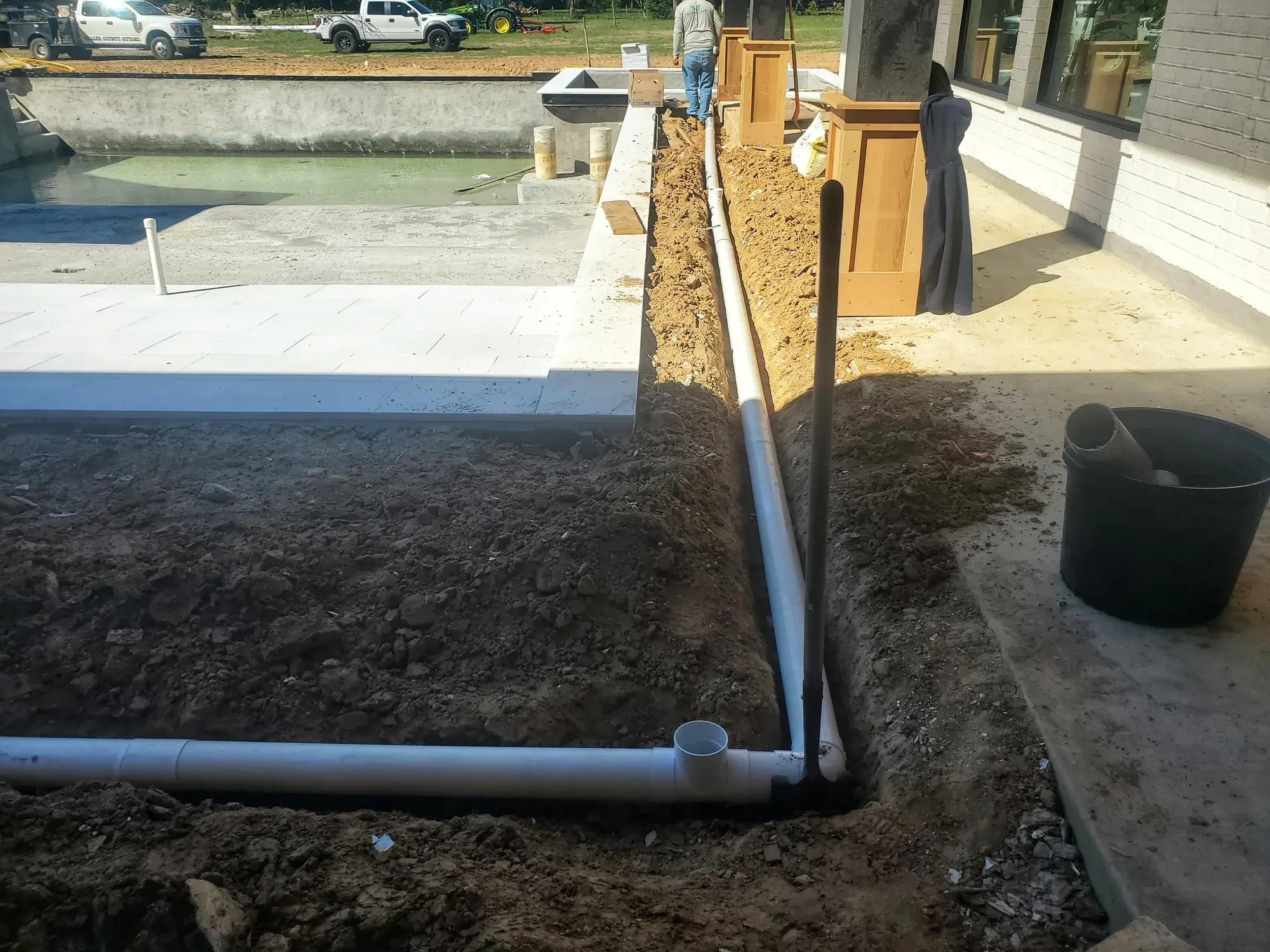
For the yard where water sits after a rinse. We find the cause before we price the fix.
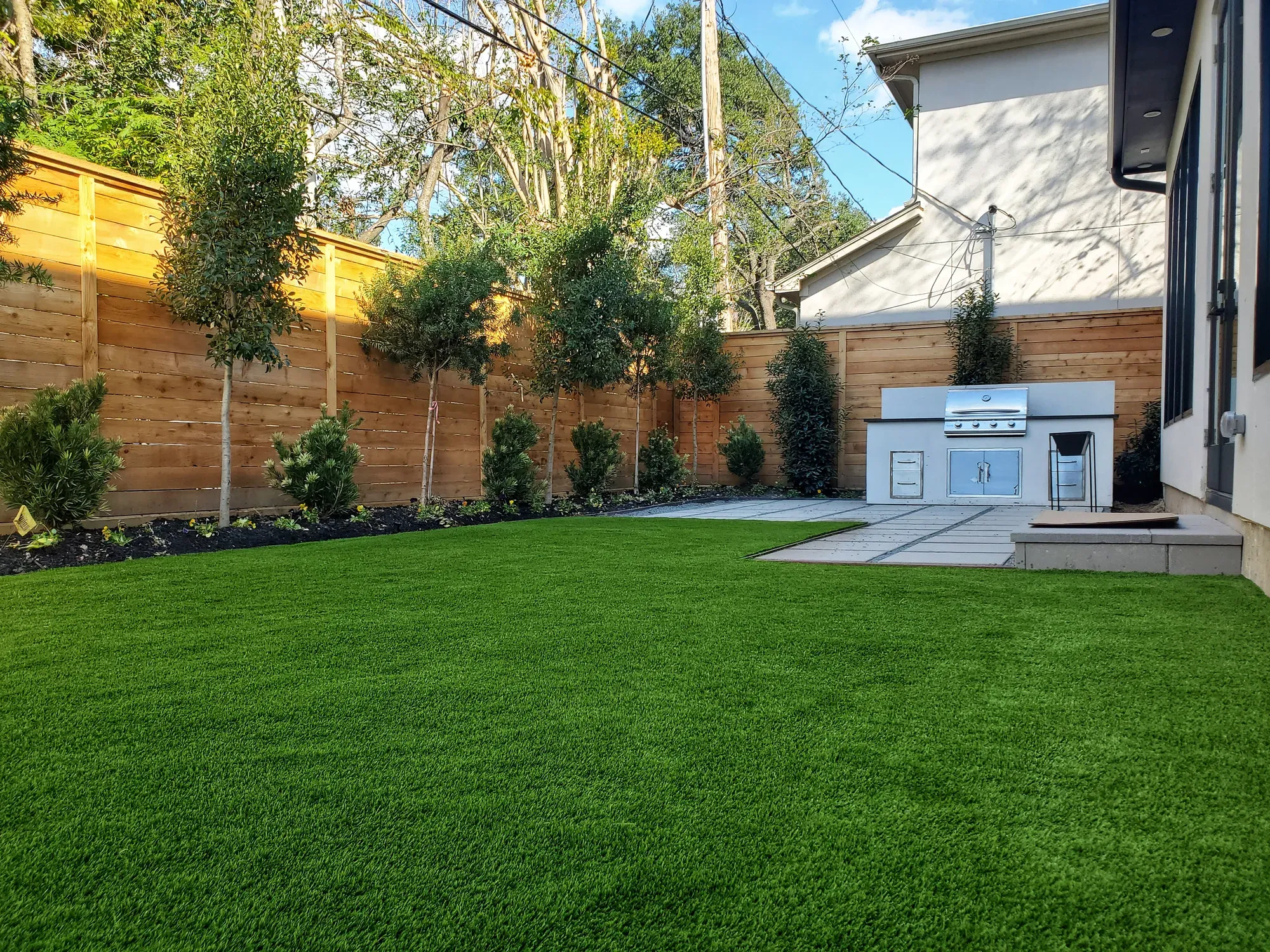
If the base has to be rebuilt, this is the build that drains from the start.
For kennels, daycares and apartment dog parks: a built-in system, not a service visit.
Start with the routine: pick up solids every day, rinse the dog's spots on a set day, and use an enzyme cleaner made for turf. If the smell comes back within a day of a good rinse, the urine has built up below the surface, in the infill and backing. A rinse cannot pull it out, but turf extraction can, because it vacuums the residue back up instead of washing it deeper.
Stains that are residue sitting in the fibers and infill usually lift or fade a lot, since that residue is what extraction pulls out. If the fiber itself has changed color, no cleaning will bring the original color back. We look at the stains on the first visit and tell you which kind you have.
Less often than a regular cleaning, and it depends on the yard. The number of dogs, the size of the yard, the Houston summer heat and how well the rinse routine is kept up all change the answer. We set it after we have seen the yard, not before. Most owners use extraction to reset the yard, then keep it there with regular cleanings and their own rinse routine.
Sometimes both. Extraction pulls residue out of the infill. But infill in a heavy dog lane can be spent or packed so tight that cleaning it is not worth it. In that case we replace it. We check the infill on the first visit and give you the honest answer, even if it is the cheaper one.
Yes. Most of the smelly turf we see was installed by someone else, and extraction works the same way on any brand. What matters is how the turf was built, which is why we check the drainage and the backing before we start.