Turf Mission
We started TNT Turf because Houston families deserve better than losing weekends to mowing and watering. Our mission is simple, give you a lawn you can enjoy every day, all year long, without the work that usually comes with it.
Padel is played off the glass, and the surface underneath decides how the ball skids, how players slide, and how the ball comes off the wall. We build the base and lay the sand-filled court turf, working to your court system supplier's drawings on the cage and the glass, so your court plays true and drains after a Houston storm.
Padel is a doubles racquet sport played inside an enclosure of tempered glass and mesh, on a playing area 20 meters by 10 meters. The walls are part of the game, the serve is underhand, and most people can rally in their first hour. It is well established in Spain, Argentina and much of Europe, and it is early in its growth curve here. Search for padel in Houston today and most of what you find is people looking for somewhere to play. That gap is the opportunity a club, hotel or developer is buying into, and the court surface is what decides whether those players come back next week.
We build the part of the court players stand on. That means excavation, a geotextile separation layer, compacted aggregate, the drainage fall, the slab your court system bolts down to, and the sand-filled turf on top. The steel frame, the tempered glass panels, the net and the lighting come from a padel court system supplier, and we coordinate our levels, our fall and our anchor points with theirs so the two halves meet cleanly. Houston makes the ground work harder than most markets. Much of this region sits on shrink-swell coastal clay people here call gumbo, and a court that moves does not only play wrong, it puts stress on a structure that is bolted to it. Base engineering is the real technical story on a padel build, and the slab spec belongs to a structural engineer, not to a rate card. We work out of Spring Branch off I-10 and cover Harris, Fort Bend, Montgomery, Brazoria, Galveston, Waller and Liberty counties, from Katy and Cypress out to Sugar Land, Pearland and The Woodlands.
A padel court is a doubles court enclosed by tempered glass and mesh, and the walls are part of the game. The playing area is 20 meters by 10 meters, which is about 65.6 feet by 32.8 feet. A tennis doubles playing area is 78 feet by 36 feet, so padel is played on a smaller, tighter surface. The differences that matter most are not about size. Padel is doubles only, the serve is underhand, and the ball can be played off the glass after it bounces. Rackets are solid with no strings. Most people can rally in their first session, which is why operators like it: the court fills, and it keeps filling.
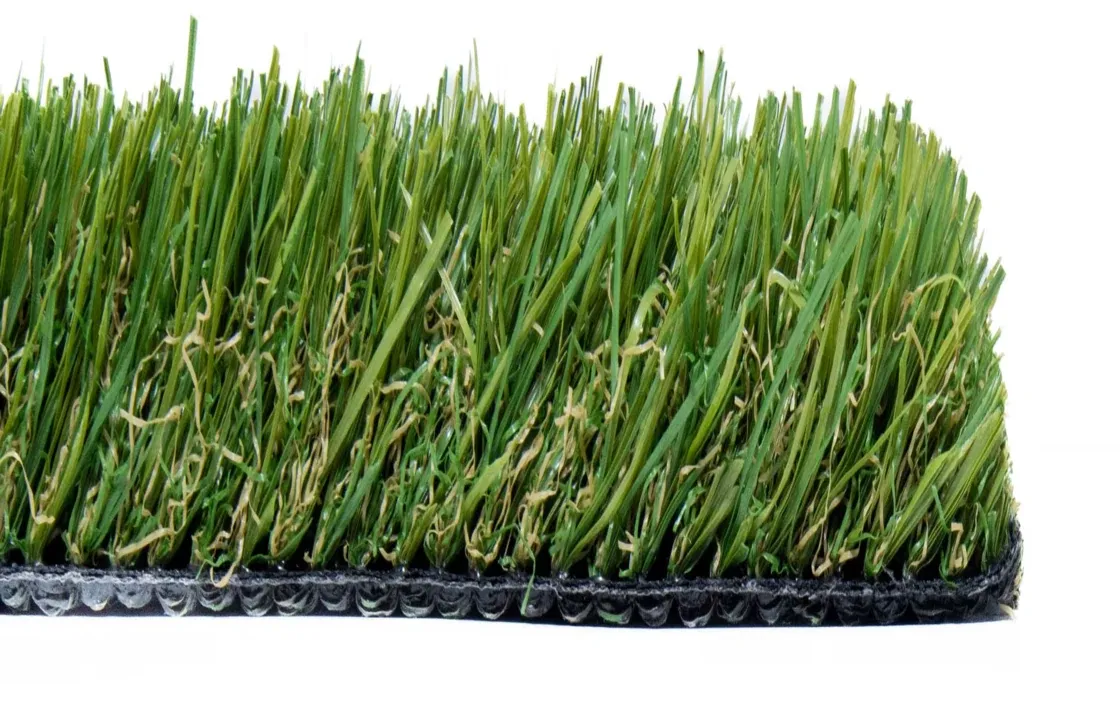
The playing surface is artificial turf dressed with silica sand. The fibers are short and dense, and the sand fills most of the pile height so the fibers stay upright and the ball behaves the same everywhere on the court. That is what sand-filled means. Sand-dressed is a different thing: the sand fills only part of the pile and the fibers stand proud of it, which is common on hockey and some tennis surfaces. Pile height, fiber type and sand grade are specification choices, not details to settle on install day. We agree them with you up front, because together they set how fast your court plays and how far a player can slide.
That depends on your fence line, and anyone who gives you a number before measuring is guessing. A padel playing area is 20 by 10 meters, roughly 2,150 square feet. A tennis doubles playing area is 78 by 36 feet, roughly 2,800 square feet. So one padel court sits inside a tennis playing area with room to spare. Whether a second one fits inside the fenced tennis footprint comes down to your run-off space, your setbacks, and how players get on and off court. We measure the slab and the fence line, then show you the layouts that actually work on your site.
Longer than the turf work alone suggests, because the base and the enclosure drive the schedule. The surface itself goes down quickly once the slab is ready and cured. What comes before it takes the time: site survey, structural design for the slab, permitting where your jurisdiction asks for it, excavation, base and drainage, then the slab. The court system, the steel and the glass are ordered from a padel supplier on a lead time of their own, and that order usually has to go in early. We give you a sequence and dates for our scope at quote stage and build around the supplier's delivery date, so nobody is standing on site waiting.
These are the operators looking at padel across Greater Houston right now. If one of them describes your site, the base and the playing surface are the parts we handle, and we work to your court supplier's drawings on the rest.
Serving homeowners, businesses, and property managers across Greater Houston with artificial turf built for our climate. From backyard putting greens and pet runs to courtyards, playgrounds, and commercial grounds, every install is measured on site, graded for drainage, finished by our own crew, and backed by a warranty we put in writing.
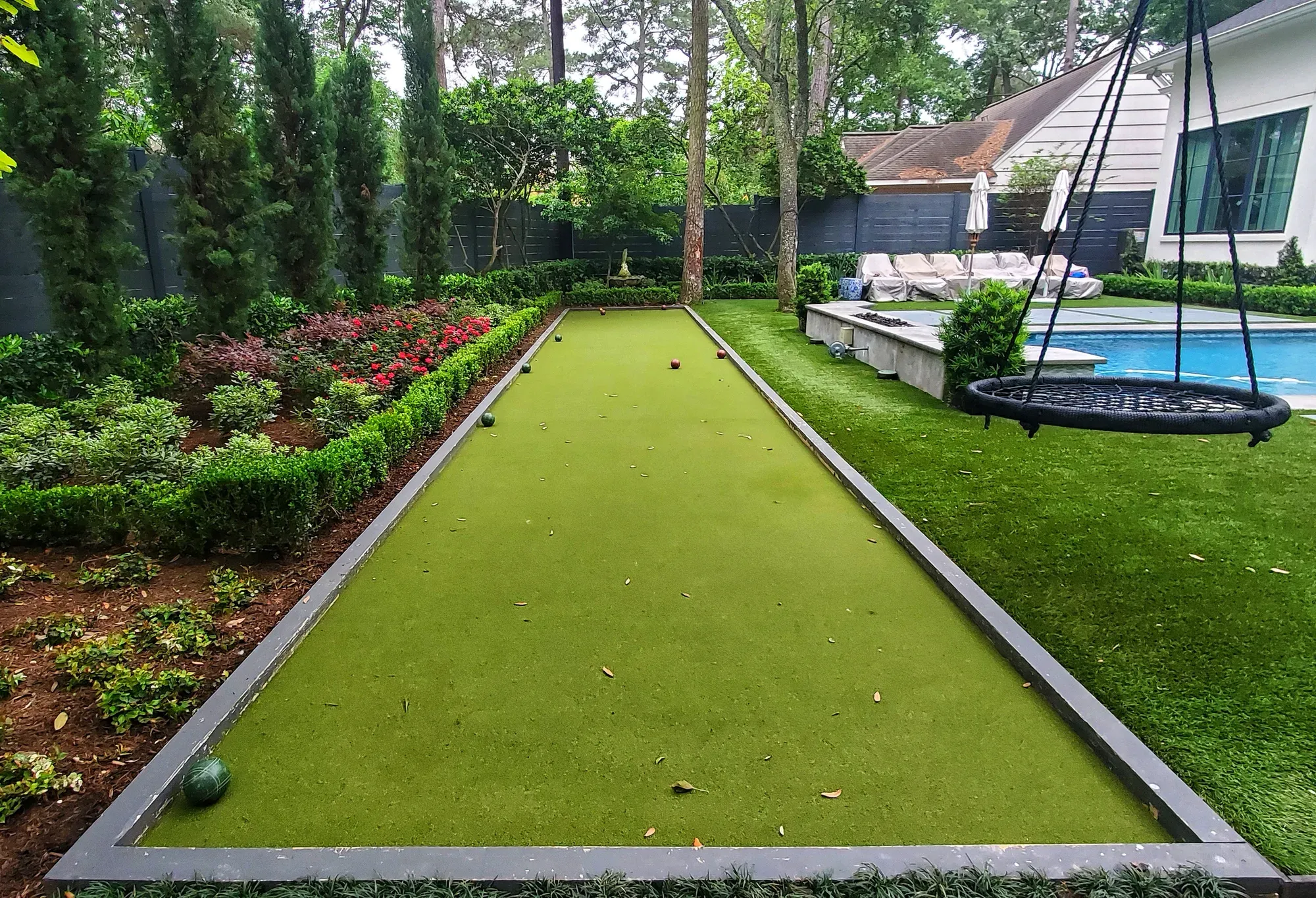
A turf bocce lane, family lawns and stone-and-turf garden paths across Memorial properties in Houston.
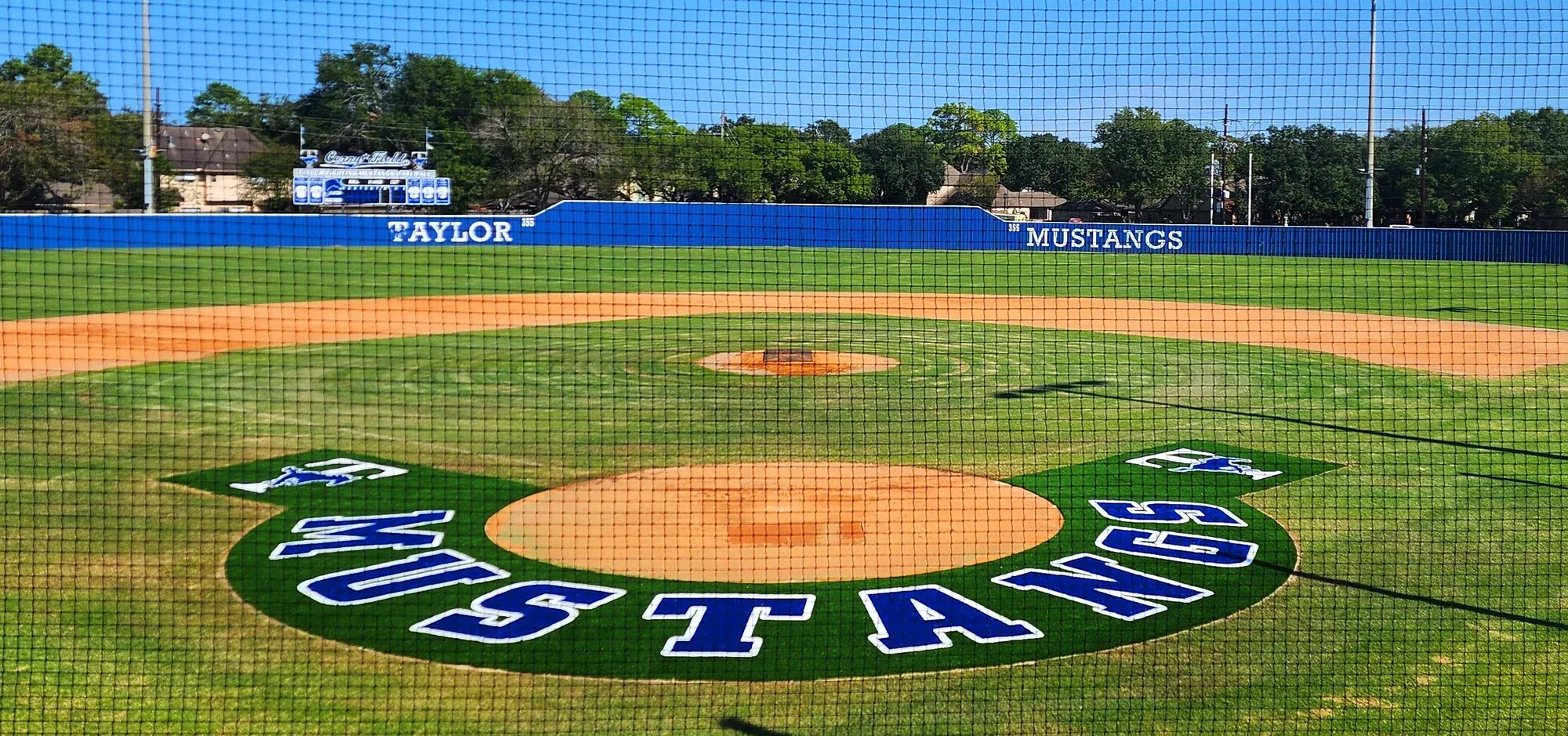
A synthetic turf halo and cut-in team logo around a baseball infield, built to take cleats, drag mats and a full season of play.
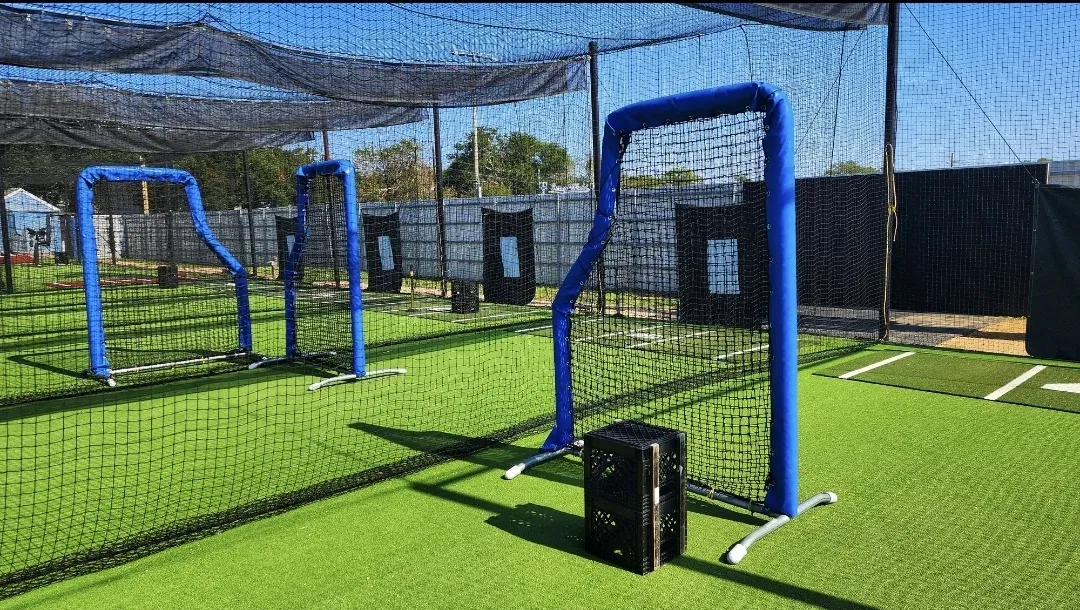
Artificial turf flooring through outdoor batting cages and pitching lanes, built to take spikes and machine wear.
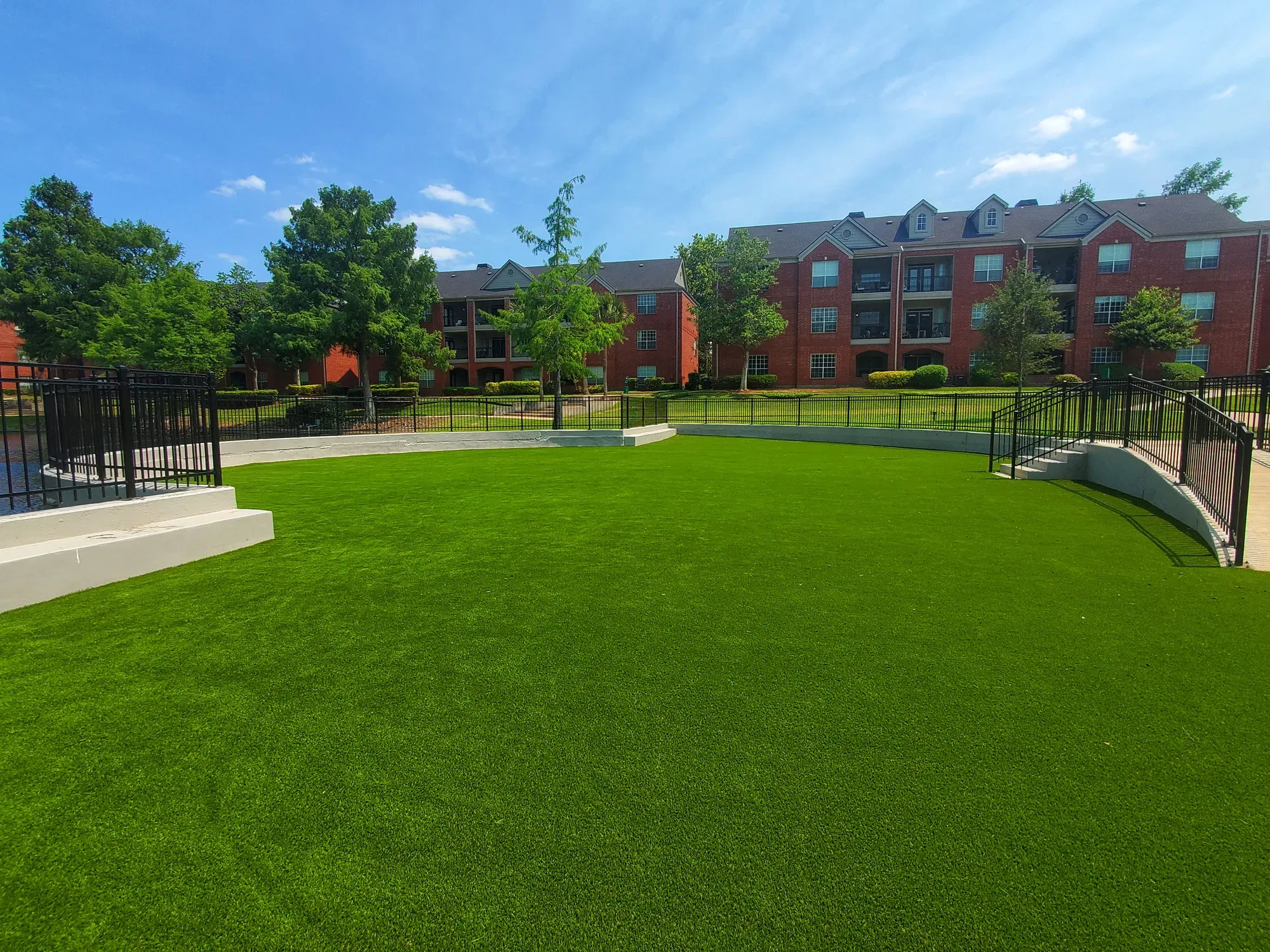
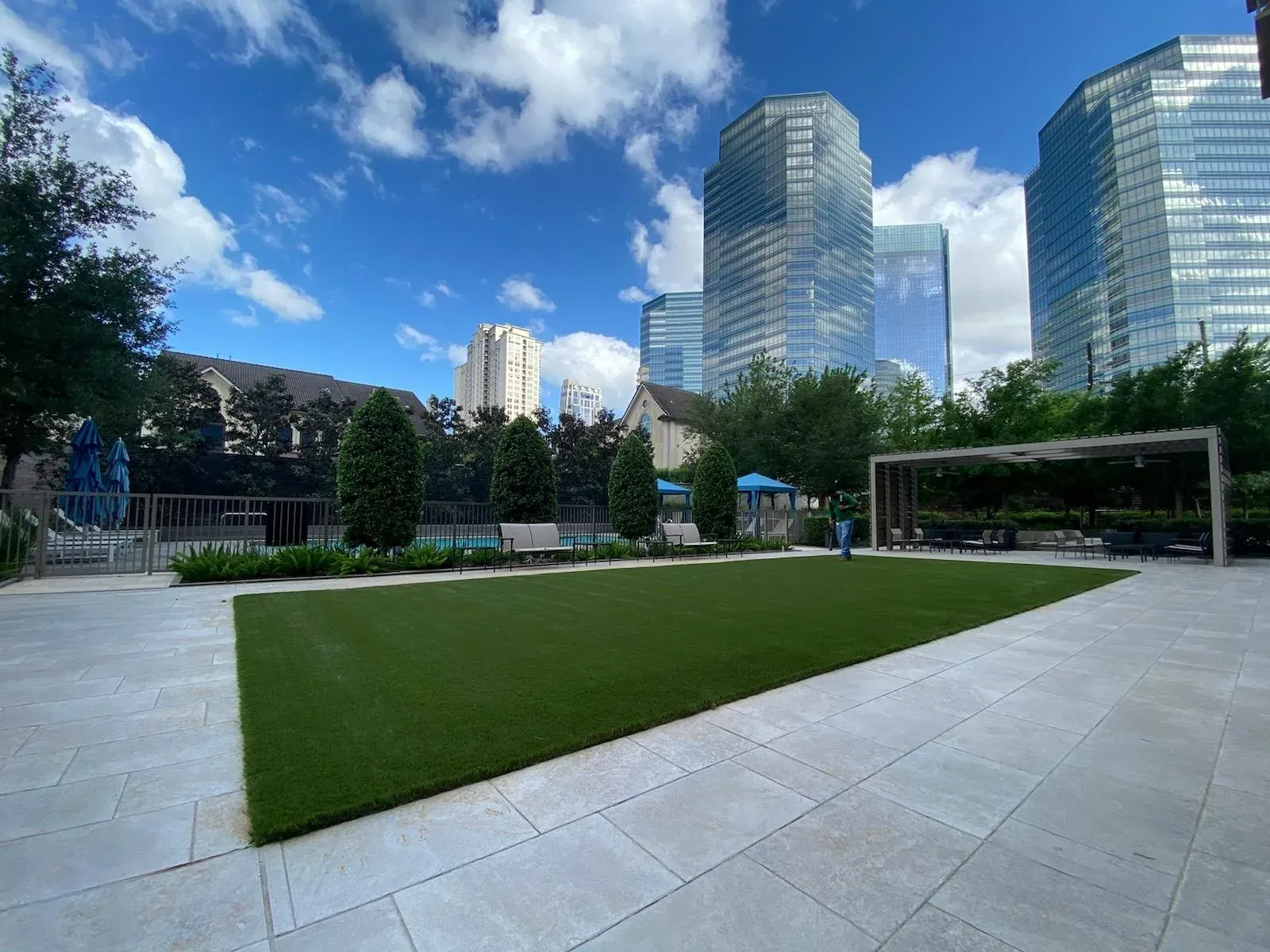
A large open artificial turf lawn in front of a multi-family building on Buffalo Speedway in Houston.
Our proven installation process ensures every project is completed efficiently with exceptional attention to detail.
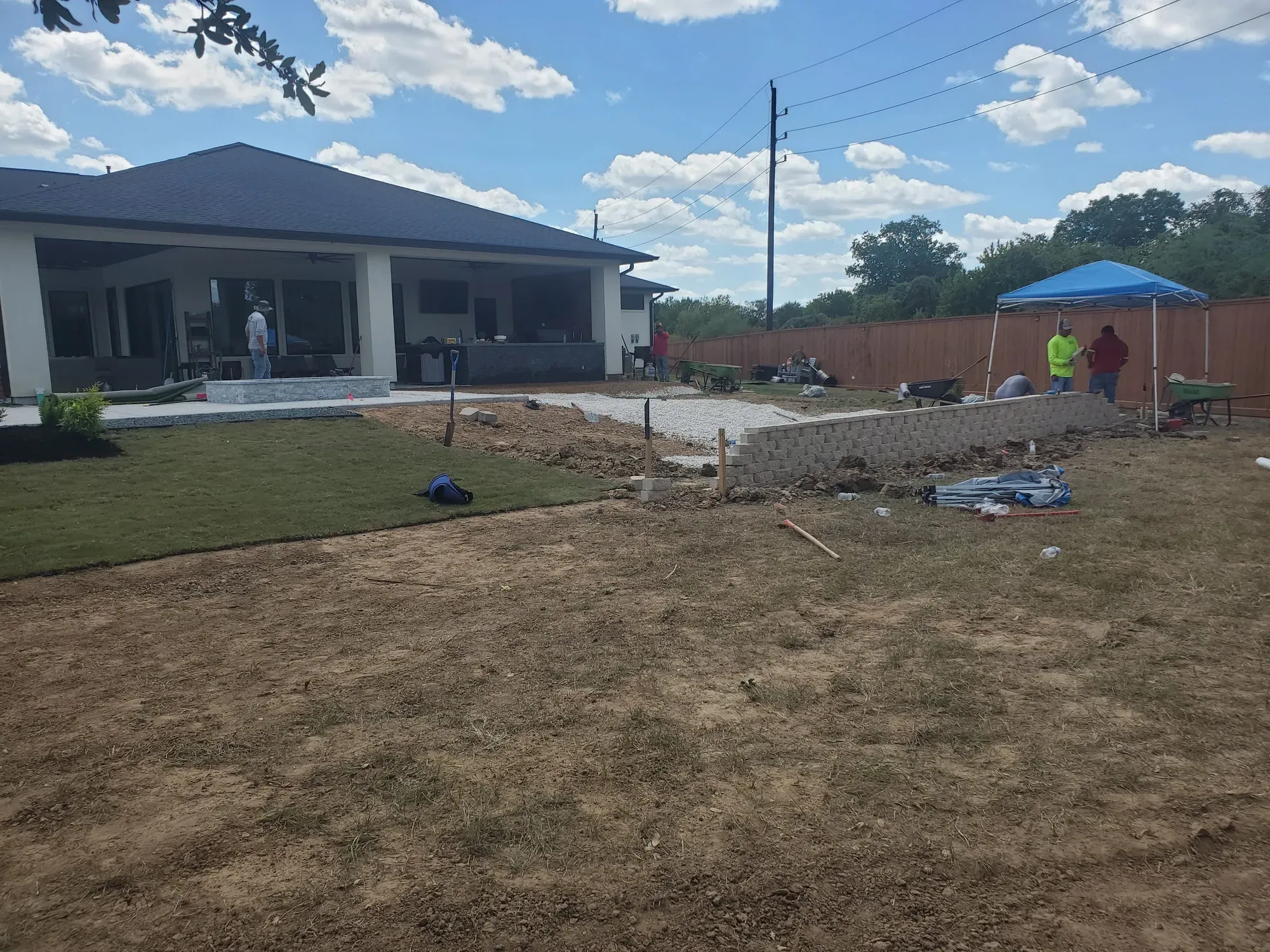
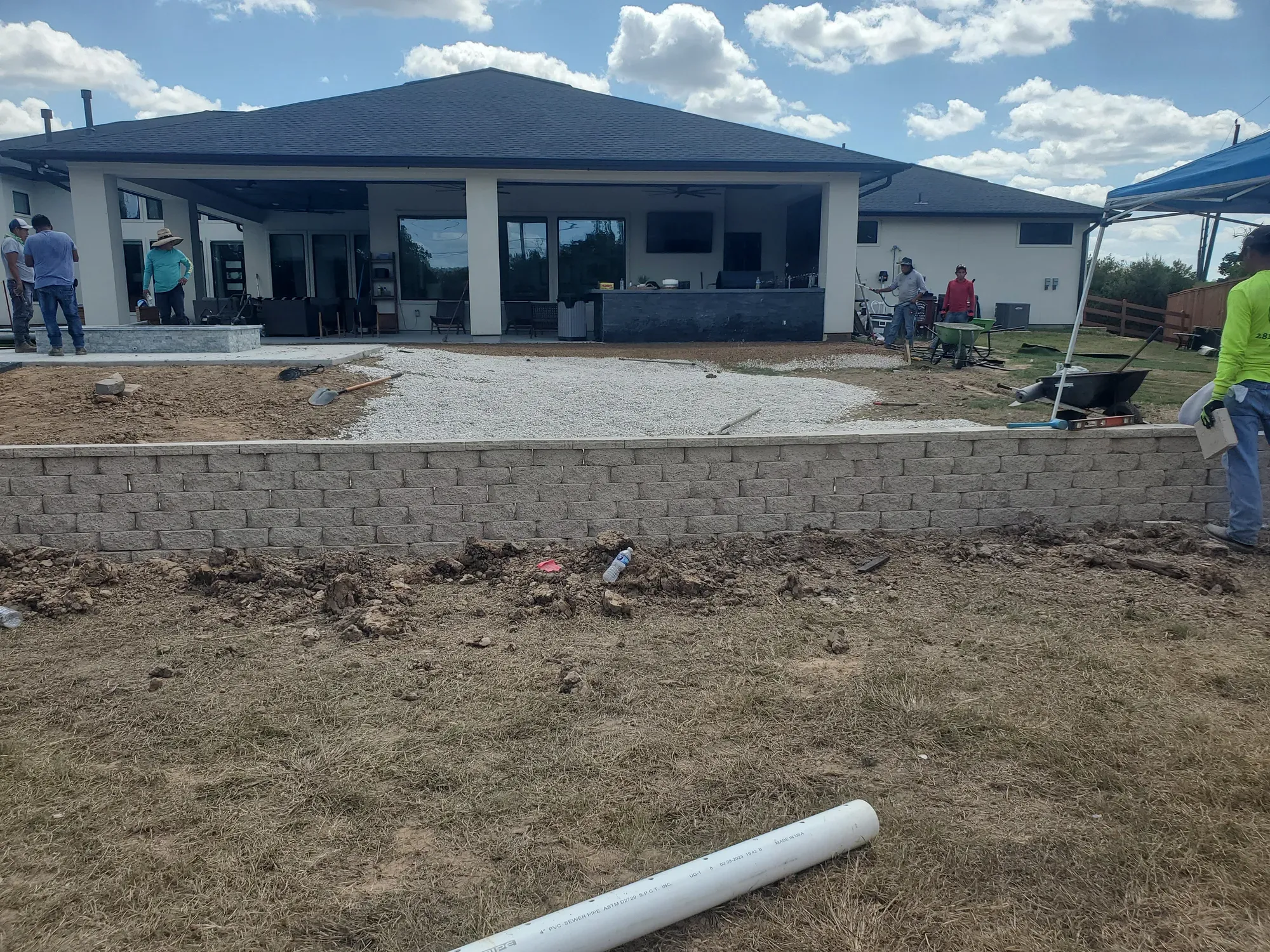
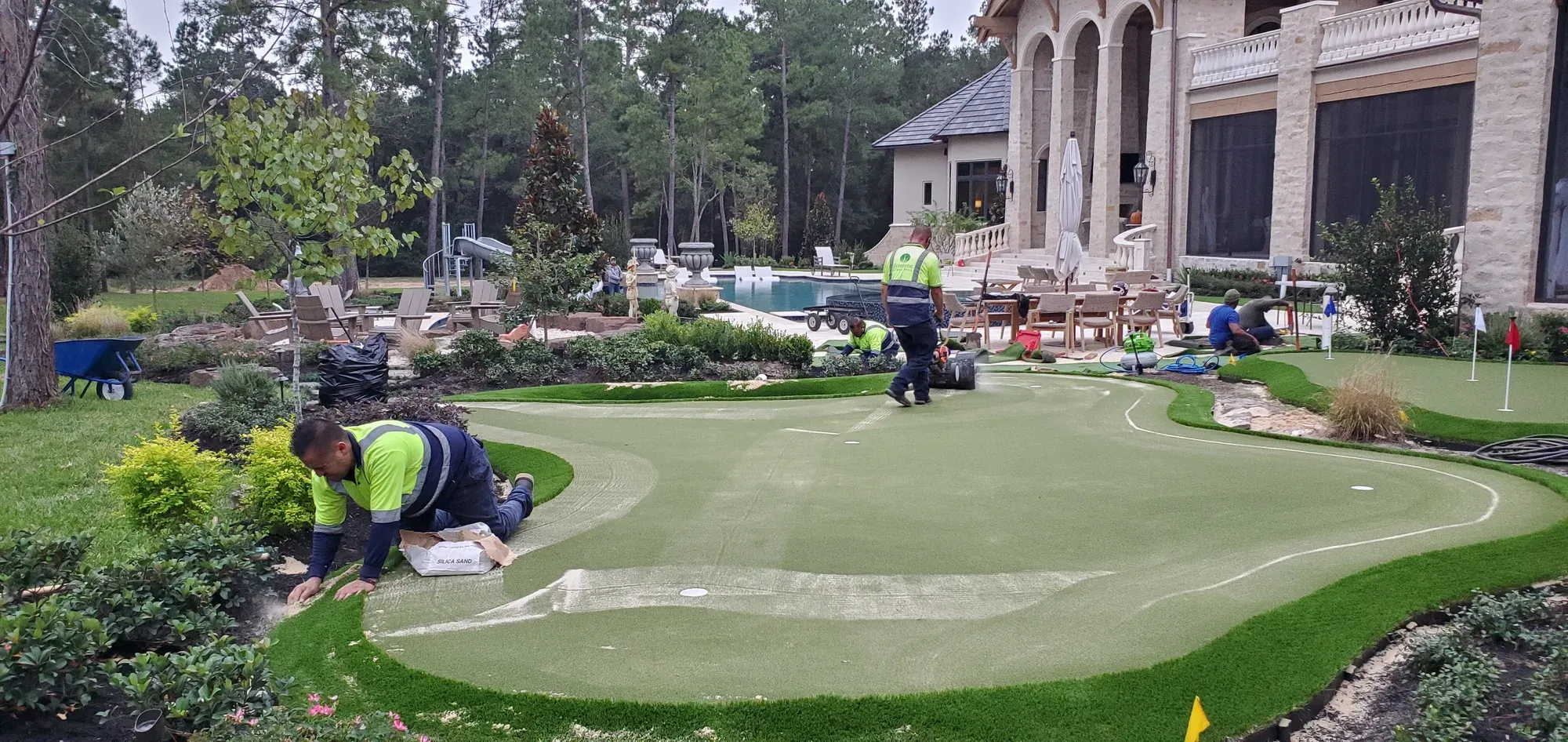
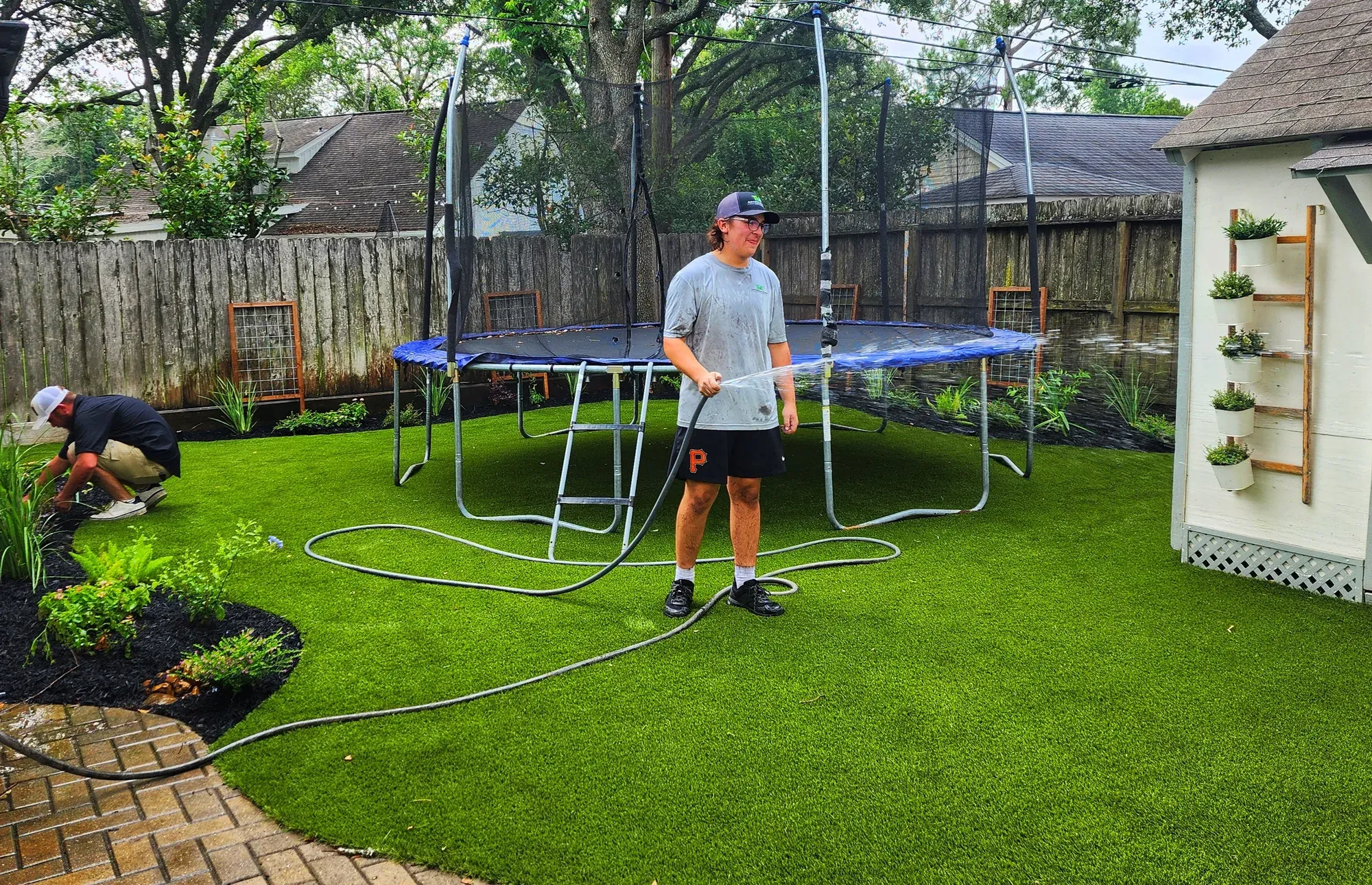
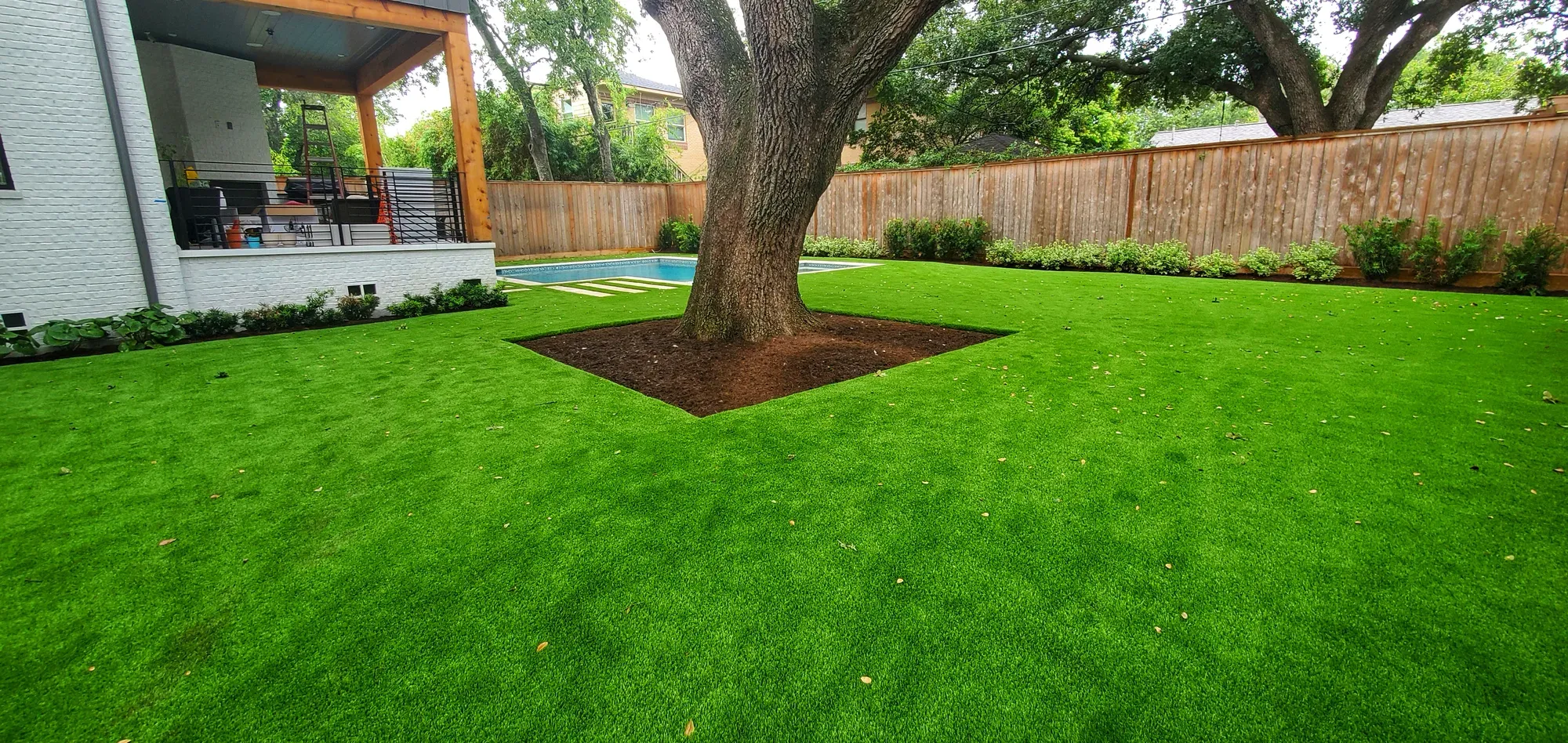
We strip the existing lawn and excavate down to a clean, stable sub-grade. Old roots, thatch, and loose topsoil all come out, because anything organic left behind will settle later and telegraph through the finished turf.
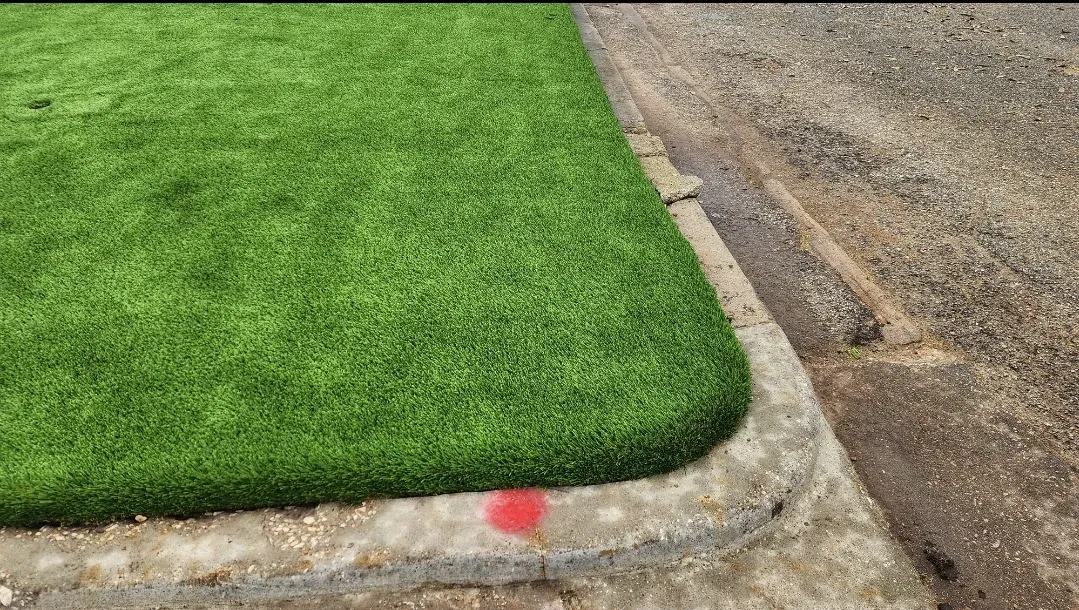
Flexible poly board is staked around the entire perimeter to lock the base in place. It holds your shape through curves and radii, keeps the aggregate from migrating into beds, and gives the turf a clean edge to be fastened to.
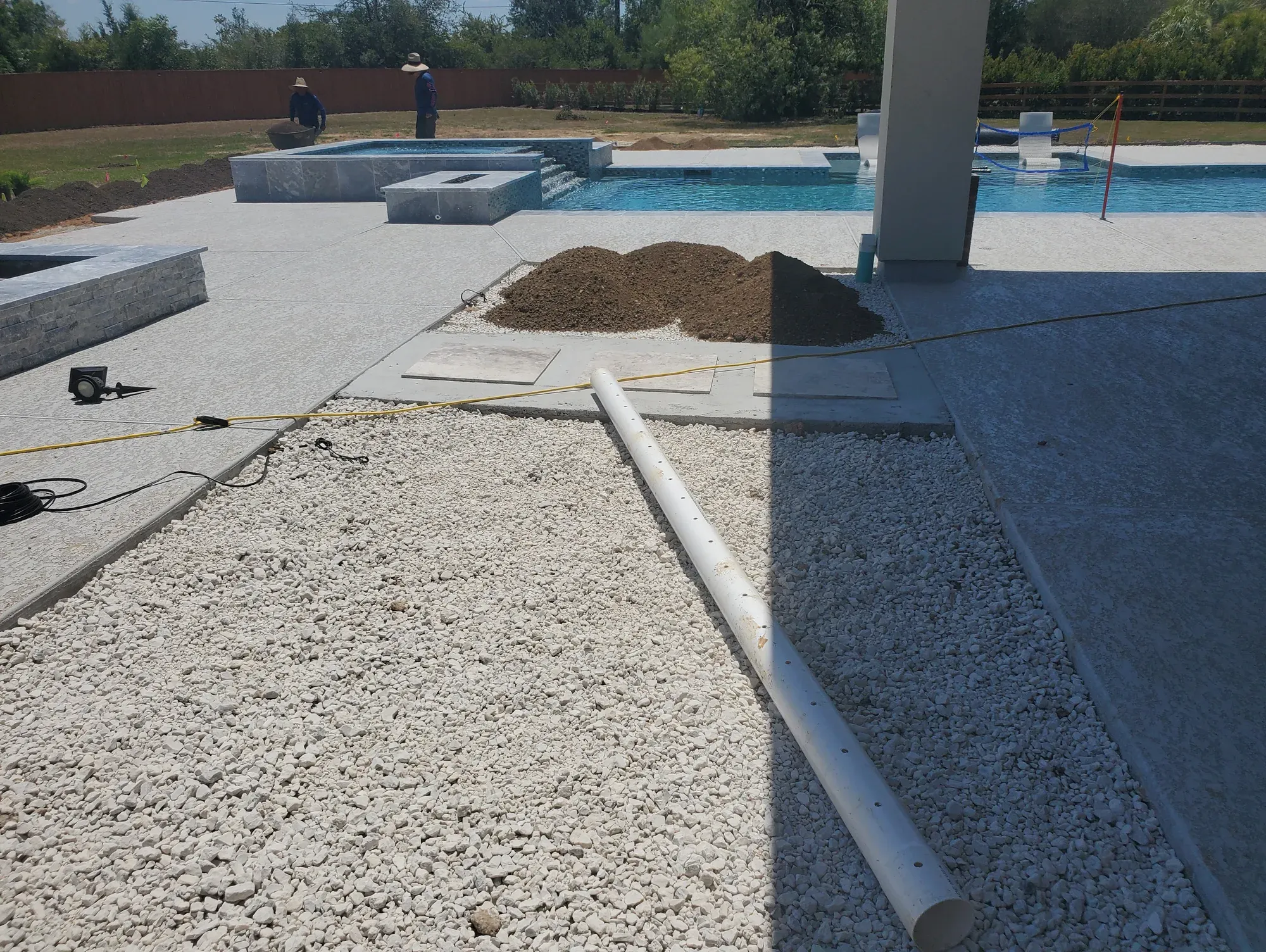
The first base layer goes down and is graded for drainage. This is the load-bearing course that carries foot traffic and keeps the surface from rutting, and it is where the finished contours of the yard are established.
A second, finer layer is screeded over the first to true the surface. Two layers instead of one is what separates a lawn that stays flat for years from one that dips and waves after the first wet season.
The base is plate-compacted to spec, then the turf is rolled out, allowed to relax, and cut to the yard. Seams are aligned to a single blade direction and joined so they disappear, and the turf is nailed off along every edge.
Silica infill is spread and worked in with a power broom, lifting every blade upright as it goes. Infill is what gives the lawn its ballast, its underfoot feel, and its ability to stand back up after traffic.
We do a final groom, clear the site, and walk the finished yard with you edge to edge. What you are left with is a lawn that looks cut every day of the year, with no mowing, watering, or seasonal brown-out.
TNT Turf is on a mission to transform Houston homes and businesses with premium synthetic turf, delivering lasting quality, honest service, and yards our customers are proud to look at everyday.
We started TNT Turf because Houston families deserve better than losing weekends to mowing and watering. Our mission is simple, give you a lawn you can enjoy every day, all year long, without the work that usually comes with it.
Every yard we install gets measured twice, leveled right, and finished like it’s our own backyard. If a job isn’t done the right way, it’s not a job we’re willing to put our name on, plain and simple.
By 2030, we want to help turn 10,000 Houston backyards into low-water, low-maintenance green spaces. It’s our way of making Houston greener and more sustainable, giving families more time to enjoy their yards instead of maintaining them.
From your first quote to the final walkthrough, we keep pricing fair, communication honest, and show up when we say we will. It’s our way of making sure every customer feels taken care of, not just sold to.
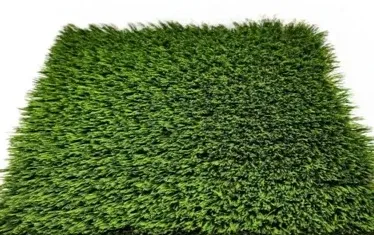
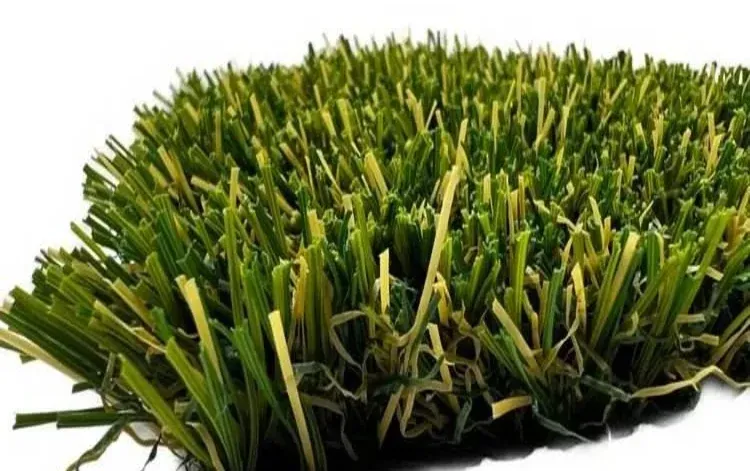
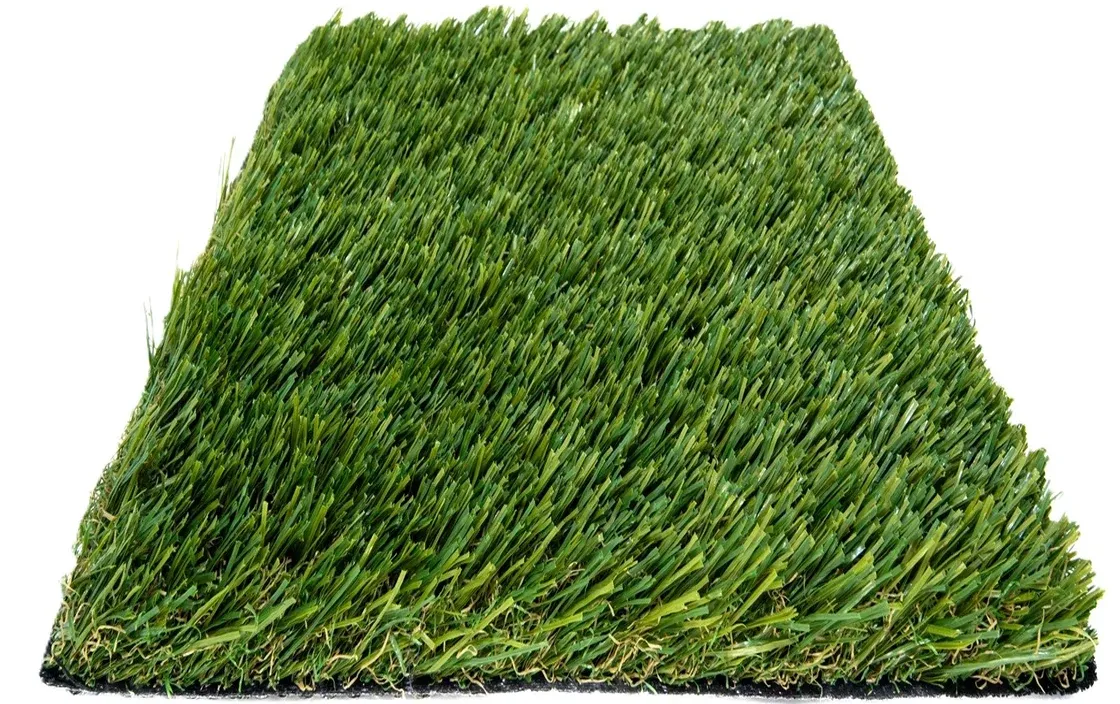
Explore a selection of our preferred artificial turf products, chosen for their appearance, durability, and performance across residential lawns, pet areas, playgrounds, and putting greens.
It comes down to the ground you are building on and the court system you buy, and we will not print a padel court price here and pretend it holds. The steel, the glass and the net are bought from a padel court system supplier and priced by them. Our part is the base, the drainage, the slab work and the sand-filled playing surface, and that number is driven by what your site is sitting on. We walk the site, look at the soil and the fall, and put a real figure in front of you before anything starts.
Two sites on the same street can price very differently, and on Houston clay most of that difference is underground. It sits in how much you excavate, how much base you build, and what your structural engineer specifies for a slab with a steel cage anchored to it. Nobody can price that from a map. We measure on site, tell you the real number for our scope before any work starts, and the site walk is free.
Book a Free Site WalkWhat drives your number
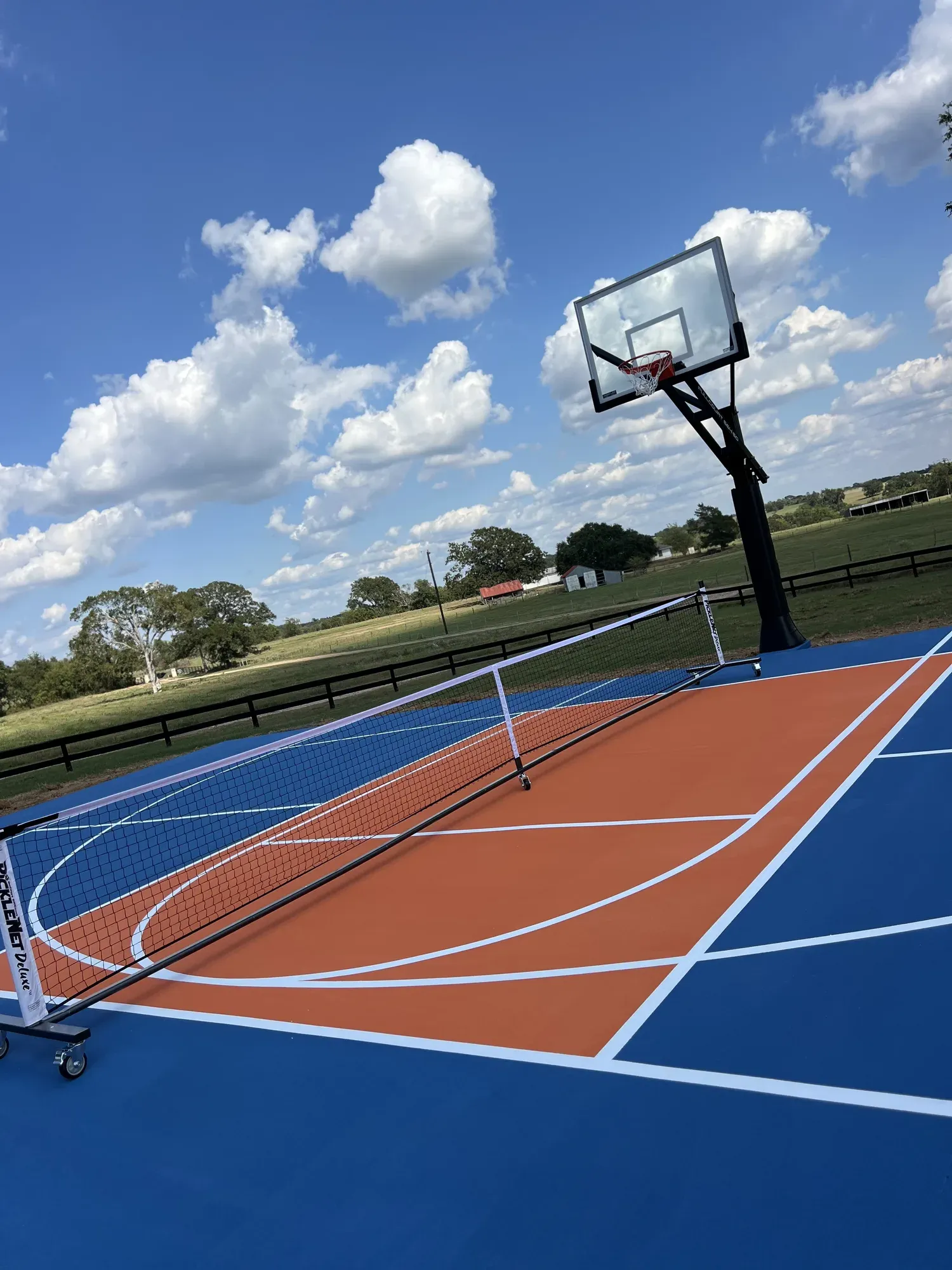
It depends on the space you have and the hours you need to fill. Padel puts four players on a small enclosed court, it is quick to learn, and it holds a group for a full booking, which is what operators like about the revenue per court hour. Pickleball costs less to build and fills courts fast. Tennis needs the most space and the deepest player base. Plenty of Houston sites end up with more than one of the three, and the honest answer comes out of your member numbers and your site plan rather than out of a trend.
If you are weighing several surfaces at once, our sports fields and courts page covers pickleball, tennis, bocce, soccer and multi-sport builds in one place.
The sand is what the ball actually feels. In a sand-filled padel surface the silica sits between short, dense fibers and holds them upright, so the ball skids off the pile at the same angle everywhere instead of grabbing in one spot and sitting up in another. Sand grade and depth change how much the ball skids and how far a player can slide into a shot. Pile height changes it again. Get the spec wrong and the court plays heavy, or it plays slick, and your members feel it long before they can name it.
A short pile carrying the right volume of sand lets the ball skid on instead of digging in, which is what keeps a rally moving. Let the sand run low and the fibers lie over, the ball grabs, and the court plays heavy.
Padel players slide into shots. The sand sitting at the top of the pile is what they slide on, so grade and depth decide whether footing feels sure or greasy. We agree that spec with you before anything is ordered.
The walls are in play, so the surface has to work with the rebound rather than fight it. A flat, true court keeps the ball coming off the glass the way players expect, and on a court this small every high spot shows up in the bounce.
Most residential projects are complete in 2–4 days. Larger commercial installs typically take 1–2 weeks.
Every install carries the manufacturer's product warranty against fading and wear, plus our own workmanship coverage on seams, edging, and base. Full terms come with your proposal.
Yes. We install lead-free, non-toxic turf over a permeable base that drains quickly, and we can add an antimicrobial infill for pet areas to keep odours down.
A rinse now and then and an occasional cross-brush of the high-traffic paths. No mowing, no watering, no fertiliser, and no seasonal brown-out.
Turf runs warmer than a natural lawn in direct sun. We specify cooler yarn and lighter infill where a yard gets full afternoon exposure, and a quick rinse brings the surface temperature straight back down.
Pricing depends on square footage, the turf you choose, and how much prep the site needs. We measure on site and give you a fixed written quote before any work starts.