
Turf Mission
We started TNT Turf because Houston families deserve better than losing weekends to mowing and watering. Our mission is simple, give you a lawn you can enjoy every day, all year long, without the work that usually comes with it.
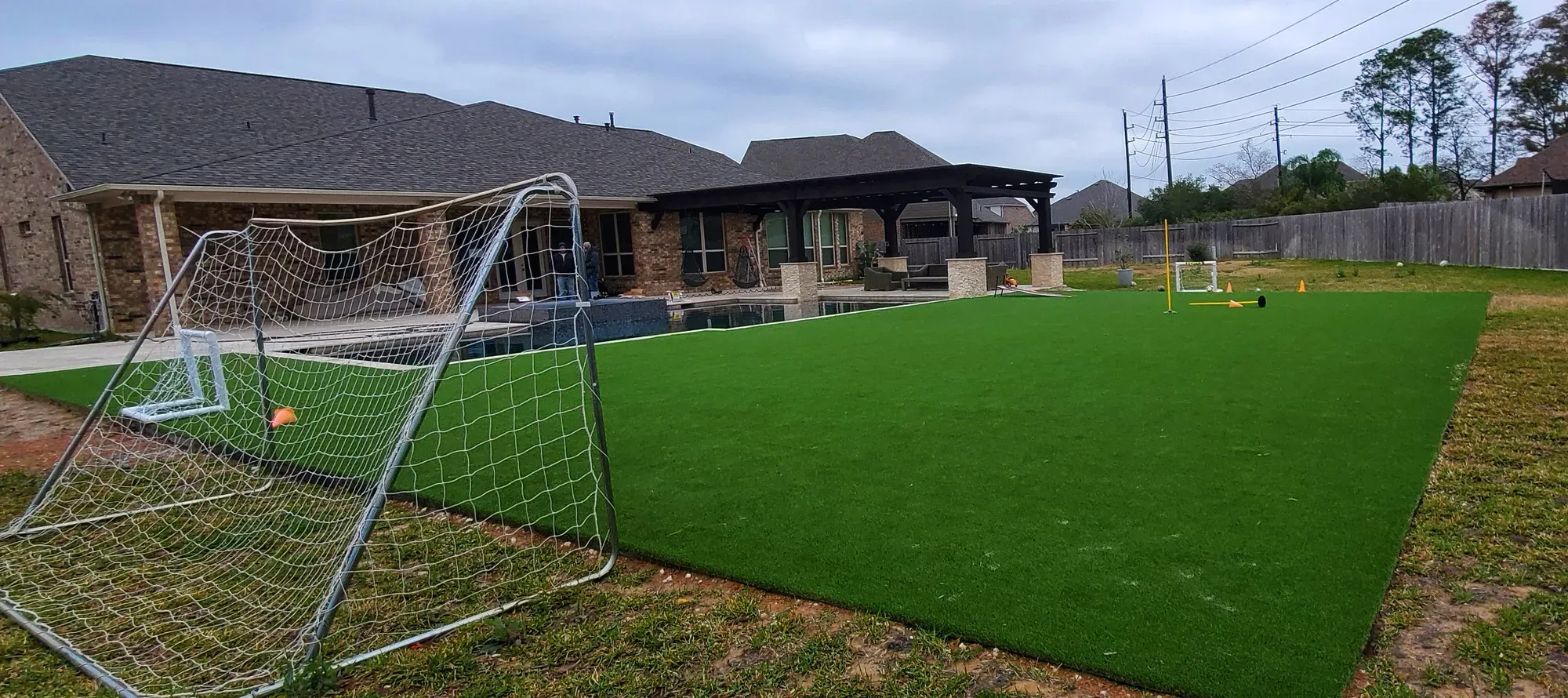
An artificial turf soccer field lets you train the morning after a Houston storm instead of moving the session. We build full-size pitches, small-sided training grids and academy fields on an engineered base that drains, with inlaid lines and a surface specified for the way soccer is actually played.
Soccer in Houston loses its nights to water. Storms come off the Gulf in heavy bursts, hurricane season runs June 1 to November 30 straight through the fall club calendar, and the ground under most of this region is shrink-swell coastal clay that holds rain at the surface instead of taking it down. A grass pitch closes, then stays closed while it dries, and the goal mouths that got played wet are bare by midseason. An artificial turf soccer field takes that off the table. It reopens fast, carries back-to-back sessions, and looks the same in the goal mouth in November as it did in August.
We build the ground first and the pitch second, and we size the pitch to the site rather than the other way around. That means a site walk, a real look at where water leaves your property, excavation to a firm subgrade, separation fabric, a compacted crushed-limestone base, laser grading and drainage tied to an outfall. Then the carpet, with a shock pad where the spec calls for one, infill chosen for a sport played on the ground, and inlaid line yarn so nobody is repainting markings before every season. We work from 2302 Campbell Rd in Houston and cover Harris, Fort Bend, Montgomery, Brazoria, Galveston, Waller and Liberty counties. Fort Bend and Montgomery are where most of the new club and campus fields are going in right now, so we are out that way constantly.
Under the IFAB Laws of the Game a full-size pitch is 90 to 120 meters long and 45 to 90 meters wide, which is roughly 295 to 394 feet by 148 to 295 feet. Pitches used for international matches sit in a tighter band, 100 to 110 meters by 64 to 75 meters. That is the playing area only. You also need run-off space beyond every touchline and goal line for players, benches, officials and anything you fence, so the surface we build is always bigger than the pitch we mark. Tell us the space you have and we will lay the largest legal pitch that fits it with safe margins, rather than squeezing a pitch in and leaving nowhere to run out.
Plan on about two acres for a comfortable full-size field. The playing area alone works out at roughly one acre at the small end of the IFAB range and about 2.7 acres at the very top end, with a common competition pitch of 110 by 68 meters landing near 1.8 acres. Add run-off, benches, a walkway and any fencing or ball-stop netting and a real-world build usually needs somewhere around 2 to 2.5 acres. Slope, existing drainage and where your outfall sits can push that up, which is why we walk the site before anyone commits to a site plan.
Small-sided sizes come from your league, not from us. US Youth Soccer, US Club Soccer and individual state associations publish age-group field grids for 4v4, 7v7 and 9v9 play, and those tables get revised, so we build to the current one your program actually plays under. Send us the table and we will fit the grids to your footprint. One honest note on futsal: official futsal is played on a flat, hard, smooth surface, so a turf small-sided court is a training and recreation surface rather than a sanctioned futsal court. It is a great fit for academy sessions and drop-in play, and we will say so plainly rather than sell it as something it is not.
Not always, but it is worth the conversation on a soccer field more than anywhere else. A shock pad is a layer that sits between the base and the carpet and helps keep impact performance steady as infill shifts around over the life of the field. Infill moves most where play concentrates, which on a pitch means the goal mouths and the center circle, so those are the spots where a pad earns its money. Some owners and governing bodies require one and set the spec; others do not. A pad usually outlives the carpet, so a replacement later is often a re-carpet rather than a full rebuild. If you want impact performance on record at handover, we can arrange third-party testing.
These are the soccer builds we quote most often. If one of them is on your site plan, a turf pitch gives you a surface that plays the same in July as it does the morning after a storm.
Serving homeowners, businesses, and property managers across Greater Houston with artificial turf built for our climate. From backyard putting greens and pet runs to courtyards, playgrounds, and commercial grounds, every install is measured on site, graded for drainage, finished by our own crew, and backed by a warranty we put in writing.
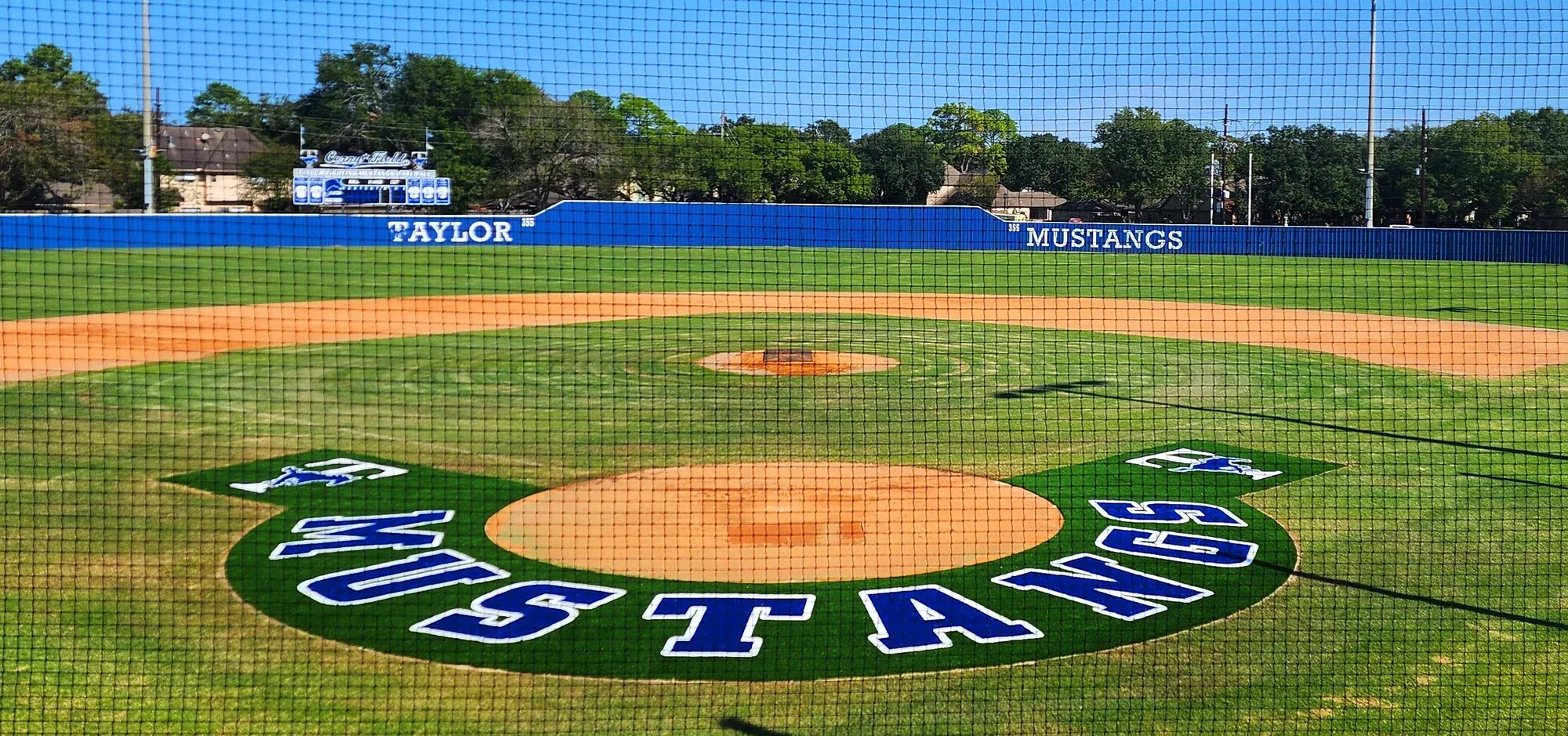
A synthetic turf halo and cut-in team logo around a baseball infield, built to take cleats, drag mats and a full season of play.
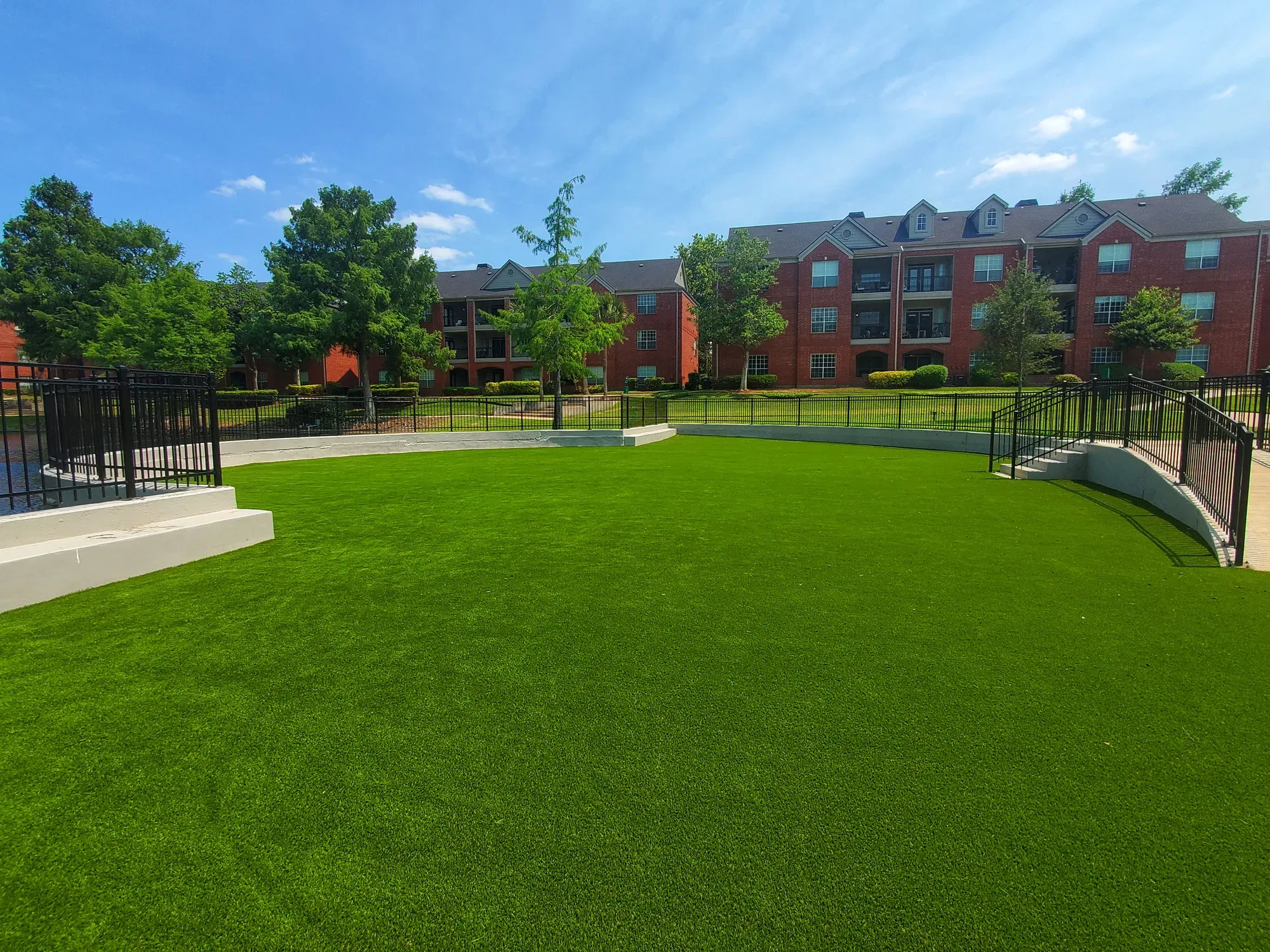
A large open artificial turf lawn in front of a multi-family building on Buffalo Speedway in Houston.
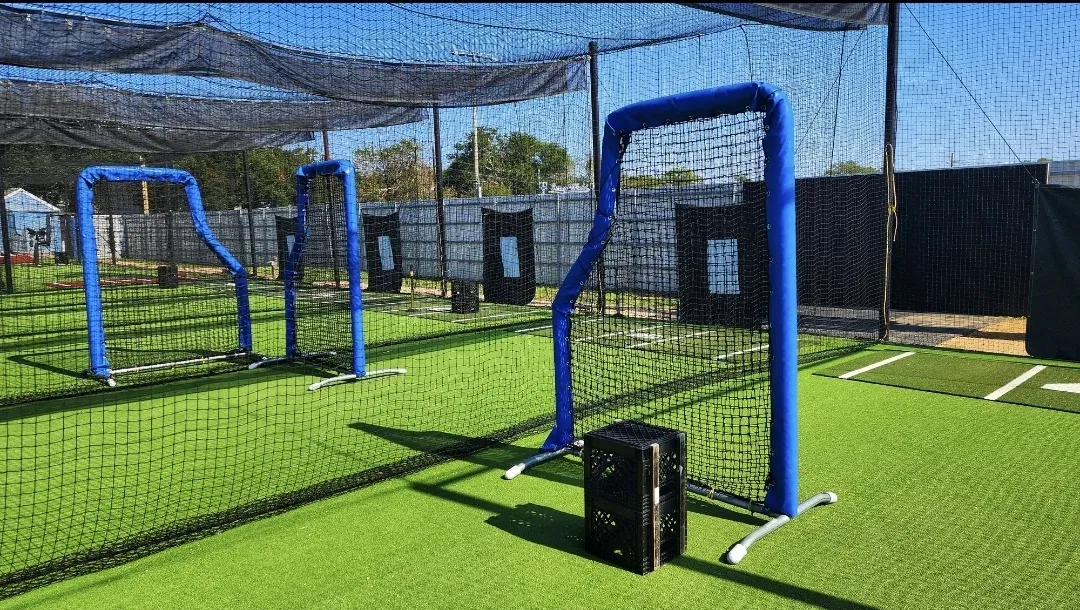
Artificial turf flooring through outdoor batting cages and pitching lanes, built to take spikes and machine wear.
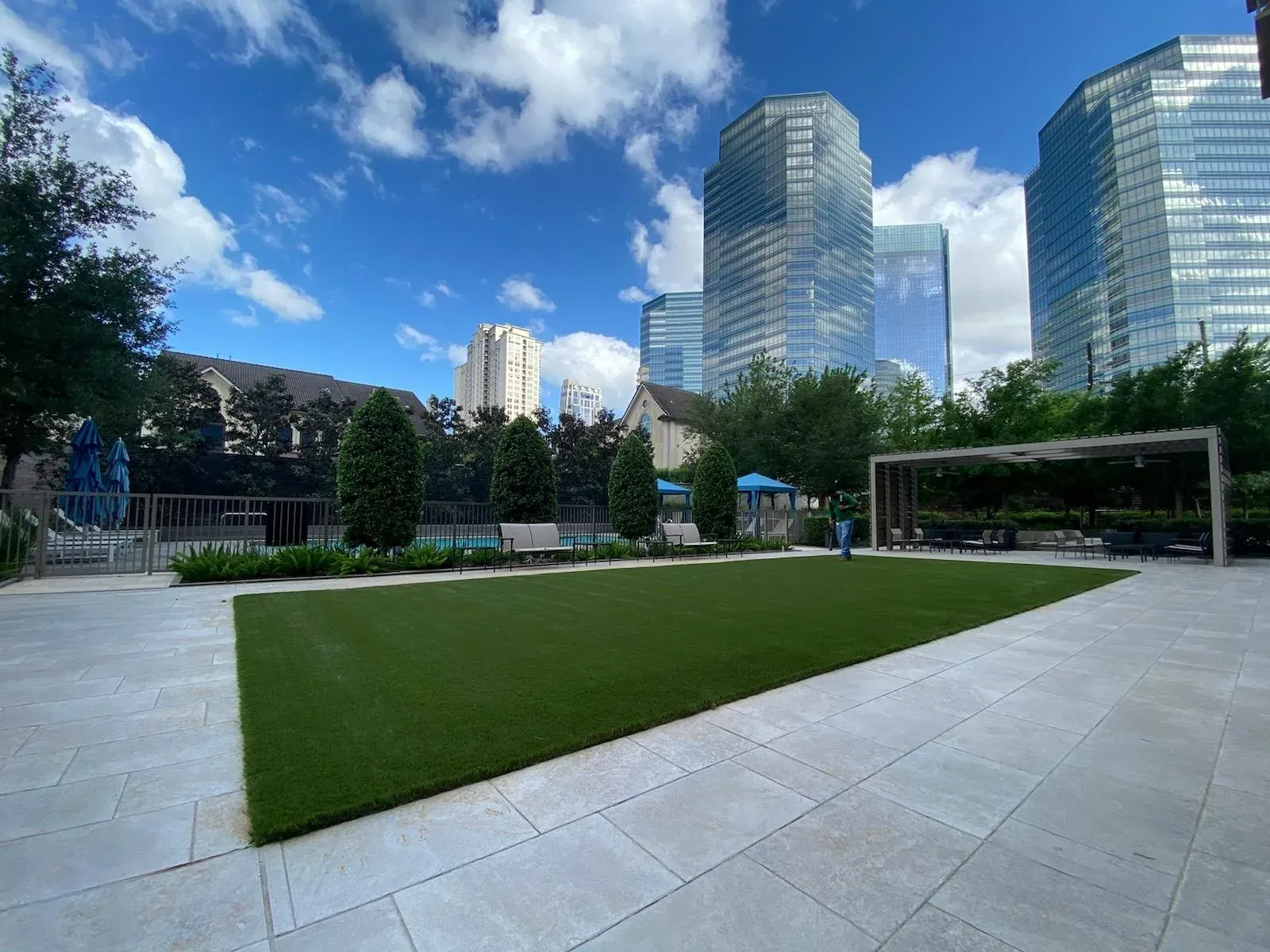
Turf terraces, courtyards, a lap pool surround and glue-down balcony grass across Galleria-area properties in Houston.
Our proven installation process ensures every project is completed efficiently with exceptional attention to detail.
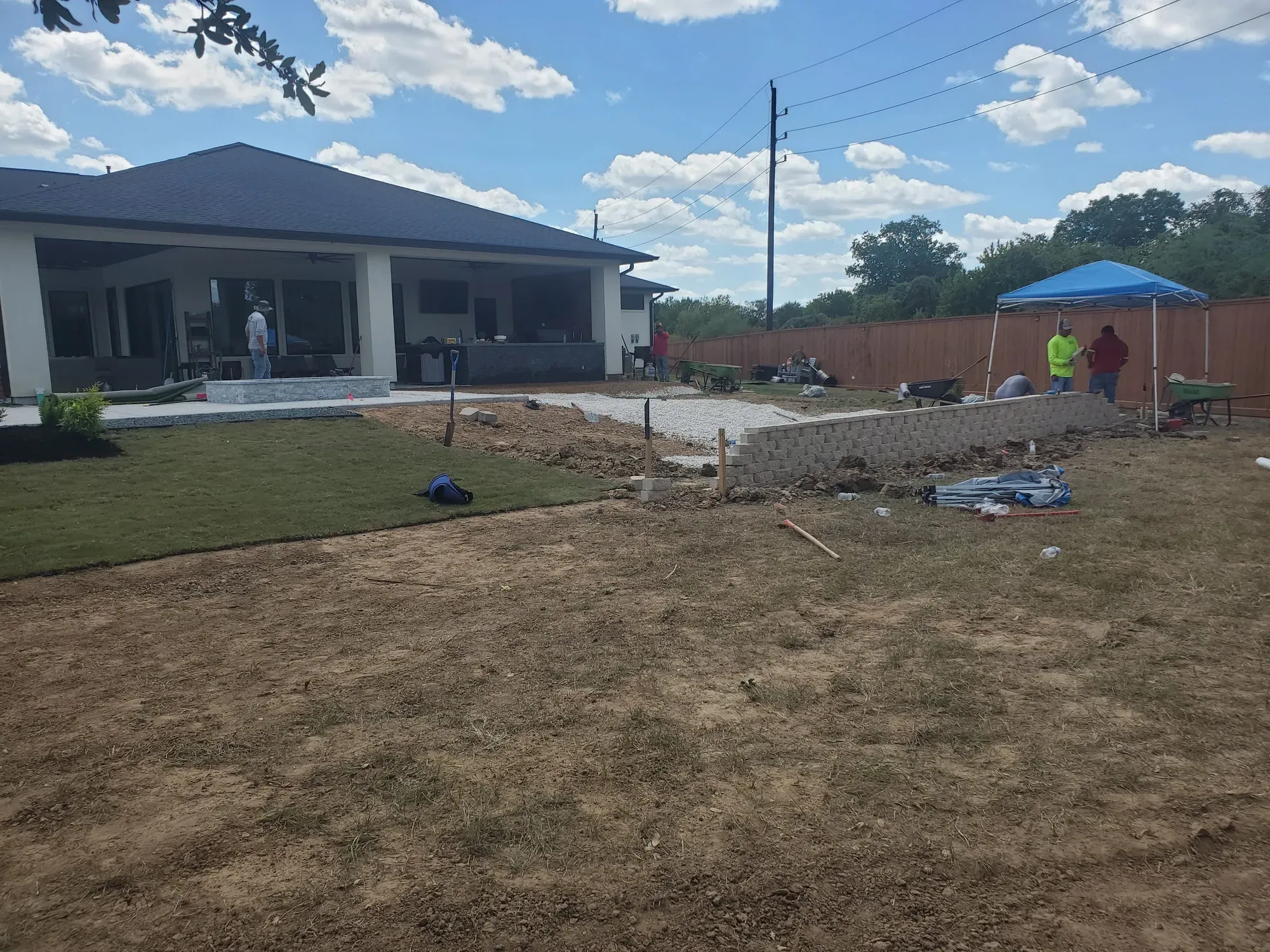
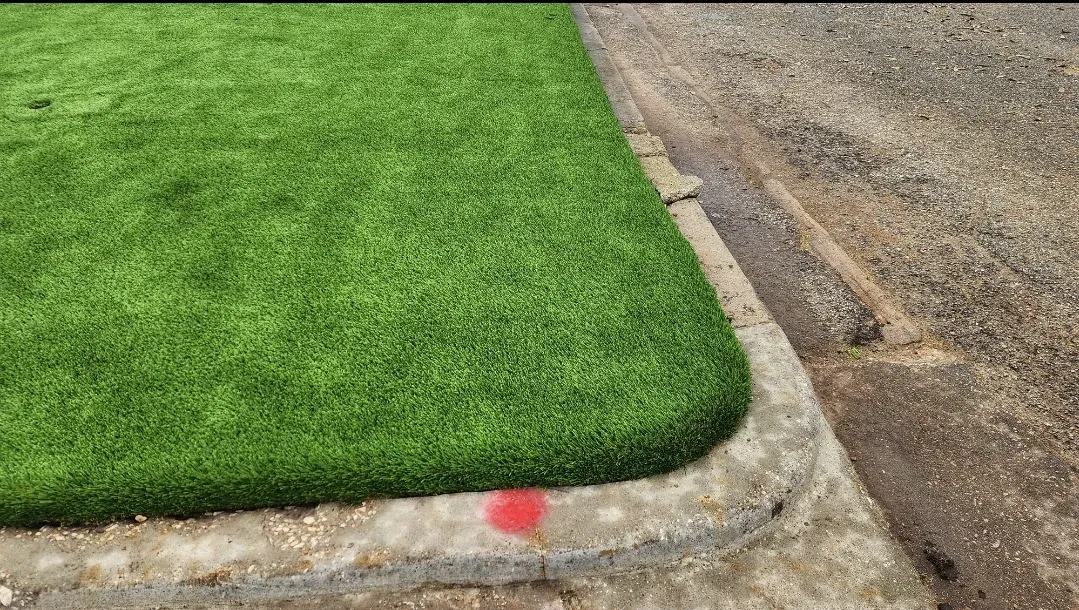
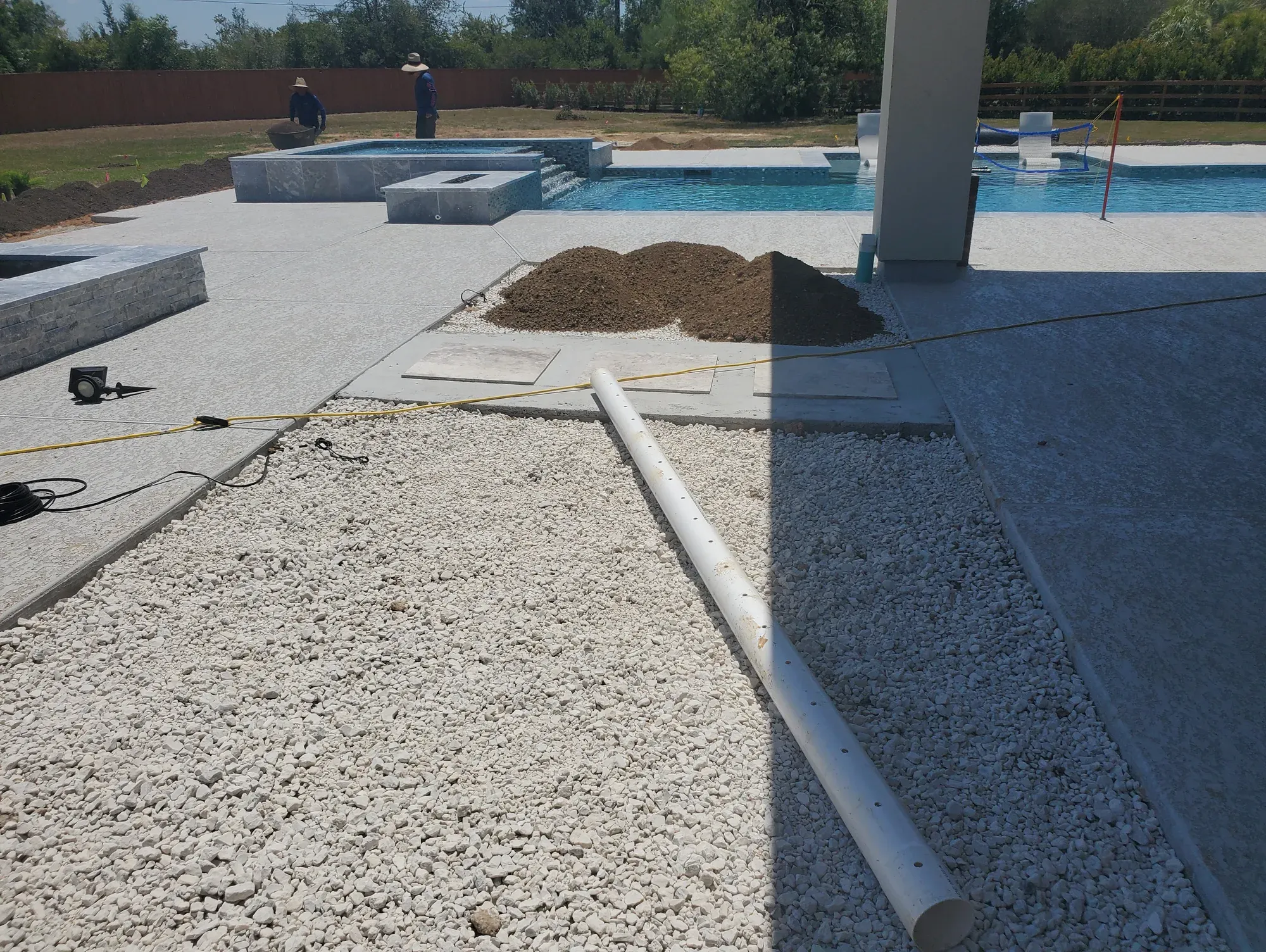
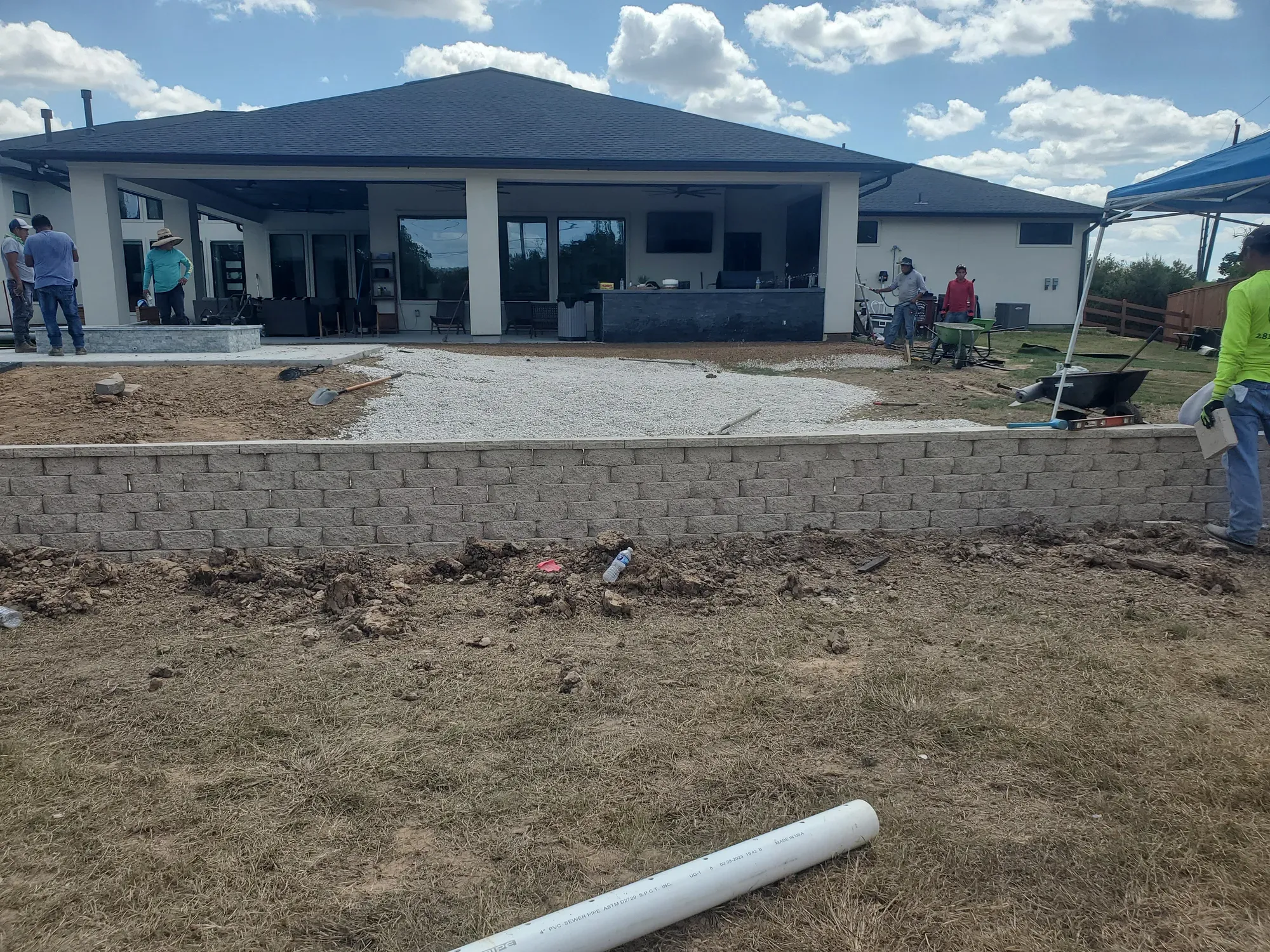
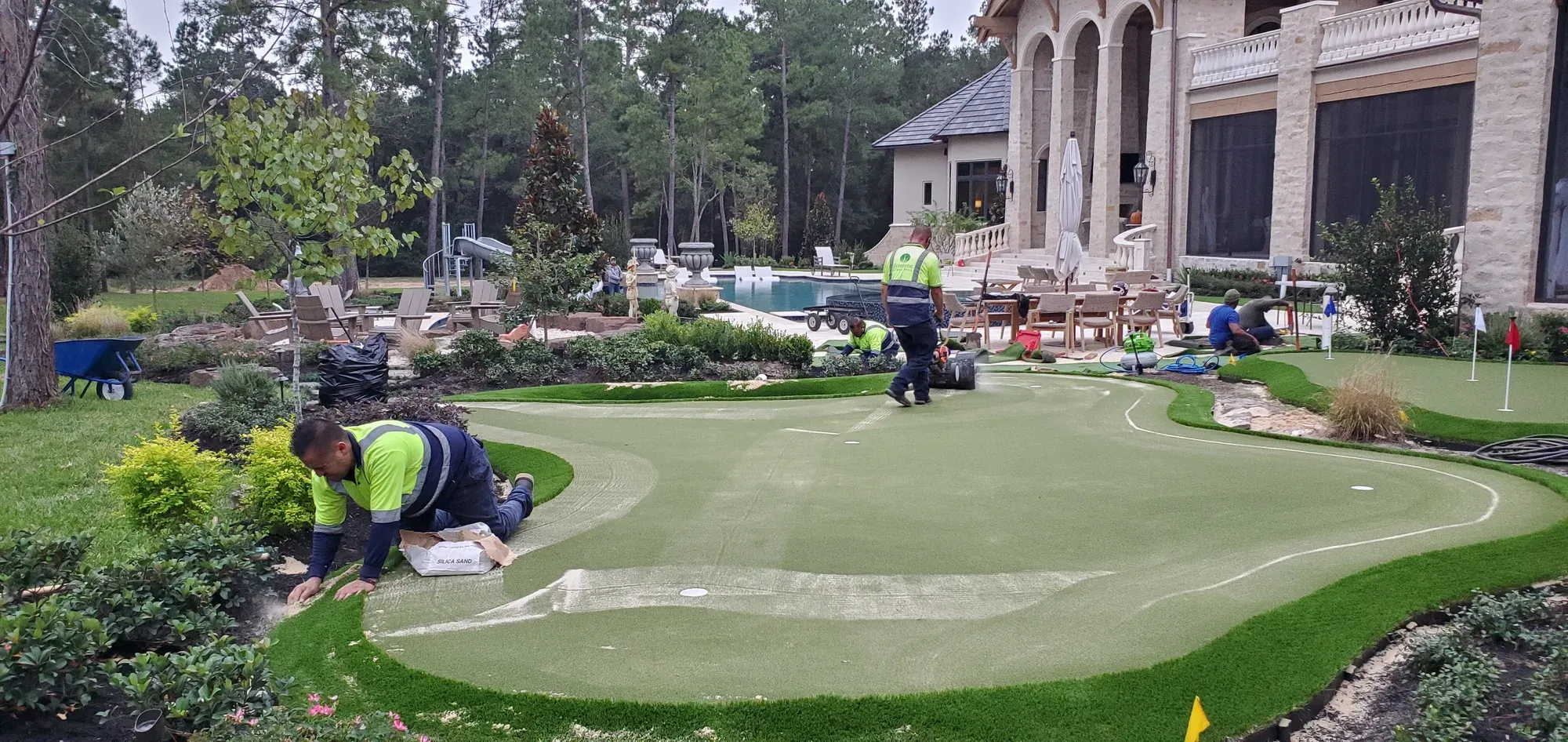
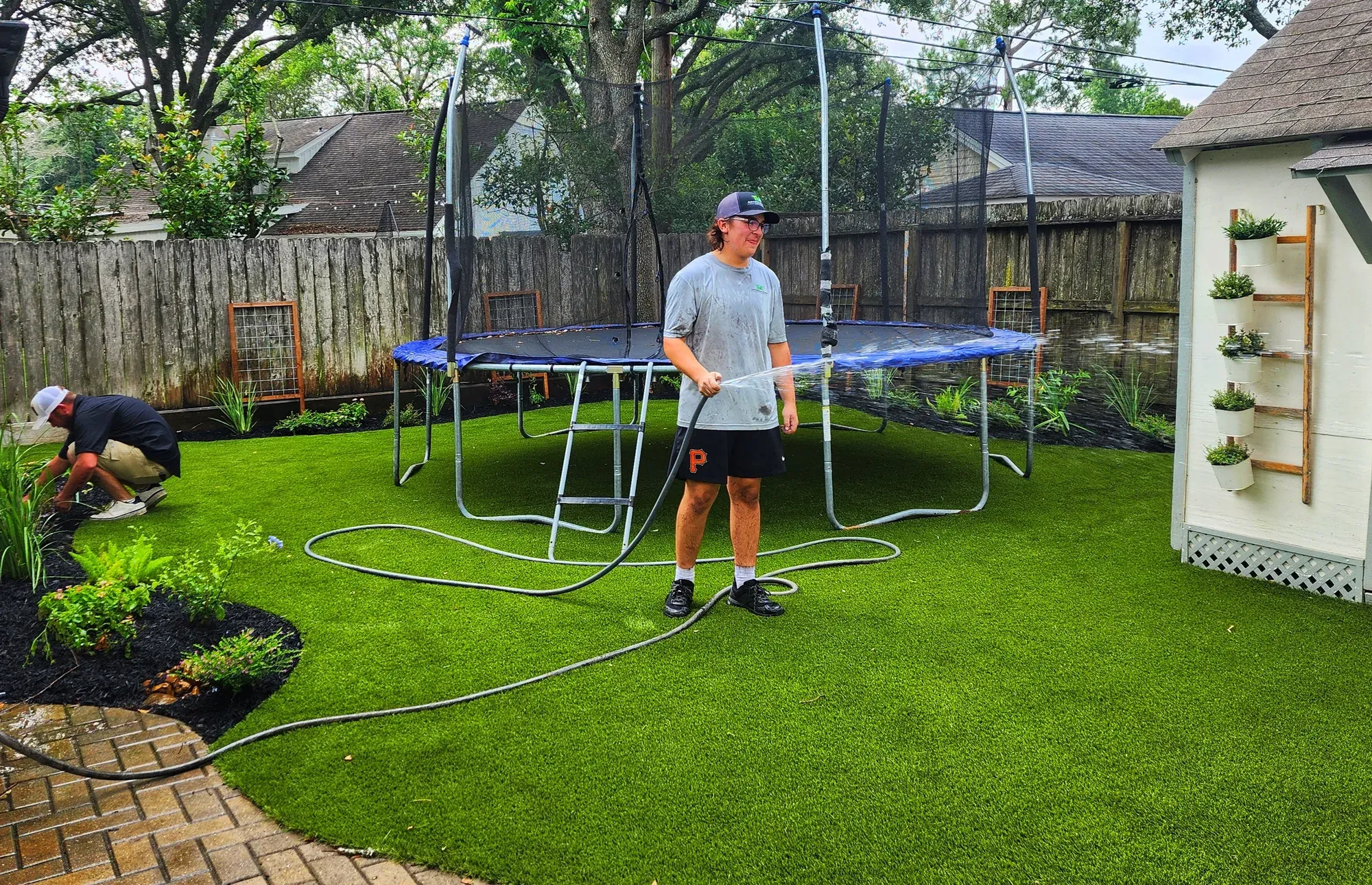
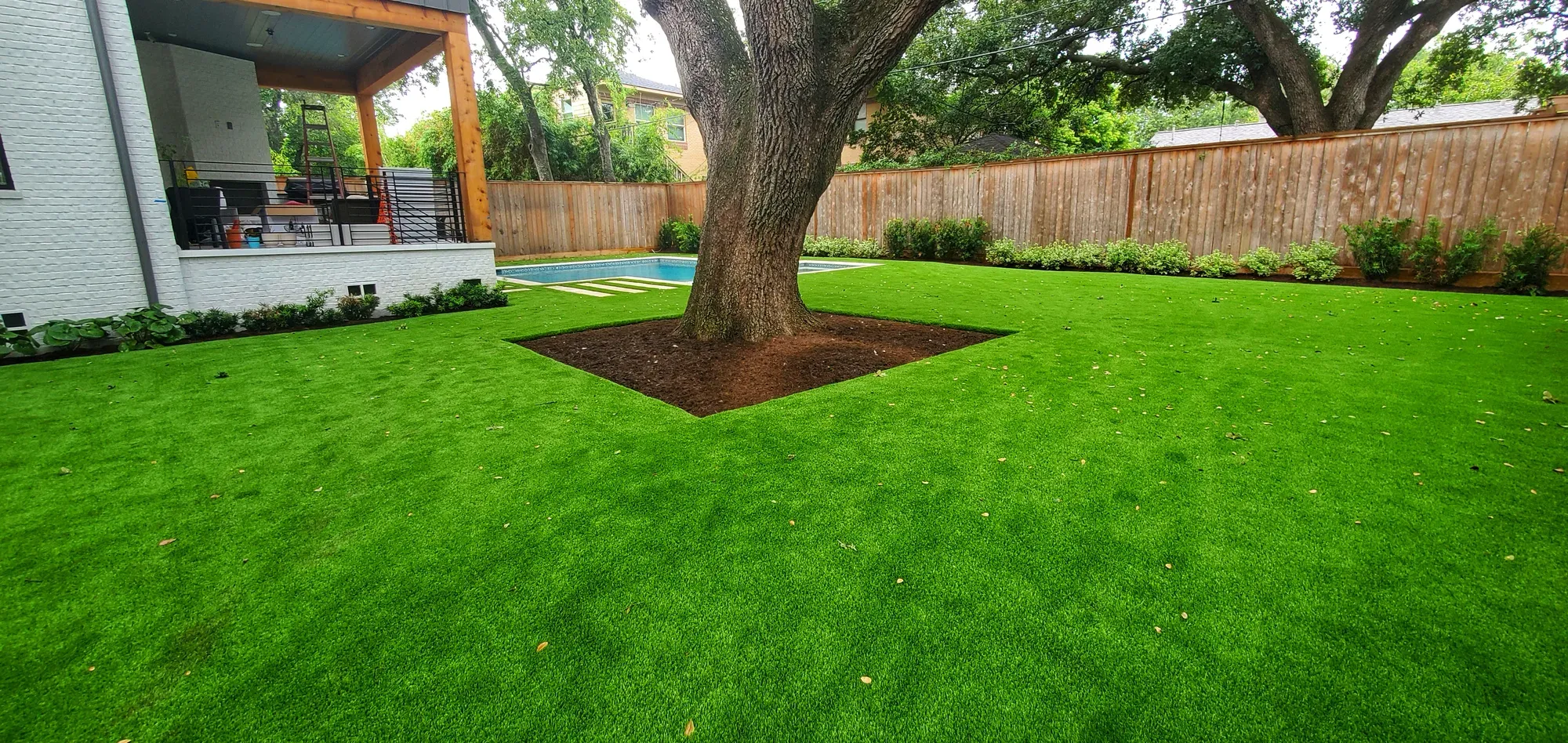
We strip the existing lawn and excavate down to a clean, stable sub-grade. Old roots, thatch, and loose topsoil all come out, because anything organic left behind will settle later and telegraph through the finished turf.
Flexible poly board is staked around the entire perimeter to lock the base in place. It holds your shape through curves and radii, keeps the aggregate from migrating into beds, and gives the turf a clean edge to be fastened to.
The first base layer goes down and is graded for drainage. This is the load-bearing course that carries foot traffic and keeps the surface from rutting, and it is where the finished contours of the yard are established.
A second, finer layer is screeded over the first to true the surface. Two layers instead of one is what separates a lawn that stays flat for years from one that dips and waves after the first wet season.
The base is plate-compacted to spec, then the turf is rolled out, allowed to relax, and cut to the yard. Seams are aligned to a single blade direction and joined so they disappear, and the turf is nailed off along every edge.
Silica infill is spread and worked in with a power broom, lifting every blade upright as it goes. Infill is what gives the lawn its ballast, its underfoot feel, and its ability to stand back up after traffic.
We do a final groom, clear the site, and walk the finished yard with you edge to edge. What you are left with is a lawn that looks cut every day of the year, with no mowing, watering, or seasonal brown-out.
TNT Turf is on a mission to transform Houston homes and businesses with premium synthetic turf, delivering lasting quality, honest service, and yards our customers are proud to look at everyday.
We started TNT Turf because Houston families deserve better than losing weekends to mowing and watering. Our mission is simple, give you a lawn you can enjoy every day, all year long, without the work that usually comes with it.
Every yard we install gets measured twice, leveled right, and finished like it’s our own backyard. If a job isn’t done the right way, it’s not a job we’re willing to put our name on, plain and simple.
By 2030, we want to help turn 10,000 Houston backyards into low-water, low-maintenance green spaces. It’s our way of making Houston greener and more sustainable, giving families more time to enjoy their yards instead of maintaining them.
From your first quote to the final walkthrough, we keep pricing fair, communication honest, and show up when we say we will. It’s our way of making sure every customer feels taken care of, not just sold to.
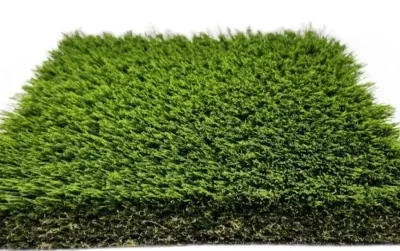
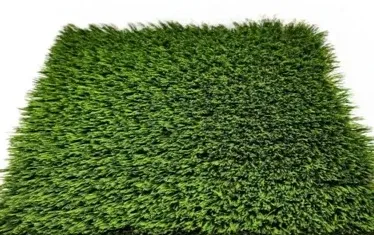
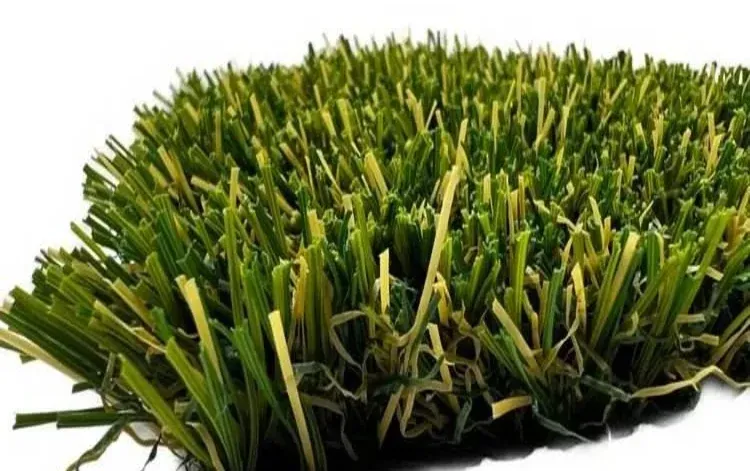
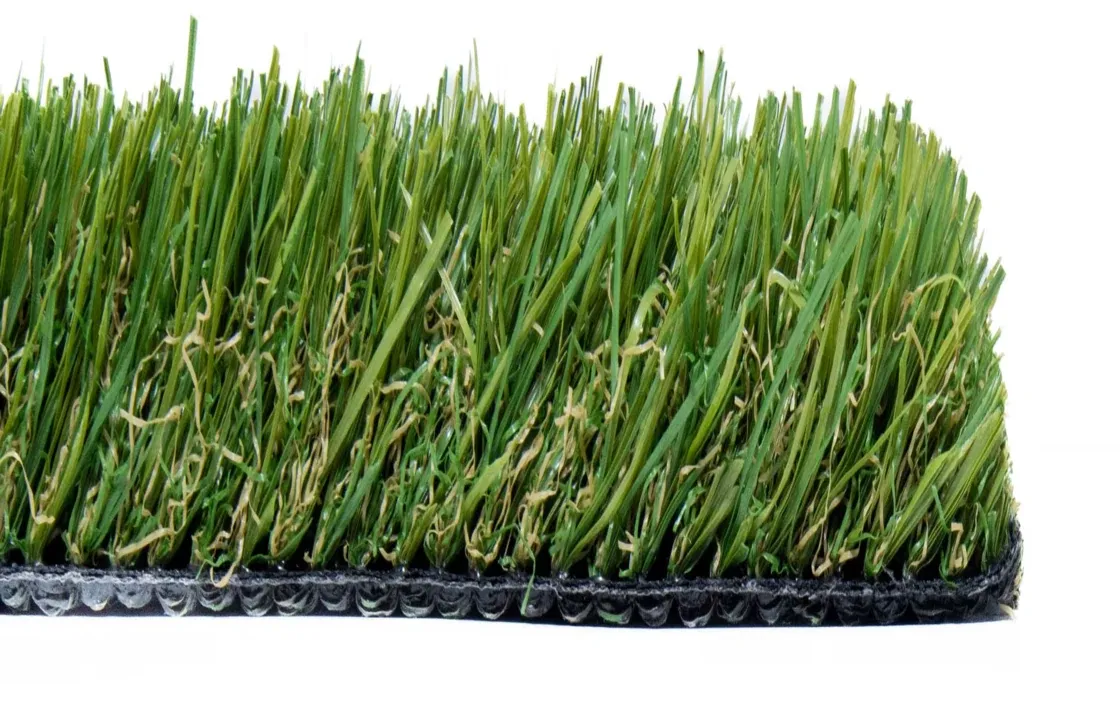
Explore a selection of our preferred artificial turf products, chosen for their appearance, durability, and performance across residential lawns, pet areas, playgrounds, and putting greens.
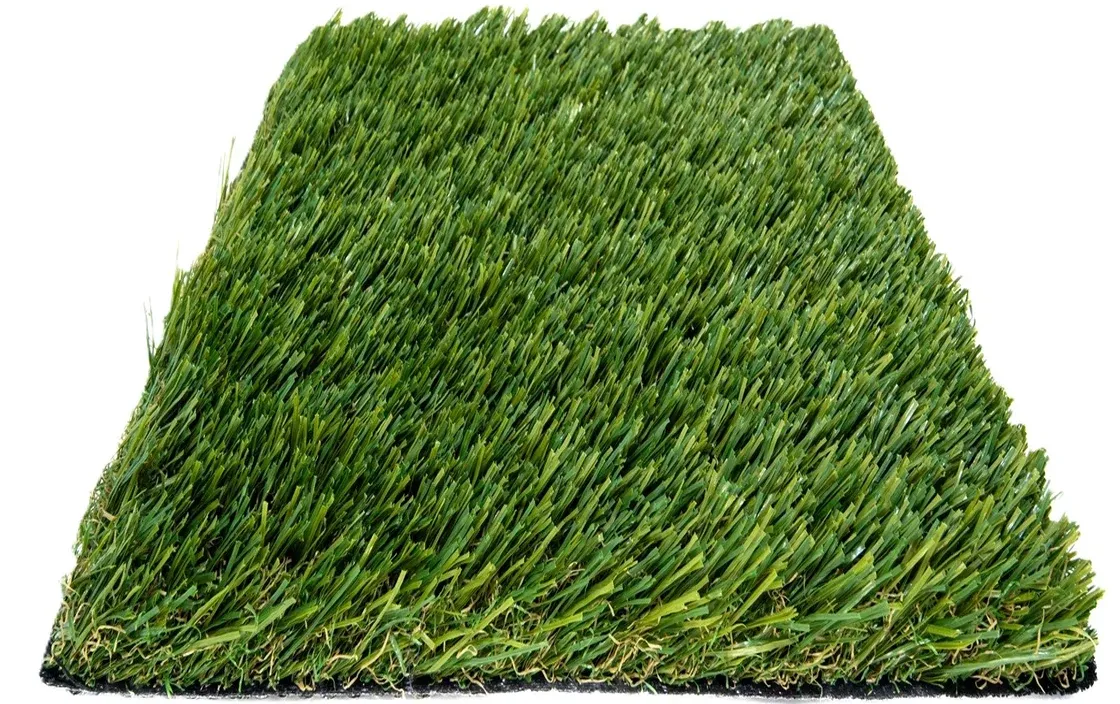
The base is the field. Most of this region sits on heavy shrink-swell coastal clay that people here call gumbo, and clay barely takes water, so a pitch laid straight onto it will hold rain at the surface and move with the seasons. We excavate to a firm subgrade, separate it from the base with fabric, compact a crushed-limestone base, laser grade it to a designed fall, and tie the drainage into an approved outfall before any carpet goes down.
Price follows that work, which is why nobody can quote a soccer field off a map. Field size, how much the ground needs, infill choice and whether you want a pad all move the number, and our sports fields and courts page walks through what drives cost across every surface we build. We measure on site, and the site walk is free.
Book a Free Site WalkWhat we build under the pitch
A soccer field is built for one ball. Soccer is played on the ground, so the carpet, the pile height and the infill are all tuned for how the ball rolls and bounces, how a stud releases in a turn, and how the surface treats a slide tackle. A multi-sport field gives some of that up on purpose so the same footprint can carry football or lacrosse lines and a different set of movements.
It comes down to playable hours. A grass pitch on the Gulf Coast loses days to standing water after a storm, then loses more while it dries out and recovers from being played wet. A synthetic field drains from the surface down and reopens fast, and it takes back-to-back sessions without rest weeks. So the real question is not what the build costs, it is how many training and match hours you get back every year.
Pull your cancellation and reschedule log for the last two seasons. Atlantic hurricane season runs June 1 to November 30, right across the fall club calendar, so that is where most of the lost nights sit.
Grass needs rest days and a worn goal mouth needs weeks. A turf pitch takes session after session, so one field can carry more teams and you may stop renting outside space to cover the overflow.
A turf field still needs grooming, decompaction and infill top-ups on a schedule, and it costs more to build than seeding grass. It is a capital project that trades upkeep for uptime, not a way to spend nothing.
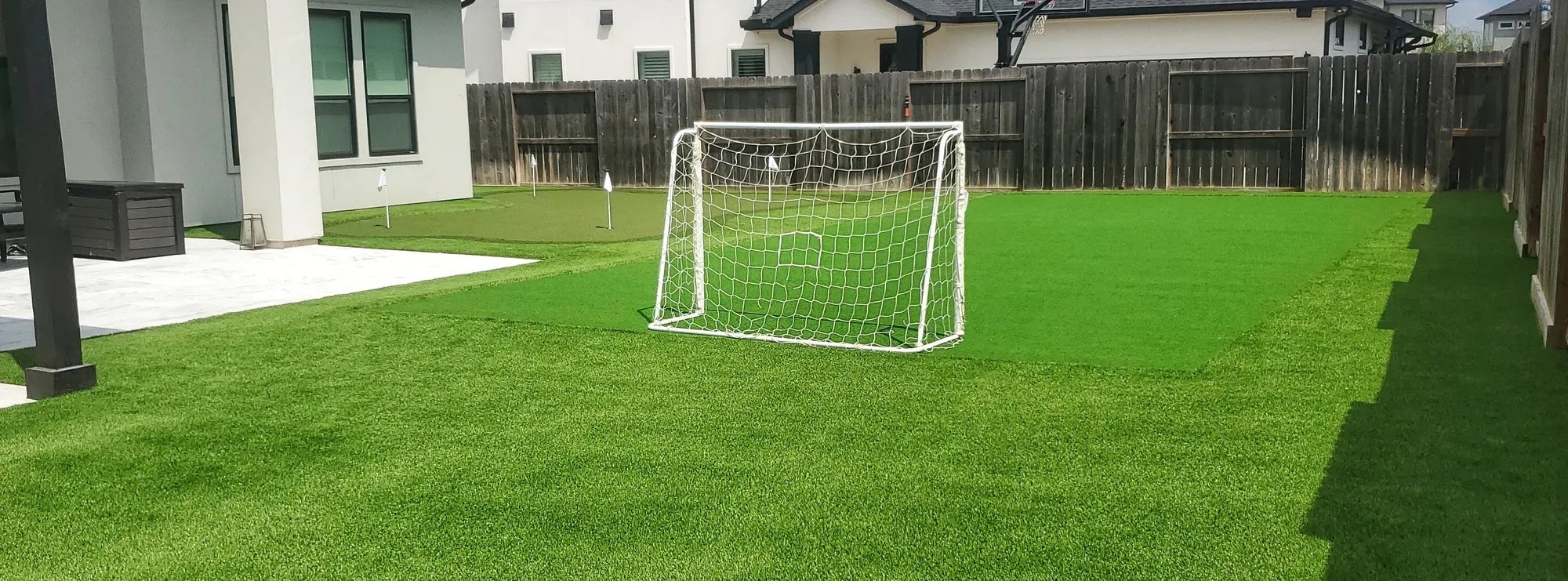
One field carrying soccer plus football or lacrosse, with inlaid primary lines and clear overlays.
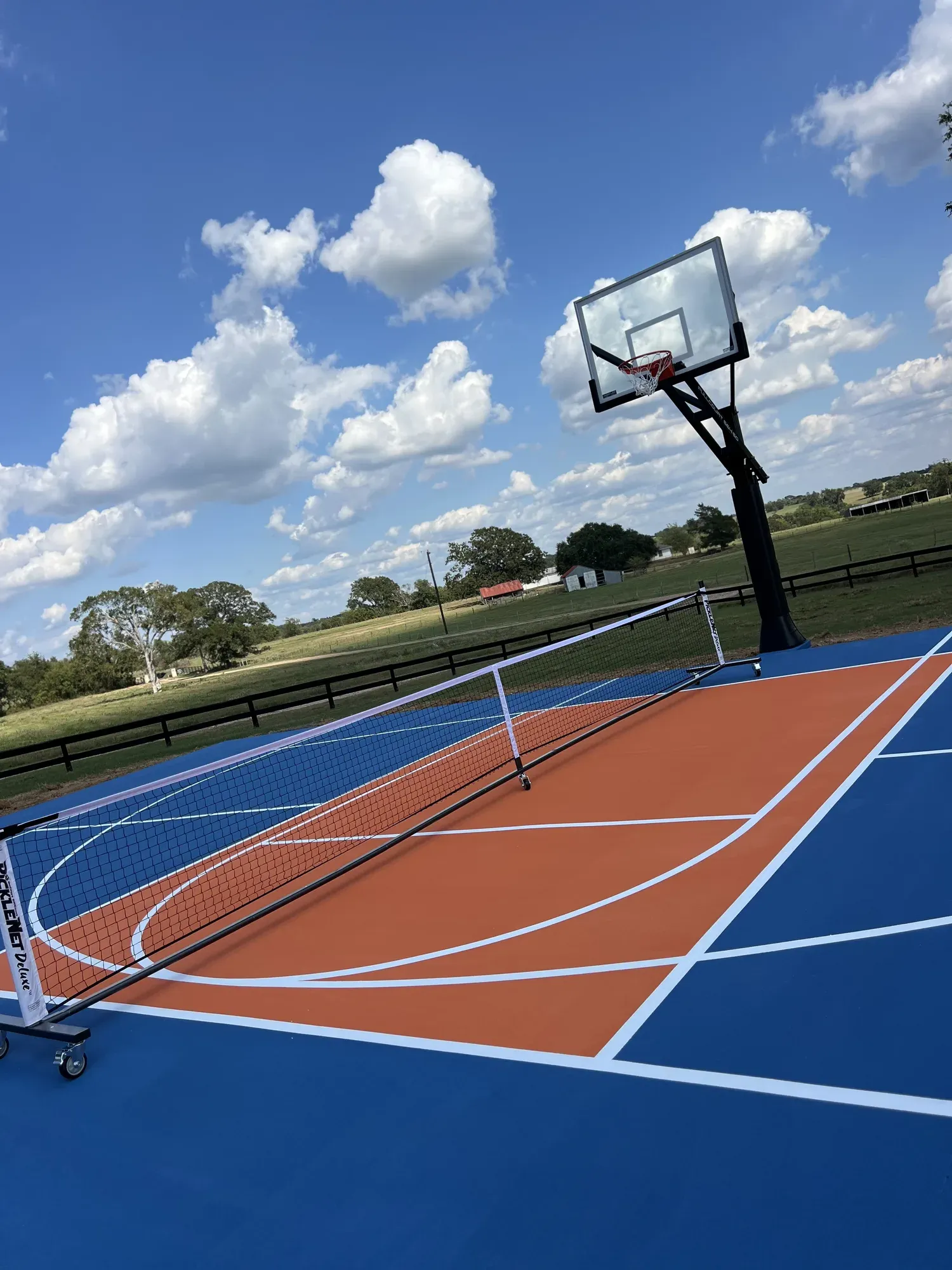
Short-pile, sand-dressed court turf laid flat and seamed tight, sized to the slab you already have.
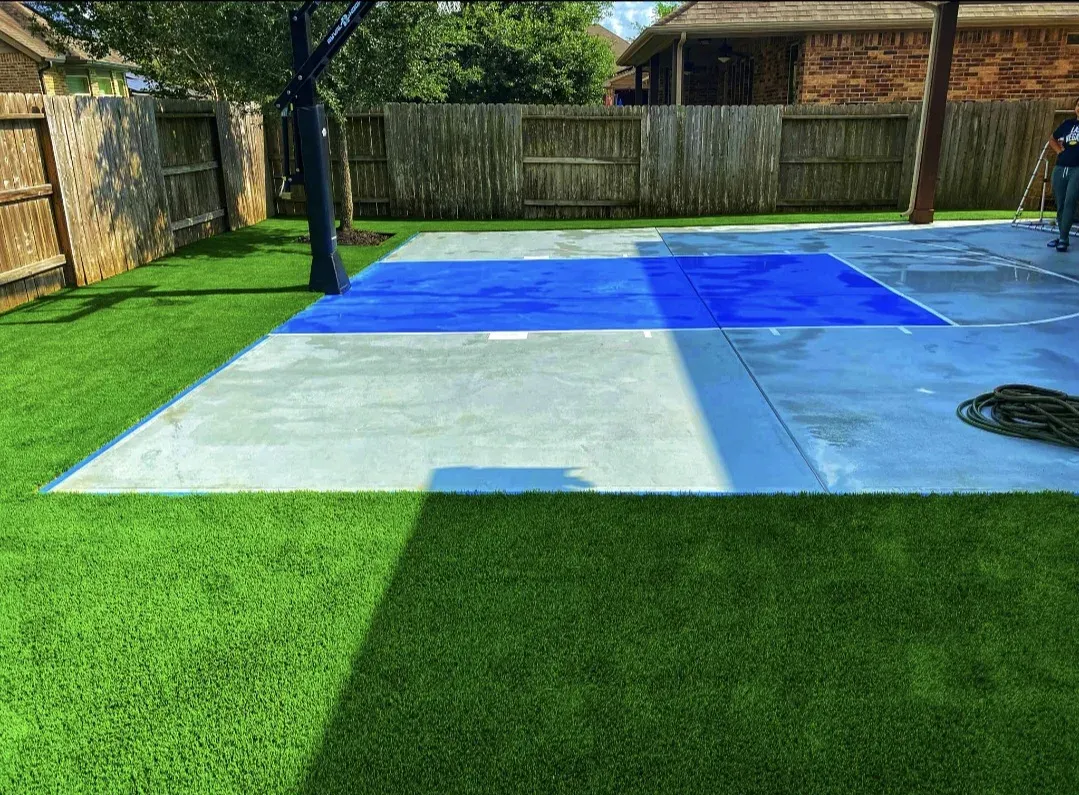
Every field and court surface we build, from full-size pitches to bocce, in one place.
Most residential projects are complete in 2–4 days. Larger commercial installs typically take 1–2 weeks.
Every install carries the manufacturer's product warranty against fading and wear, plus our own workmanship coverage on seams, edging, and base. Full terms come with your proposal.
Yes. We install lead-free, non-toxic turf over a permeable base that drains quickly, and we can add an antimicrobial infill for pet areas to keep odours down.
A rinse now and then and an occasional cross-brush of the high-traffic paths. No mowing, no watering, no fertiliser, and no seasonal brown-out.
Turf runs warmer than a natural lawn in direct sun. We specify cooler yarn and lighter infill where a yard gets full afternoon exposure, and a quick rinse brings the surface temperature straight back down.
Pricing depends on square footage, the turf you choose, and how much prep the site needs. We measure on site and give you a fixed written quote before any work starts.