
Turf Mission
We started TNT Turf because Houston families deserve better than losing weekends to mowing and watering. Our mission is simple, give you a lawn you can enjoy every day, all year long, without the work that usually comes with it.
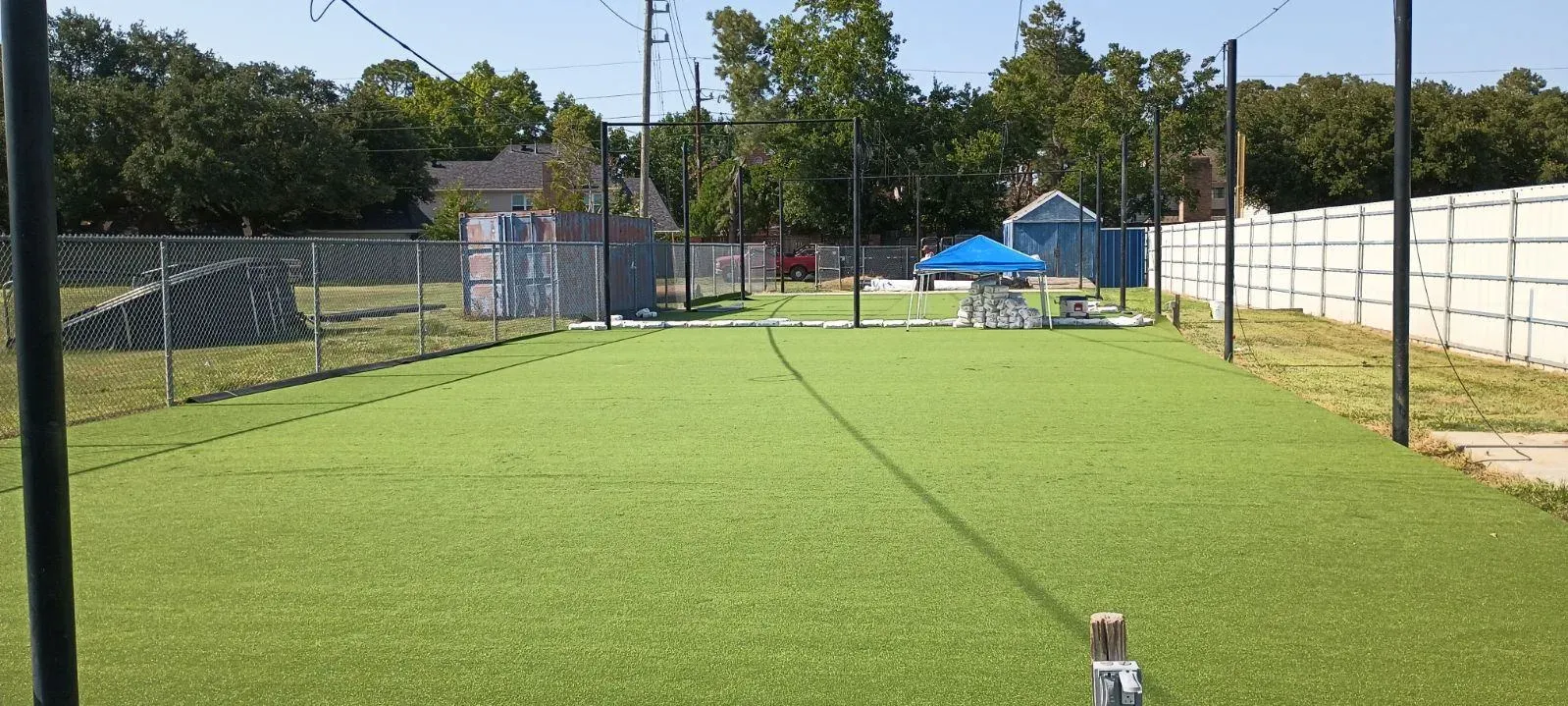
A loaded sled dragging down the same narrow track is the hardest thing you can ask turf to do. We build sled push and pull lanes, prowler tracks and speed and agility runways for Houston training facilities, with the seams planned to run with the lane and the edges bonded so the run does not creep.
A sled lane takes more punishment than any other turf in a gym. The rest of the floor spreads its load around. A sled lane takes all of it in one narrow track, in one direction, thousands of times. Houston makes that worse. From May through September the heat and Gulf humidity push sled and sprint work indoors, so your lane carries close to twelve months of load instead of eight. Most performance gyms here sit in converted warehouse and flex space off I-10 and Beltway 8, which is where the long, column-free bays a sled run needs actually exist.
So we plan the lane before we plan the turf. We measure the longest clear run in your building, mark the turnaround space you need at both ends, and set the lane width against the roll width of the product, because turf ships in fixed widths and that partly decides the answer for you. Then we read the slab. A sled pushes sideways on the floor, so the bond takes horizontal shear rather than weight, and a lane is the worst place for a bond to fail. The industry tests for slab moisture are ASTM F1869 and ASTM F2170, and any installer you hire should tell you how they plan to handle it before adhesive touches your floor. Seams get planned last, and they run with the lane, never across it. Our shop is on Campbell Road in Spring Branch, right in that same I-10 corridor.
Your lane is as long as your longest clear run, minus the space you need at both ends. Start with the drill you actually coach, then add turnaround room at each end so an athlete can slow down, reset and reload without stepping off the turf. Most rooms cannot give you the full distance in one straight shot, so facilities run a shorter lane and do more trips. That works fine, and it wears the turnaround ends faster, which is worth knowing before you pick where the lane goes. We measure the building and show you what the longest usable run really is.
Sometimes, and it comes down to roll width and lane length. Turf ships in fixed roll widths, so if your lane is narrower than the roll and shorter than the roll length, it can go in as one piece. Wider or longer than that and you will have a seam. That is not a problem as long as the seam is planned: we run seams with the direction of travel, so the sled stays between them instead of riding across one. A seam that crosses the lane takes the sled edge on every single rep, which is exactly where you do not want it. Ask us what your product's roll size allows before you settle on a lane width.
Loading is a coaching call, not a turf limit, so we will not put a number on your programming. What we can tell you is what the installed surface has to hold up. A sled pushes sideways on the floor, not down into it, so the bond under the turf takes horizontal shear on every rep. That is why we bond the edges and the ends of the lane, not just the field of it, so heavy work does not creep the lane or lift a corner. Tell us the heaviest thing you plan to drag and we will spec the build around it.
Yes, we can lay out a lane for sled push and sled pull work in your building. TNT Turf is not affiliated with Hyrox and does not build official or certified lanes for the format, so check the current rulebook yourself for the distances and sled weights, because those change by division and by season. Bring us the numbers you want to train to and the clear run you have. We will tell you what fits, where the turnarounds land, and what the lane costs before anything gets glued down.
These are the rooms where one strip of floor carries the hardest work in the building. If your programming lives on this list, the lane is worth planning on its own instead of as an afterthought.
Serving homeowners, businesses, and property managers across Greater Houston with artificial turf built for our climate. From backyard putting greens and pet runs to courtyards, playgrounds, and commercial grounds, every install is measured on site, graded for drainage, finished by our own crew, and backed by a warranty we put in writing.
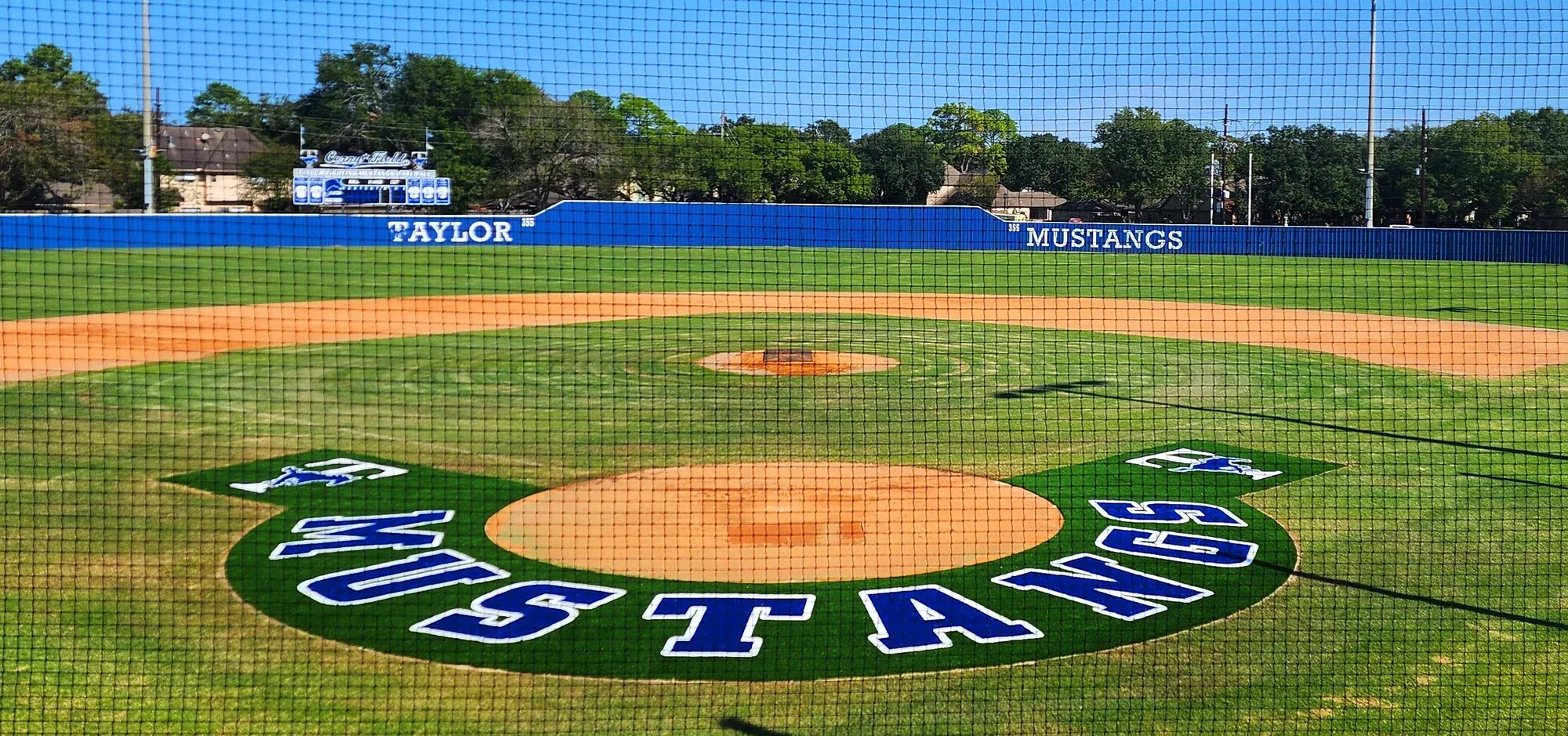
A synthetic turf halo and cut-in team logo around a baseball infield, built to take cleats, drag mats and a full season of play.
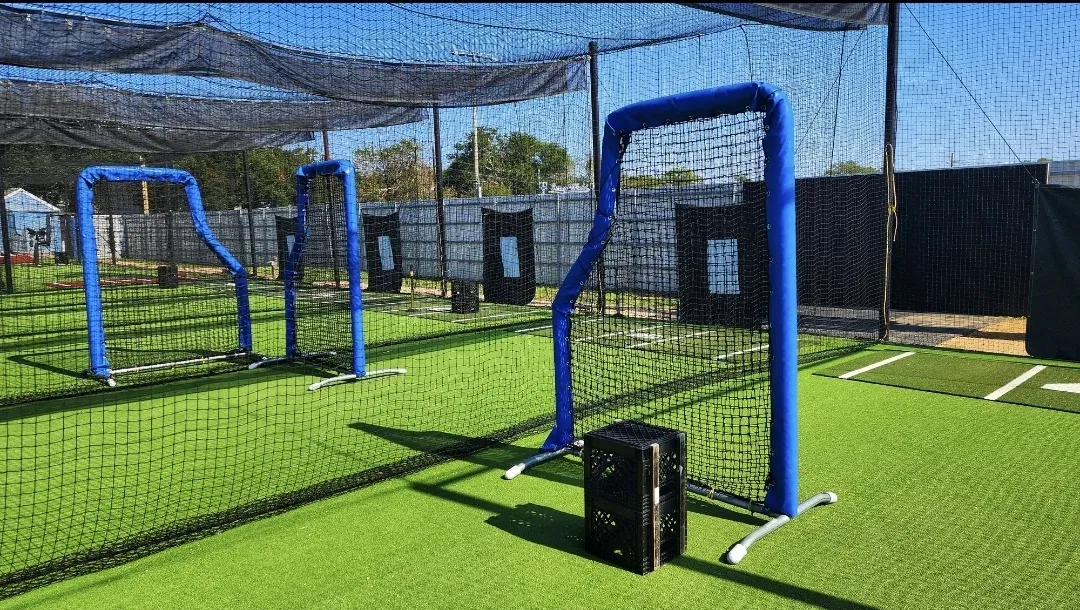
Artificial turf flooring through outdoor batting cages and pitching lanes, built to take spikes and machine wear.
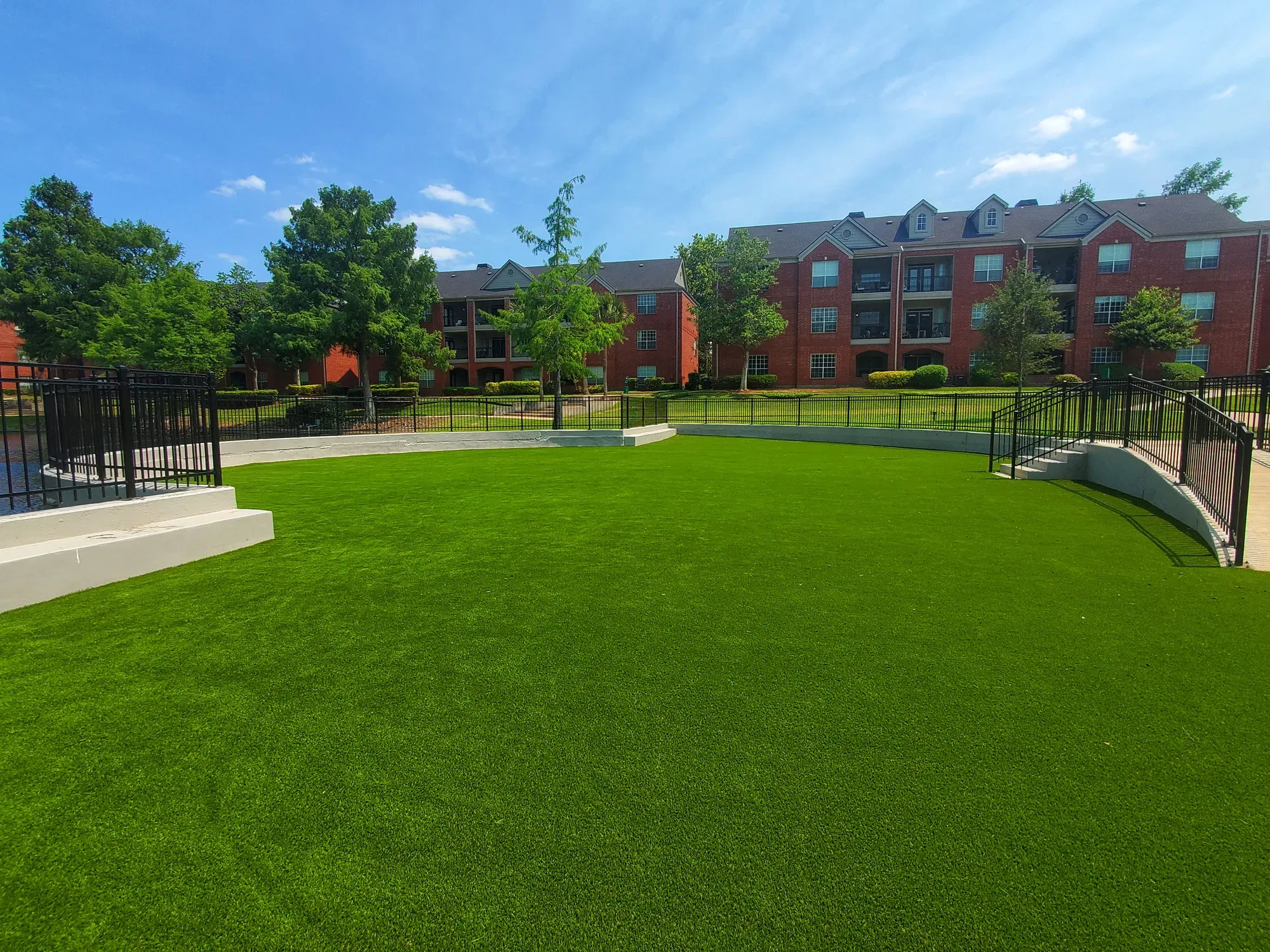
A large open artificial turf lawn in front of a multi-family building on Buffalo Speedway in Houston.
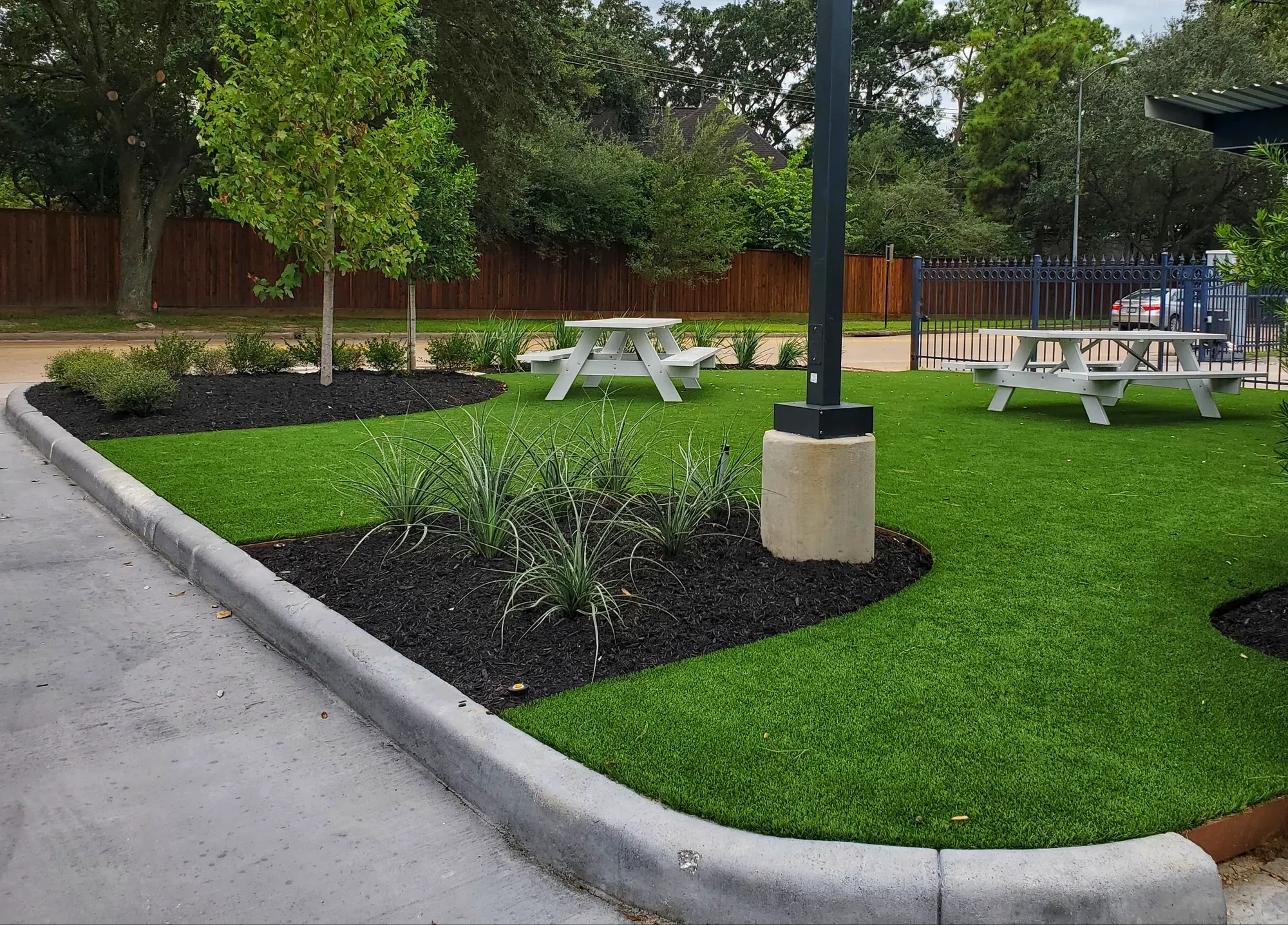
A kerbed artificial turf picnic and break area in Hedwig Village, with planted beds and shaded seating.
Our proven installation process ensures every project is completed efficiently with exceptional attention to detail.
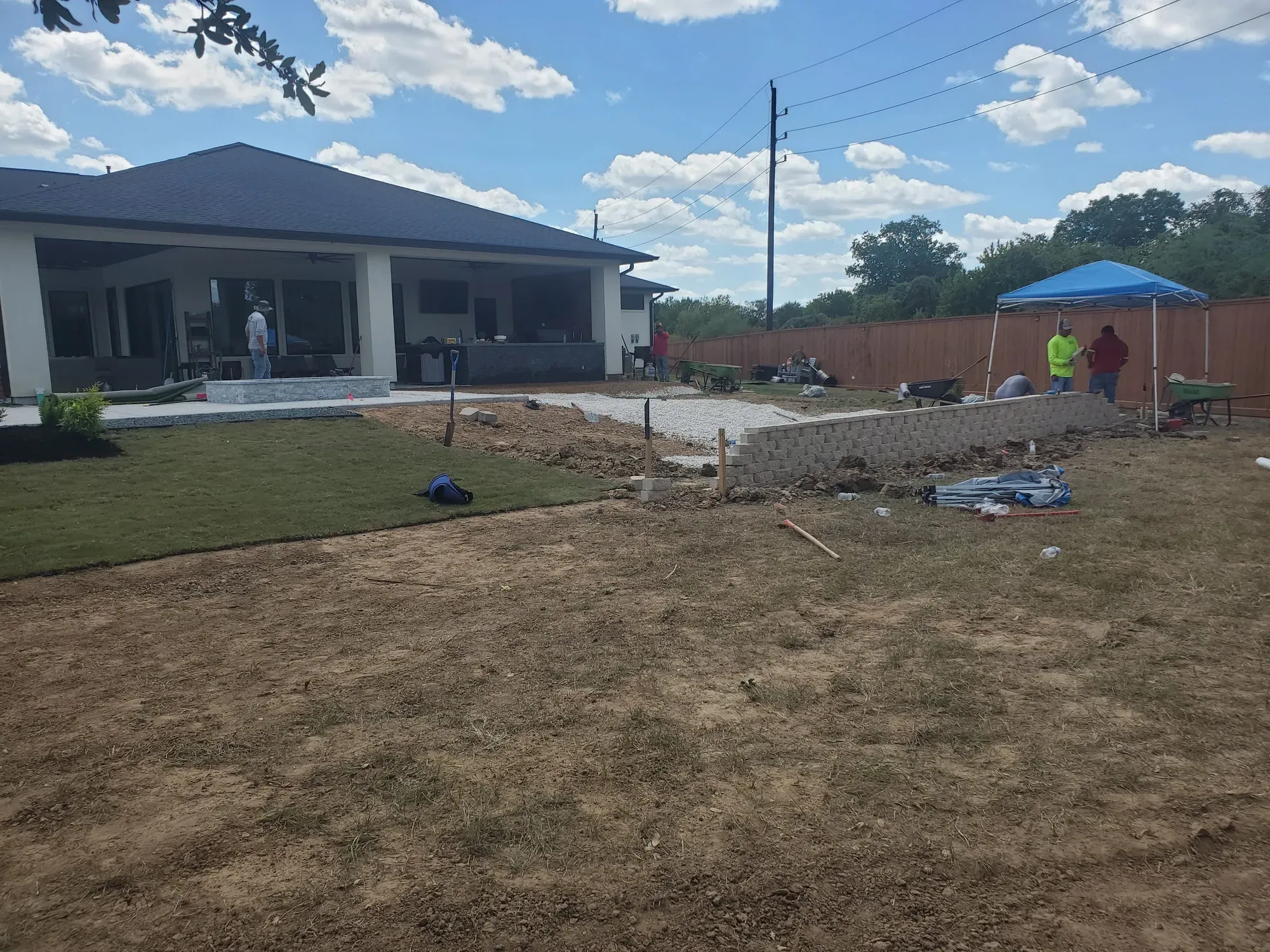
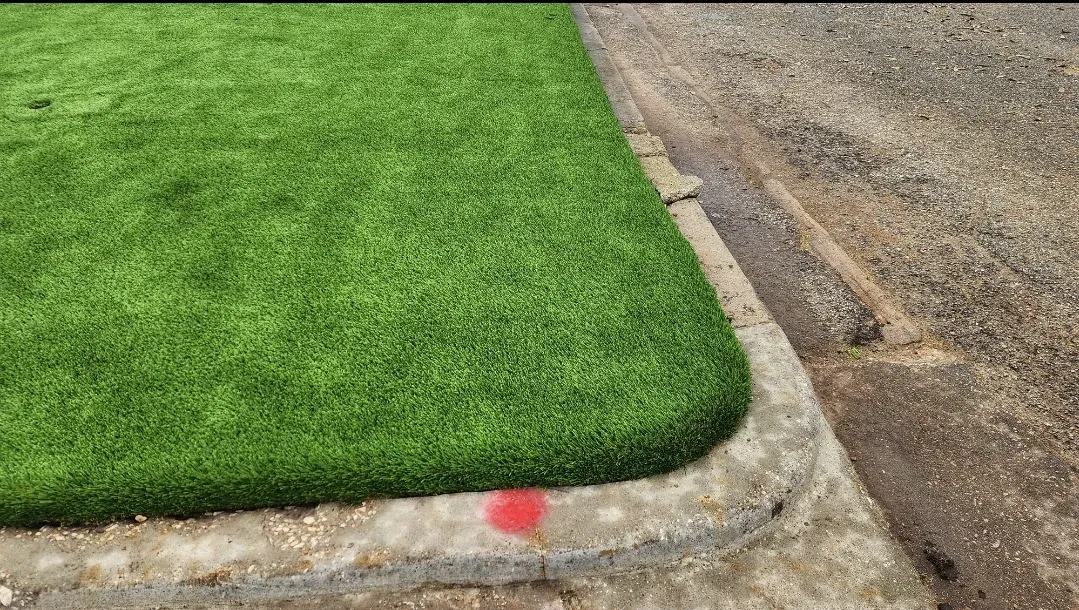
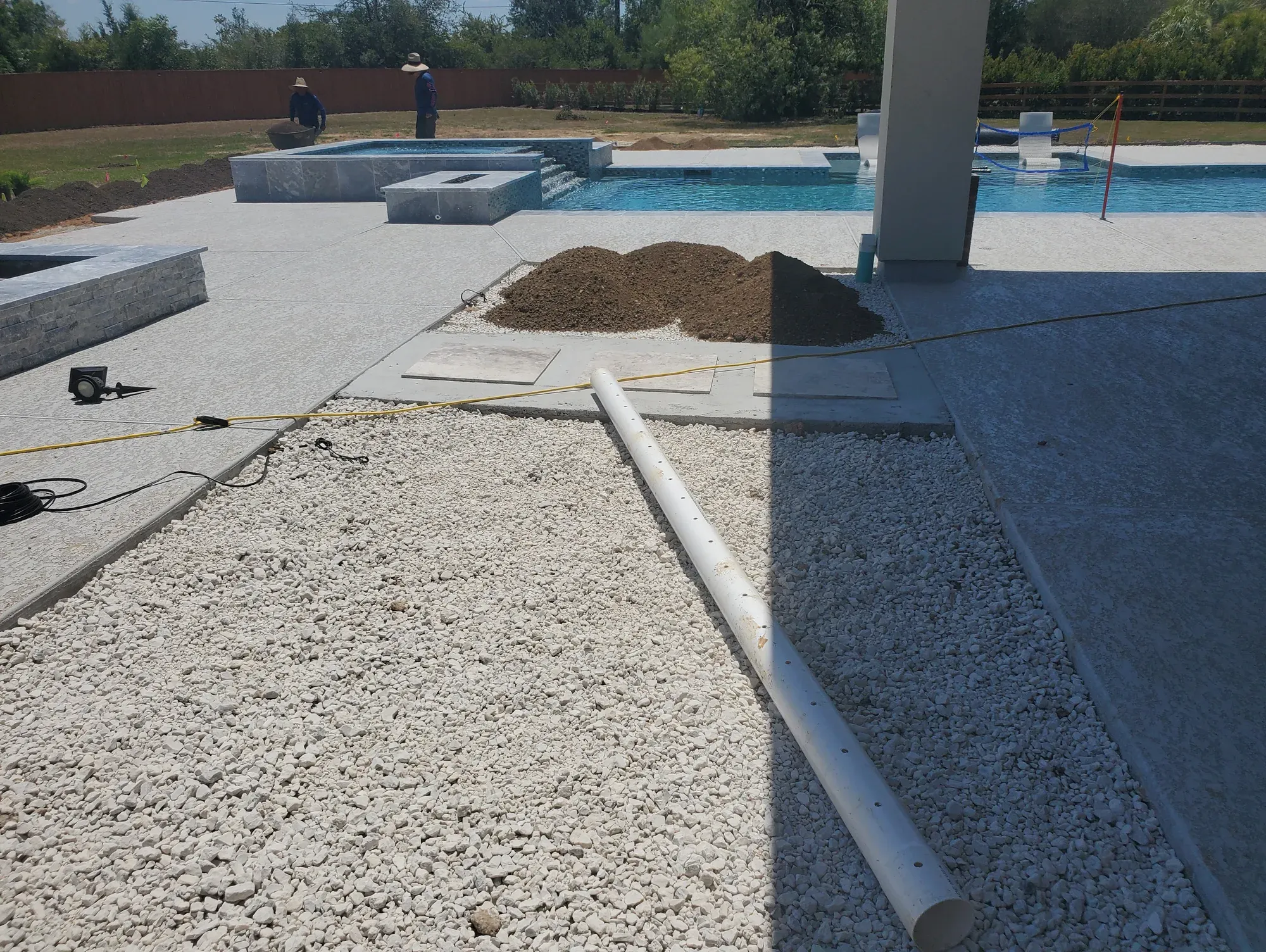
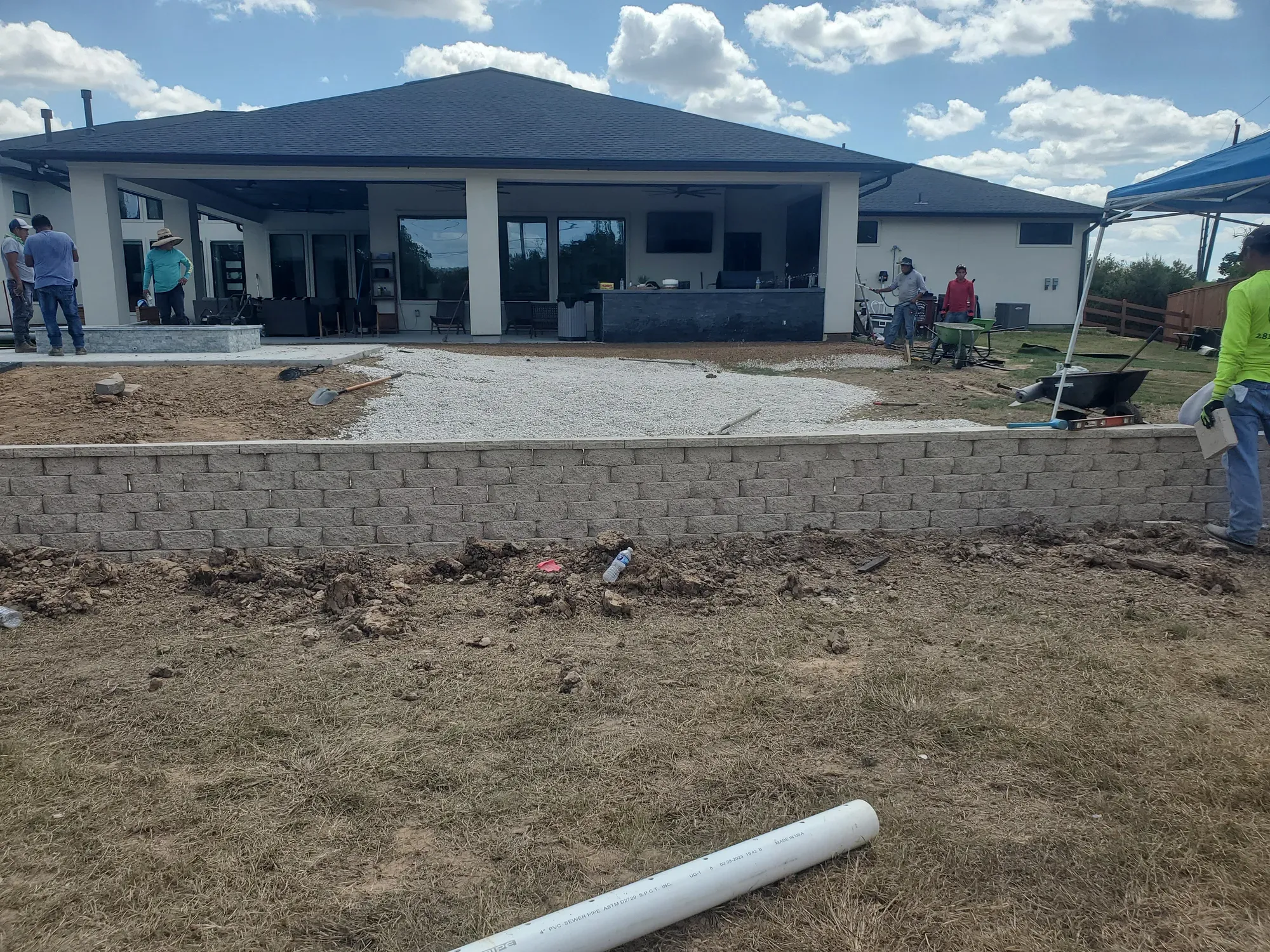
We strip the existing lawn and excavate down to a clean, stable sub-grade. Old roots, thatch, and loose topsoil all come out, because anything organic left behind will settle later and telegraph through the finished turf.
Flexible poly board is staked around the entire perimeter to lock the base in place. It holds your shape through curves and radii, keeps the aggregate from migrating into beds, and gives the turf a clean edge to be fastened to.
The first base layer goes down and is graded for drainage. This is the load-bearing course that carries foot traffic and keeps the surface from rutting, and it is where the finished contours of the yard are established.
A second, finer layer is screeded over the first to true the surface. Two layers instead of one is what separates a lawn that stays flat for years from one that dips and waves after the first wet season.
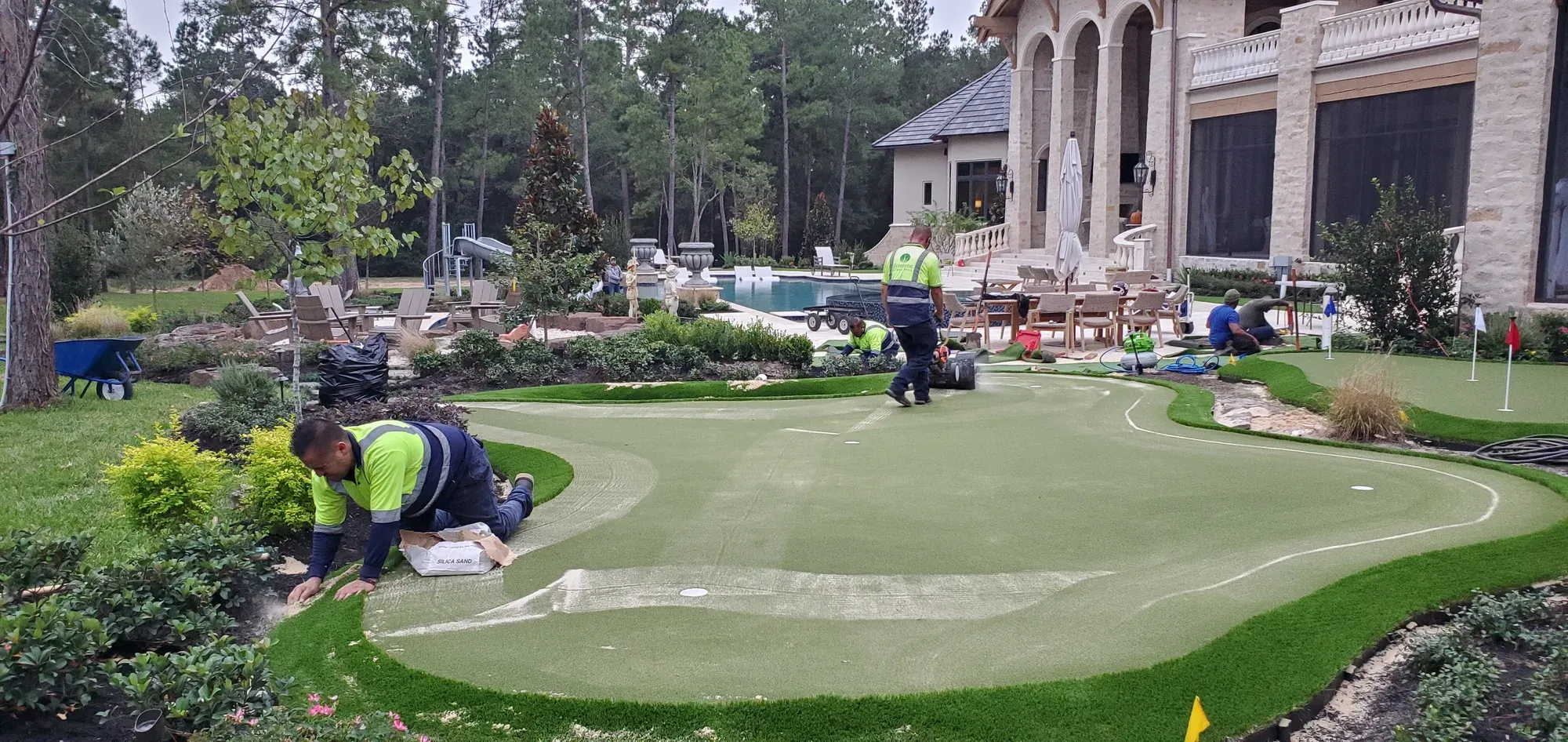
The base is plate-compacted to spec, then the turf is rolled out, allowed to relax, and cut to the yard. Seams are aligned to a single blade direction and joined so they disappear, and the turf is nailed off along every edge.
Silica infill is spread and worked in with a power broom, lifting every blade upright as it goes. Infill is what gives the lawn its ballast, its underfoot feel, and its ability to stand back up after traffic.
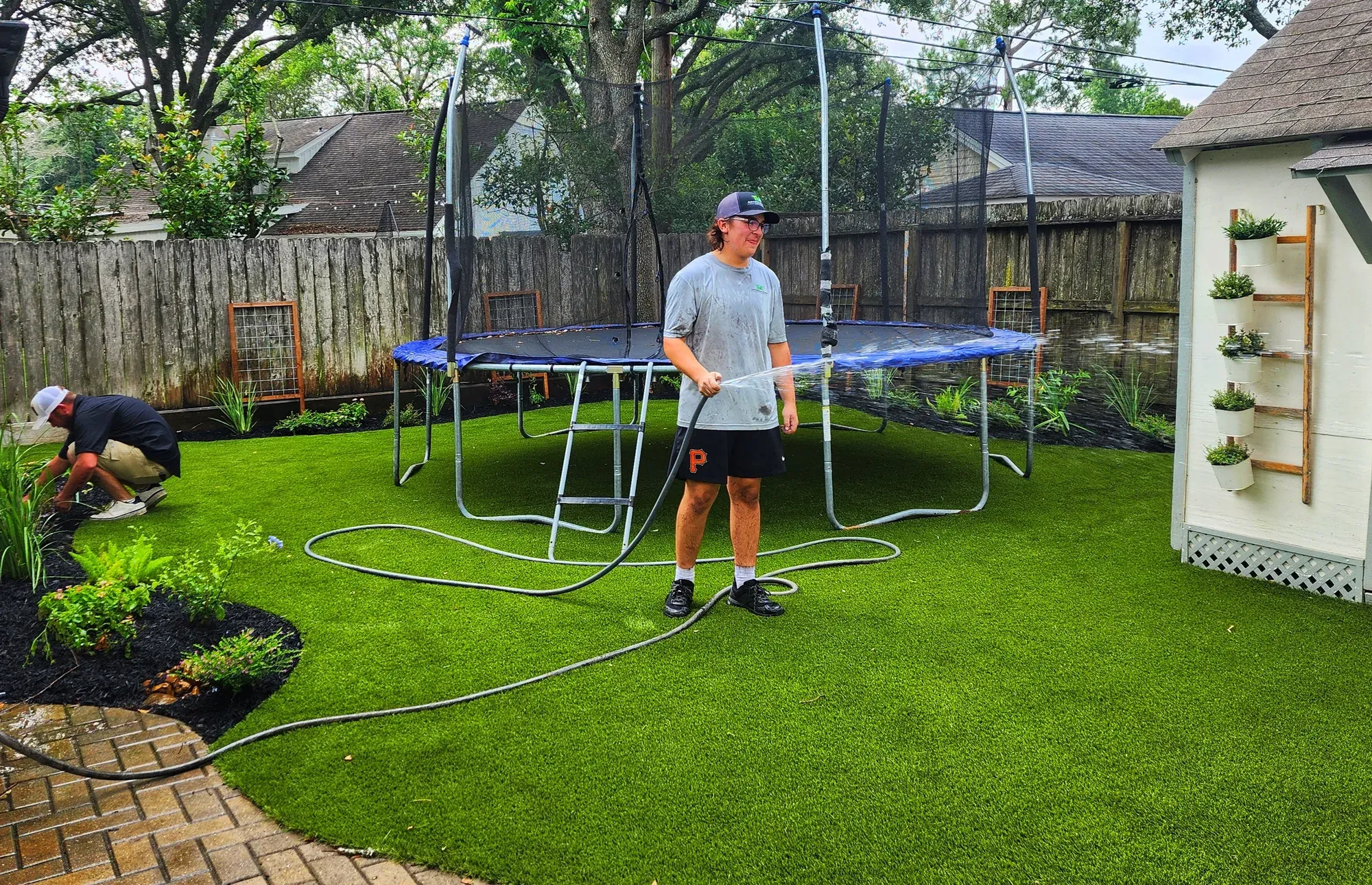
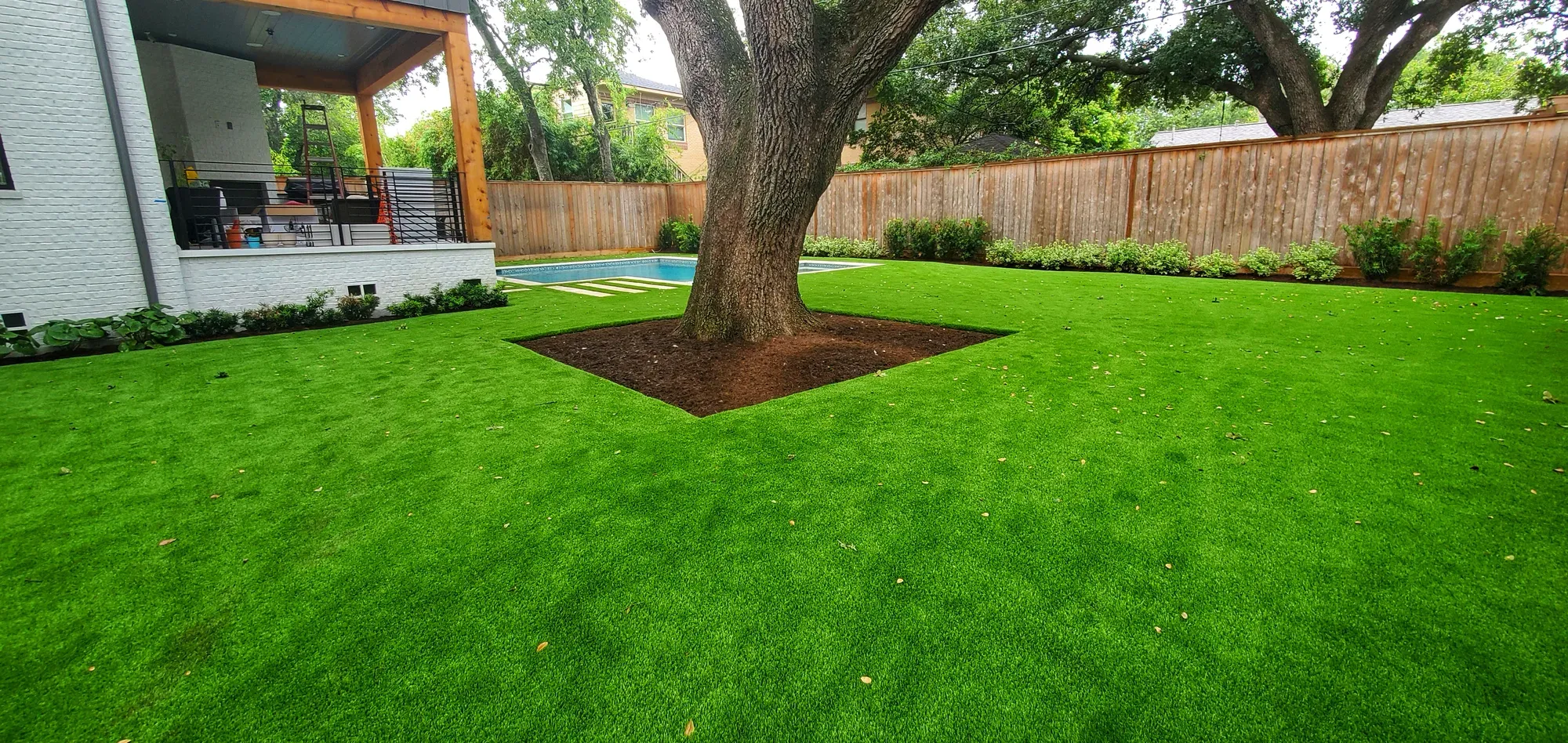
We do a final groom, clear the site, and walk the finished yard with you edge to edge. What you are left with is a lawn that looks cut every day of the year, with no mowing, watering, or seasonal brown-out.
TNT Turf is on a mission to transform Houston homes and businesses with premium synthetic turf, delivering lasting quality, honest service, and yards our customers are proud to look at everyday.
We started TNT Turf because Houston families deserve better than losing weekends to mowing and watering. Our mission is simple, give you a lawn you can enjoy every day, all year long, without the work that usually comes with it.
Every yard we install gets measured twice, leveled right, and finished like it’s our own backyard. If a job isn’t done the right way, it’s not a job we’re willing to put our name on, plain and simple.
By 2030, we want to help turn 10,000 Houston backyards into low-water, low-maintenance green spaces. It’s our way of making Houston greener and more sustainable, giving families more time to enjoy their yards instead of maintaining them.
From your first quote to the final walkthrough, we keep pricing fair, communication honest, and show up when we say we will. It’s our way of making sure every customer feels taken care of, not just sold to.
Explore a selection of our preferred artificial turf products, chosen for their appearance, durability, and performance across residential lawns, pet areas, playgrounds, and putting greens.
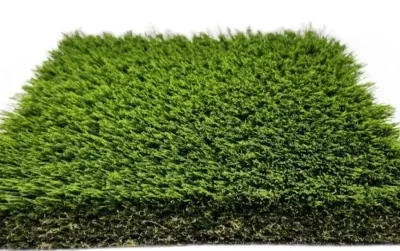
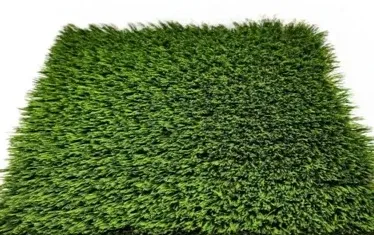
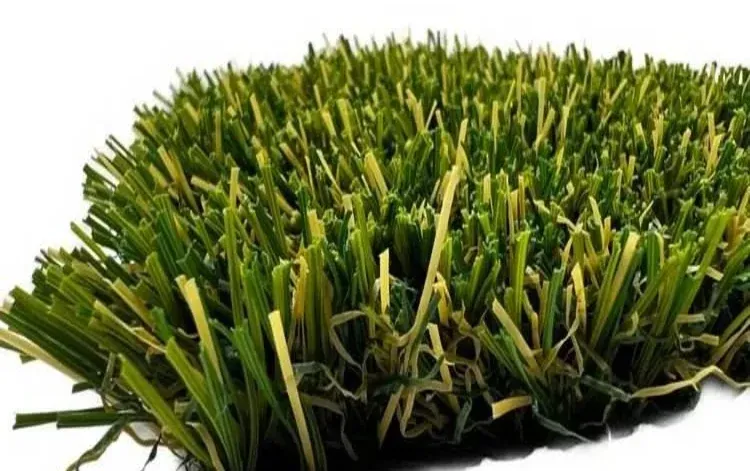
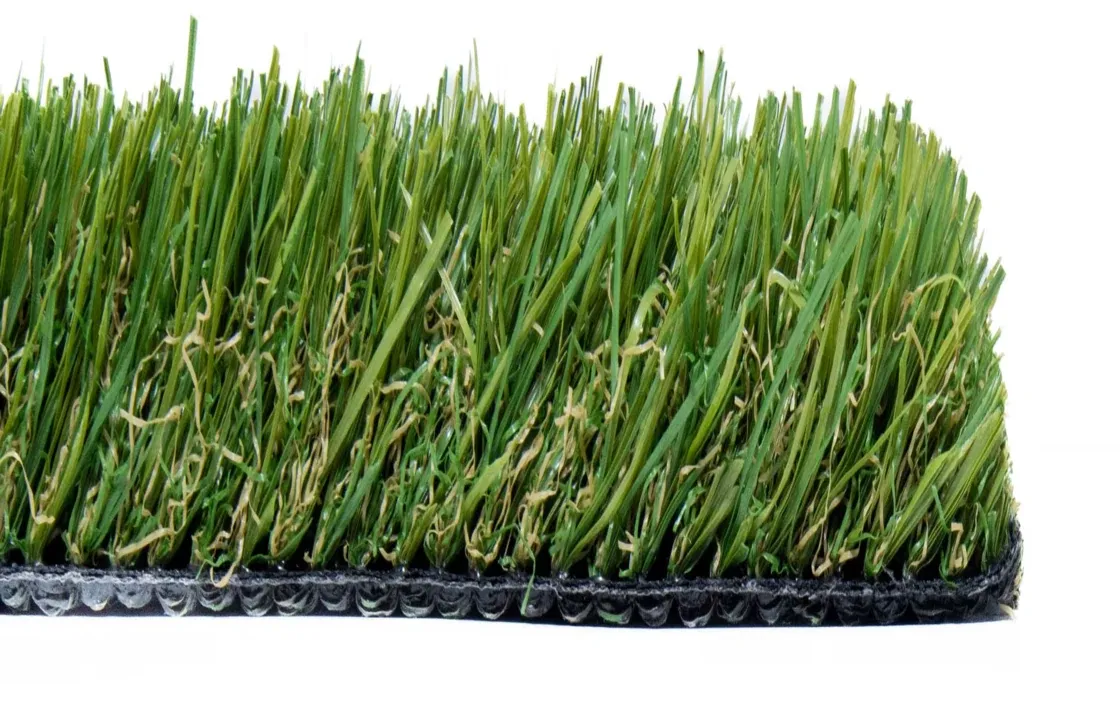
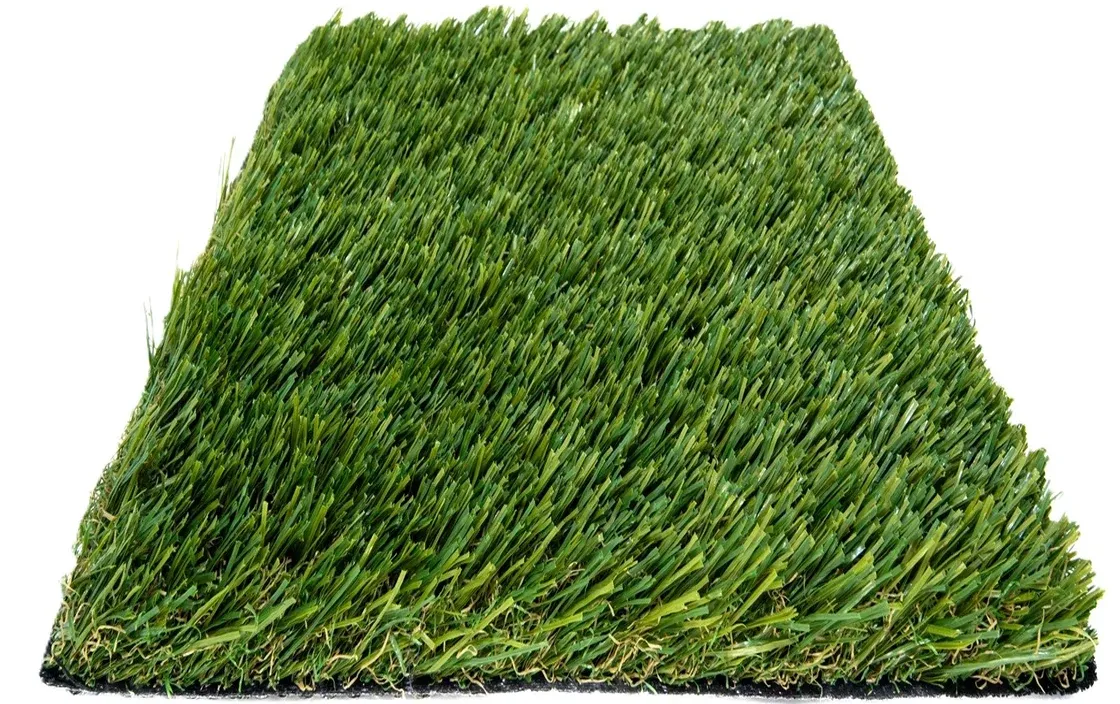
There is no single right answer, and the honest one is that it depends on the room. Non-infill turf leaves nothing in the pile to kick out, which matters when a loaded sled drags down the same narrow track thousands of times. Sand-filled turf puts weight and body into the pile, and some facilities prefer how that feels underfoot. We spec the lane for the work the lane does, rather than matching whatever went down on the rest of the floor.
The lane is one strip of a bigger floor. If you are pricing the whole room, our athletic facility turf page covers the rest of it. Bring us the longest clear run in your building and we will walk the slab with you.
Get a Free On-Site QuoteFree
on-site measure and written quote
What sets your lane spec
A sled lane wears faster than the rest of a gym floor, because the same few feet take every rep. How long yours lasts comes down to three things: the turf you start with, how well the slab and the bond were prepped, and whether anyone brushes the pile back up in the track. The turnaround ends go first, since that is where athletes plant, pivot and reload the sled.
It can, the way any turf surface can, and it is a fair thing to ask before you put a sprint lane in your gym. Skin drags across the fibers on a bear crawl, a slide or a hard fall, and that friction is what leaves a burn. How the lane is specified and how clean you keep it both change how the surface feels. Tell us your members train barefoot or in socks before we pick the turf, because that changes what goes down.
Fiber and pile change how a surface feels on a crawl or a slide. We ask what your members wear on the lane before we pick the turf, not after.
Traffic flattens the fibers in the sled track, and a flat, hard track is rougher on skin. A regular brush pass down the lane keeps the pile up.
Metal runners and worn sled edges chew fibers faster than plastic ones. Check the underside of your sleds now and then and swap out anything gone sharp.
The wider training floor the lane sits in: functional bays, weight room turf and drop zones over your slab.
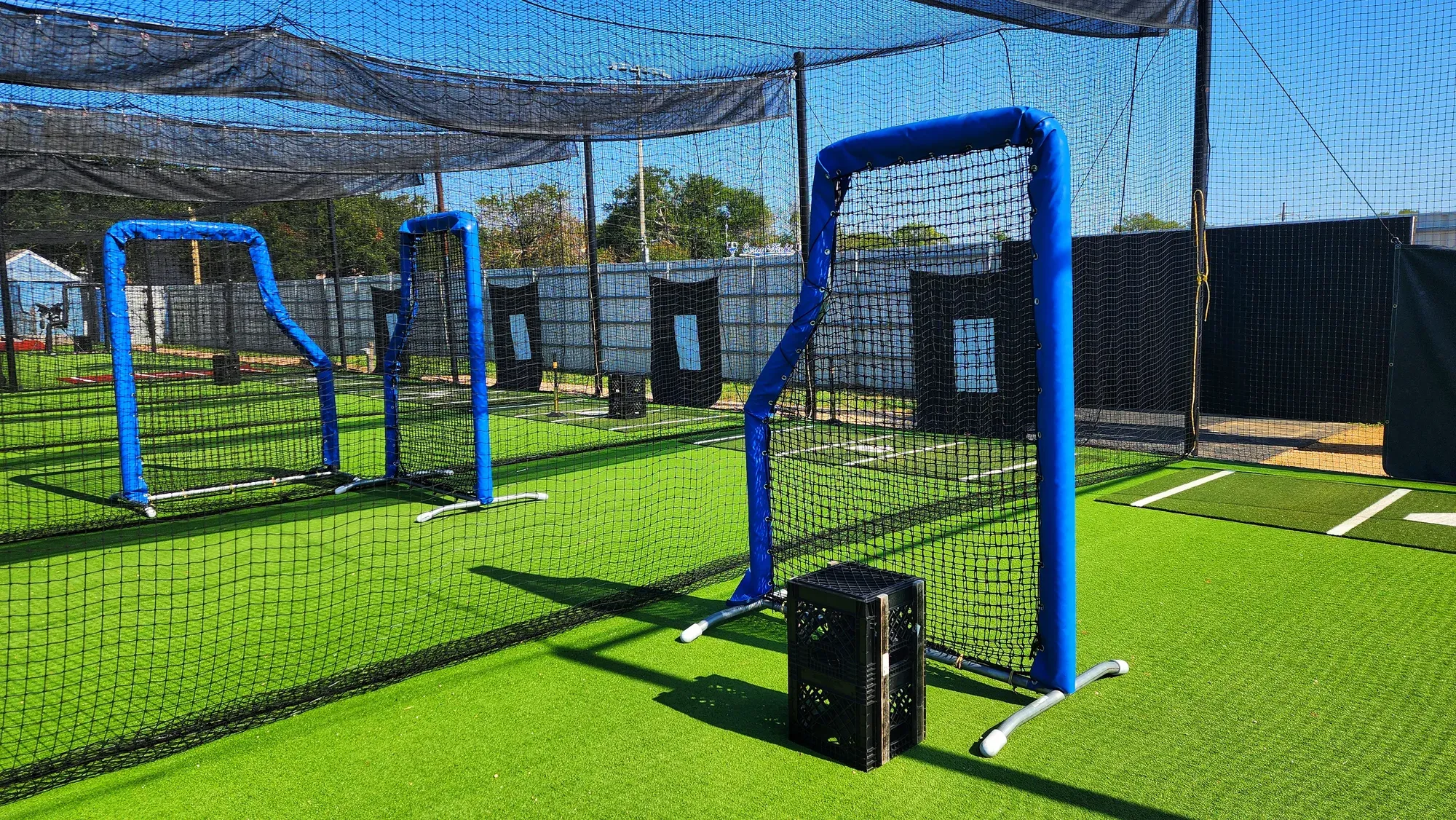
Cage floors, tunnel runs and bullpen surfaces for baseball and softball training, indoors or under cover.
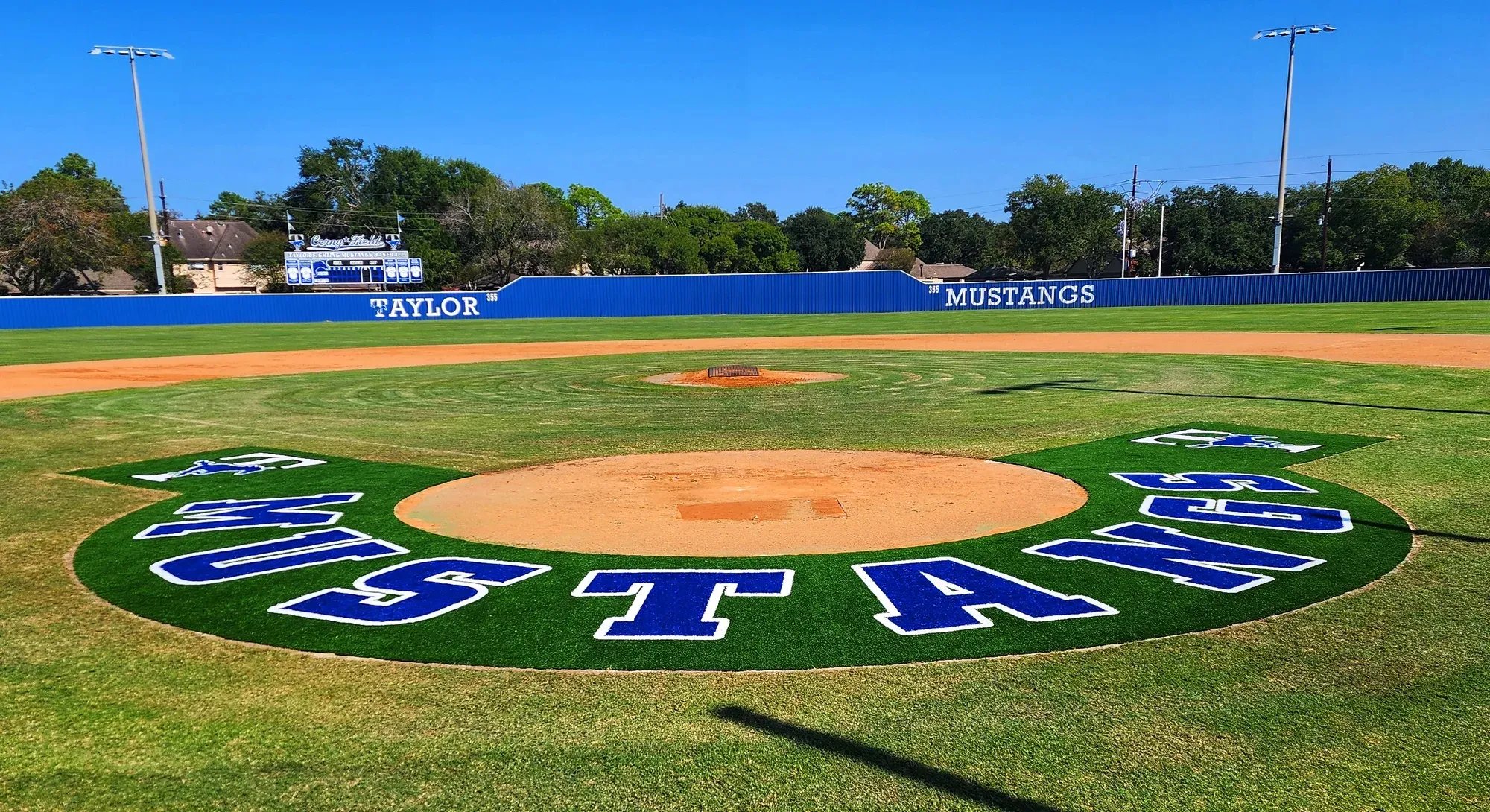
The full picture for a training building: what turf costs, how long it lasts, and how the surface gets cleaned.
Most residential projects are complete in 2–4 days. Larger commercial installs typically take 1–2 weeks.
Every install carries the manufacturer's product warranty against fading and wear, plus our own workmanship coverage on seams, edging, and base. Full terms come with your proposal.
Yes. We install lead-free, non-toxic turf over a permeable base that drains quickly, and we can add an antimicrobial infill for pet areas to keep odours down.
A rinse now and then and an occasional cross-brush of the high-traffic paths. No mowing, no watering, no fertiliser, and no seasonal brown-out.
Turf runs warmer than a natural lawn in direct sun. We specify cooler yarn and lighter infill where a yard gets full afternoon exposure, and a quick rinse brings the surface temperature straight back down.
Pricing depends on square footage, the turf you choose, and how much prep the site needs. We measure on site and give you a fixed written quote before any work starts.