
Turf Mission
We started TNT Turf because Houston families deserve better than losing weekends to mowing and watering. Our mission is simple, give you a lawn you can enjoy every day, all year long, without the work that usually comes with it.
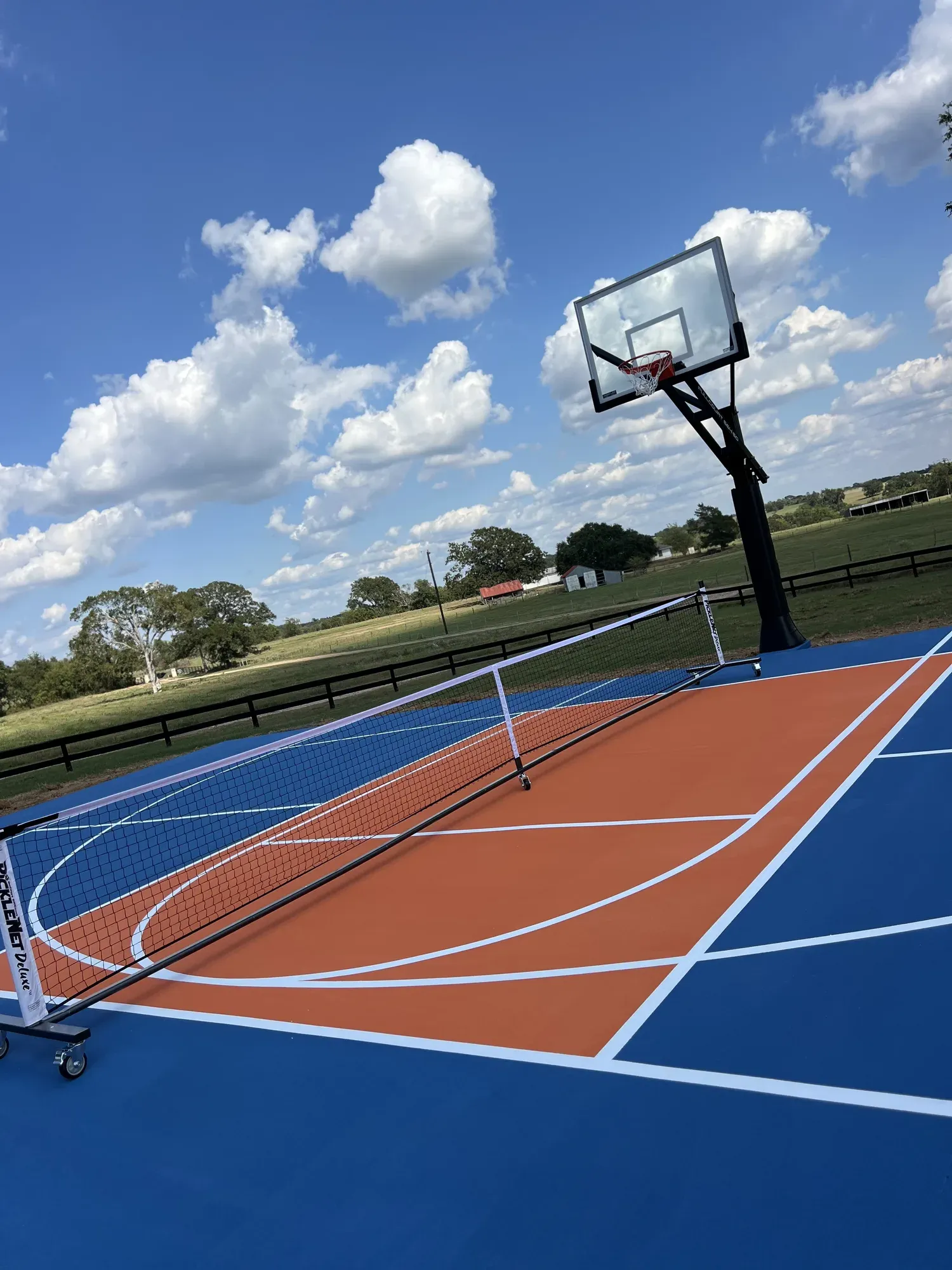
Pickleball fills a court faster than any amenity you can add right now. We handle pickleball court installation across Greater Houston, from one court behind the house to a multi-court HOA complex, on a base that drains after a Gulf storm and a surface chosen for the people who will actually be playing on it.
Pickleball is why so many Houston HOA boards are staring at a tired tennis court right now. The game asks for a small footprint: the playing area is 20 feet by 44 feet for both singles and doubles, with a 7 foot non-volley zone, the kitchen, on each side of the net. That fits behind a house, on an apartment amenity deck, or more than once inside an existing tennis fence, depending on what your fence line actually measures. We build courts for HOAs and master-planned communities, 55+ and active adult communities, apartment amenity decks, church and school campuses, private clubs, and homeowners who want one in the back yard. Houston has no conventional zoning code, so for most of these the approvals path is your deed restrictions and HOA architectural review rather than a zoning hearing. Paddle noise is a live issue in a lot of neighborhoods, so confirm your community's rules on placement and hours before you fix a layout.
The ground is what makes or breaks a court here. Most of this region sits on shrink-swell coastal clay people call gumbo, and it swells when it rains and pulls back when it dries. A rigid slab on ground that moves is how courts end up cracked and resurfaced a few years in, which is exactly why pickleball court resurfacing is such a busy search in this market. We excavate, lay a geotextile separation layer, compact a crushed aggregate base, laser grade it to a true plane so the ball bounces the same at both ends, and build the fall and the drainage before any surface goes down. Then comes the court itself: cushioned turf dressed with sand, or an acrylic system over concrete, with inlaid or painted lines, a net set to 36 inches at the sidelines and 34 inches in the middle, and the fencing, lighting and seating the site calls for. We work out of Spring Branch, off I-10 just inside Beltway 8, and cover Harris, Fort Bend, Montgomery, Brazoria, Galveston, Waller and Liberty counties, from Katy and Cypress out to Sugar Land, Pearland and The Woodlands.
More than the court itself. The playing area is 20 feet by 44 feet, but nobody plays inside a box that size. Players run past the baseline to chase a lob and step wide of the sideline to return a hard angle, so you need clear run-off on all four sides. USA Pickleball publishes a recommended total playing surface that is larger than the playing area, and we build to the current published recommendation rather than a number somebody copied off a forum. Where a back yard or an amenity deck cannot give you the full recommendation, we will tell you what you are giving up before you decide, not after the concrete is poured.
Usually more than one, and the honest way to find out is to measure your fence line. You will see one number repeated everywhere online, but it is not a rule. It depends on the fenced dimensions of your court, not just the lines painted on it, and on how much run-off you are willing to give up between courts. The arithmetic is simple: take the fenced area, fit as many 20 by 44 playing areas into it as you can, then add the surround each one needs and see what survives. We do that on site with a tape and give you a layout. You then have two ways to build it. The cheap route keeps the existing surface and adds pickleball lines and portable nets, which works if tennis is still being played there. The other route resurfaces the slab, which is where you get to change the surface underfoot as well as the lines.
On a permeable turf court, usually yes. Water passes through the turf backing and the sand dressing into the free-draining base underneath, so the surface sheds a shower instead of holding it. On acrylic over concrete the water has nowhere to go. It sits in a film on top and the court stays slick until it dries or somebody squeegees it, and low spots on an older slab hold puddles for a lot longer than that. Houston gets enough rain that this is not a detail. It is the difference between a court your members use most of the year and one that sits closed after every storm. Either way we build fall into the base and tie the drainage to an outfall, because no surface drains well over ground that holds water.
A pickleball court is 20 feet wide and 44 feet long, and that is the same for singles and for doubles. The non-volley zone, which everybody calls the kitchen, runs the full 20 foot width and extends 7 feet back from the net on each side. So the kitchen sits inside the 44 foot length rather than adding to it. The net is 36 inches high at the sidelines and 34 inches in the middle, which is why a permanent net system needs its posts set right the first time. Those are the numbers the lines and the posts get built to. What you actually have to find room for is the playing area plus the run-off around it, which is covered above.
These are the sites we handle pickleball court installation for across Greater Houston. If one of them looks like yours, the first thing to settle is not the surface. It is how much space you really have, and we can tell you that in one visit.
Serving homeowners, businesses, and property managers across Greater Houston with artificial turf built for our climate. From backyard putting greens and pet runs to courtyards, playgrounds, and commercial grounds, every install is measured on site, graded for drainage, finished by our own crew, and backed by a warranty we put in writing.
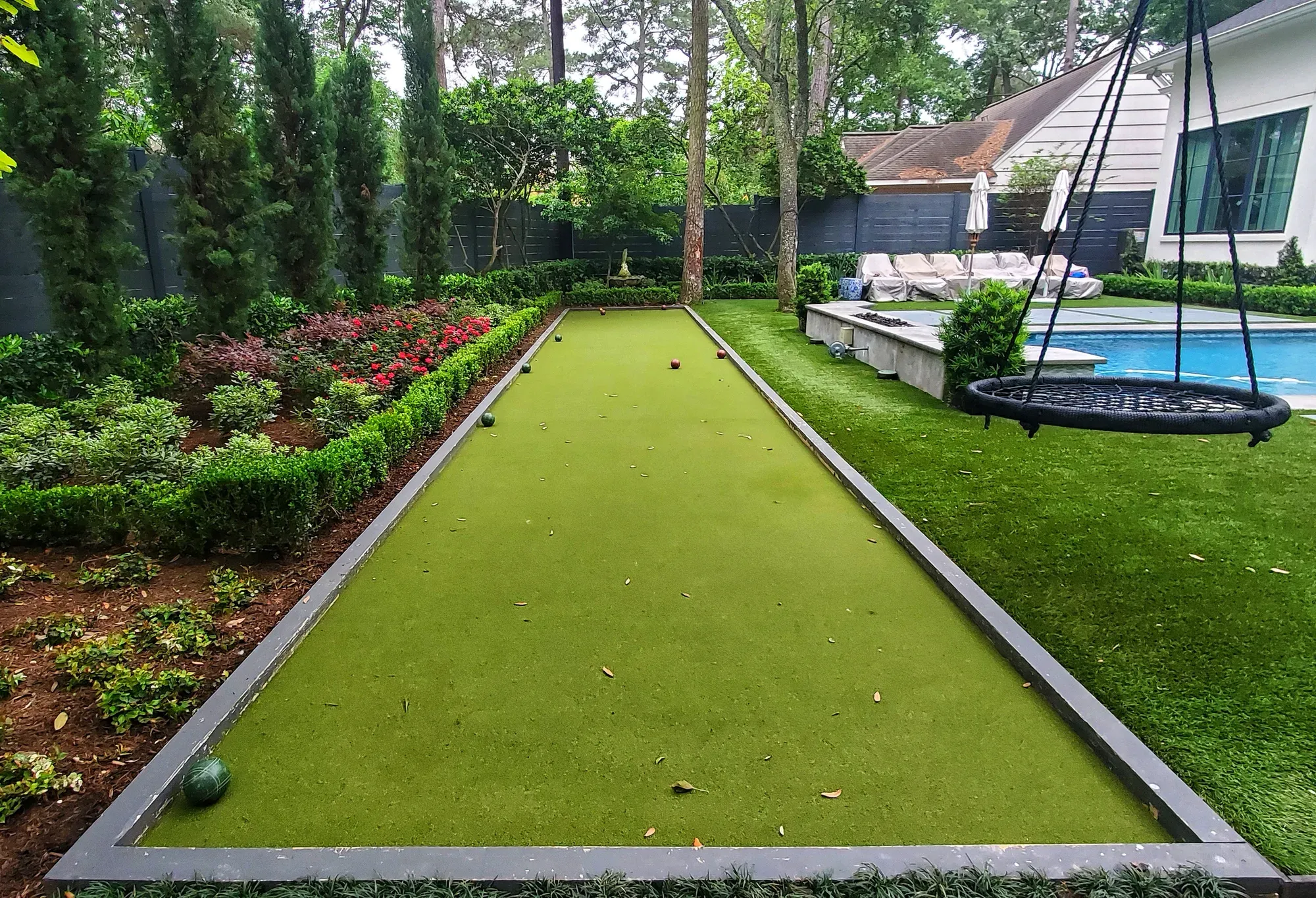
A turf bocce lane, family lawns and stone-and-turf garden paths across Memorial properties in Houston.
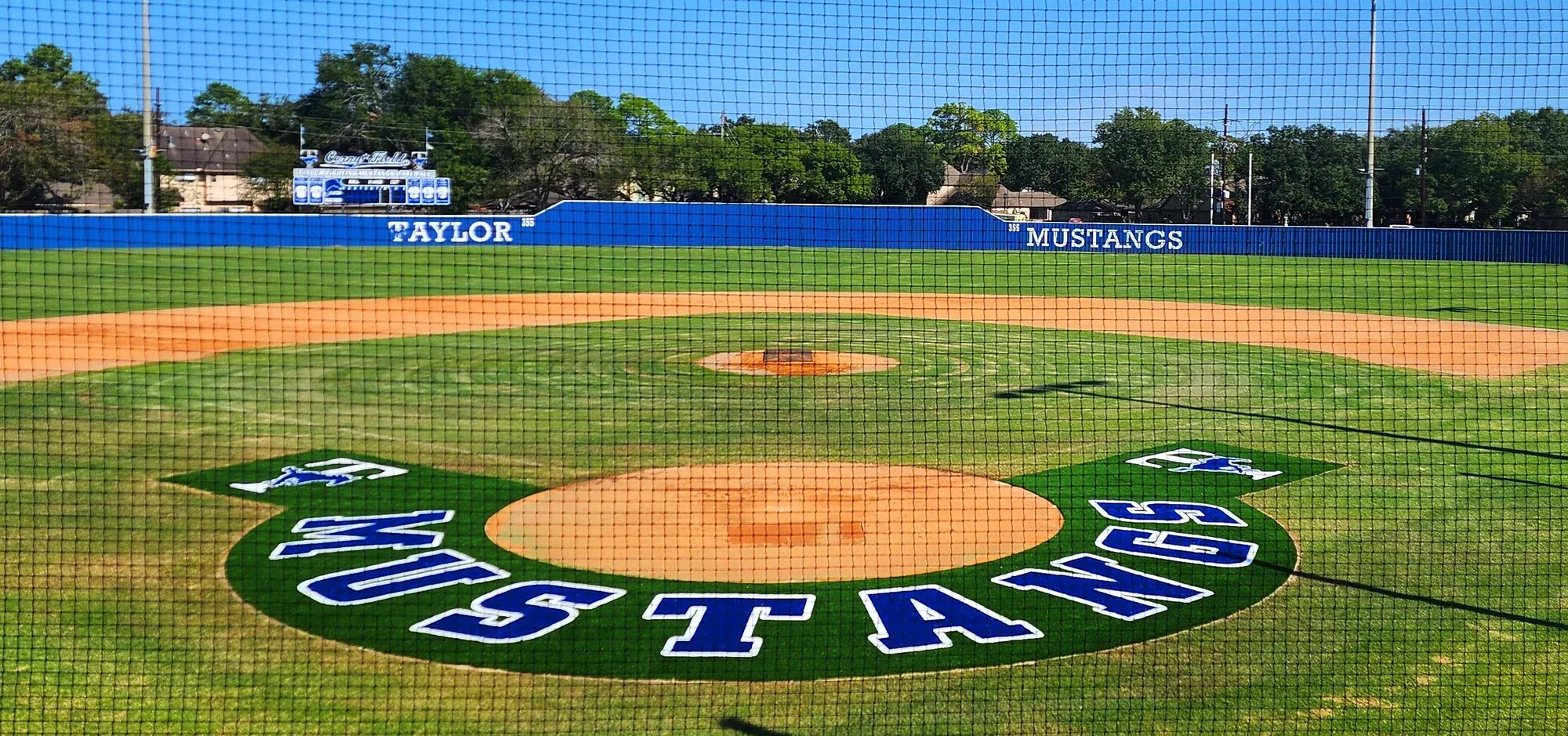
A synthetic turf halo and cut-in team logo around a baseball infield, built to take cleats, drag mats and a full season of play.
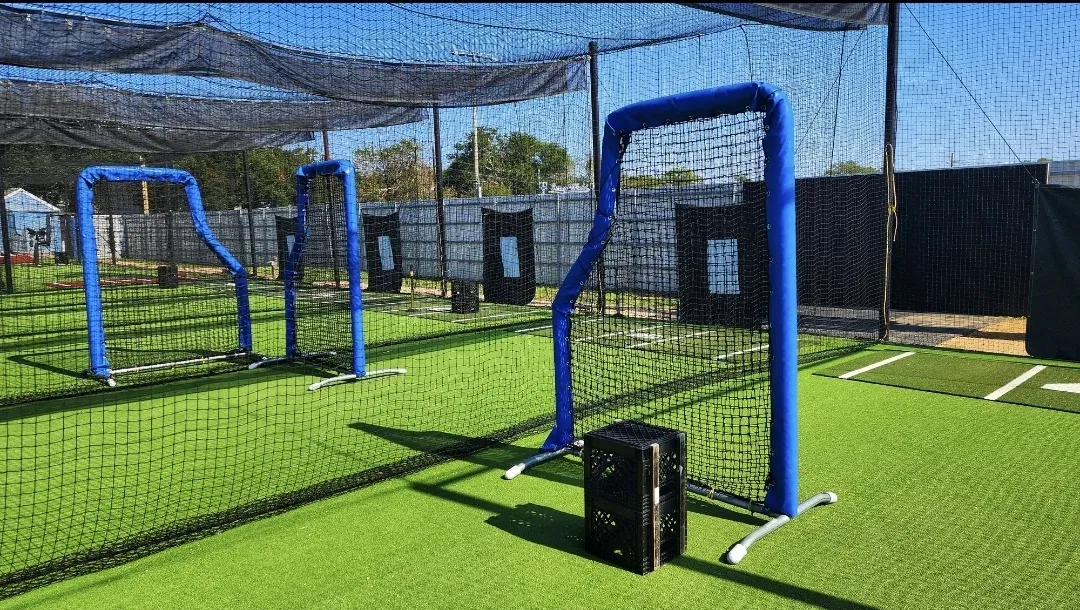
Artificial turf flooring through outdoor batting cages and pitching lanes, built to take spikes and machine wear.
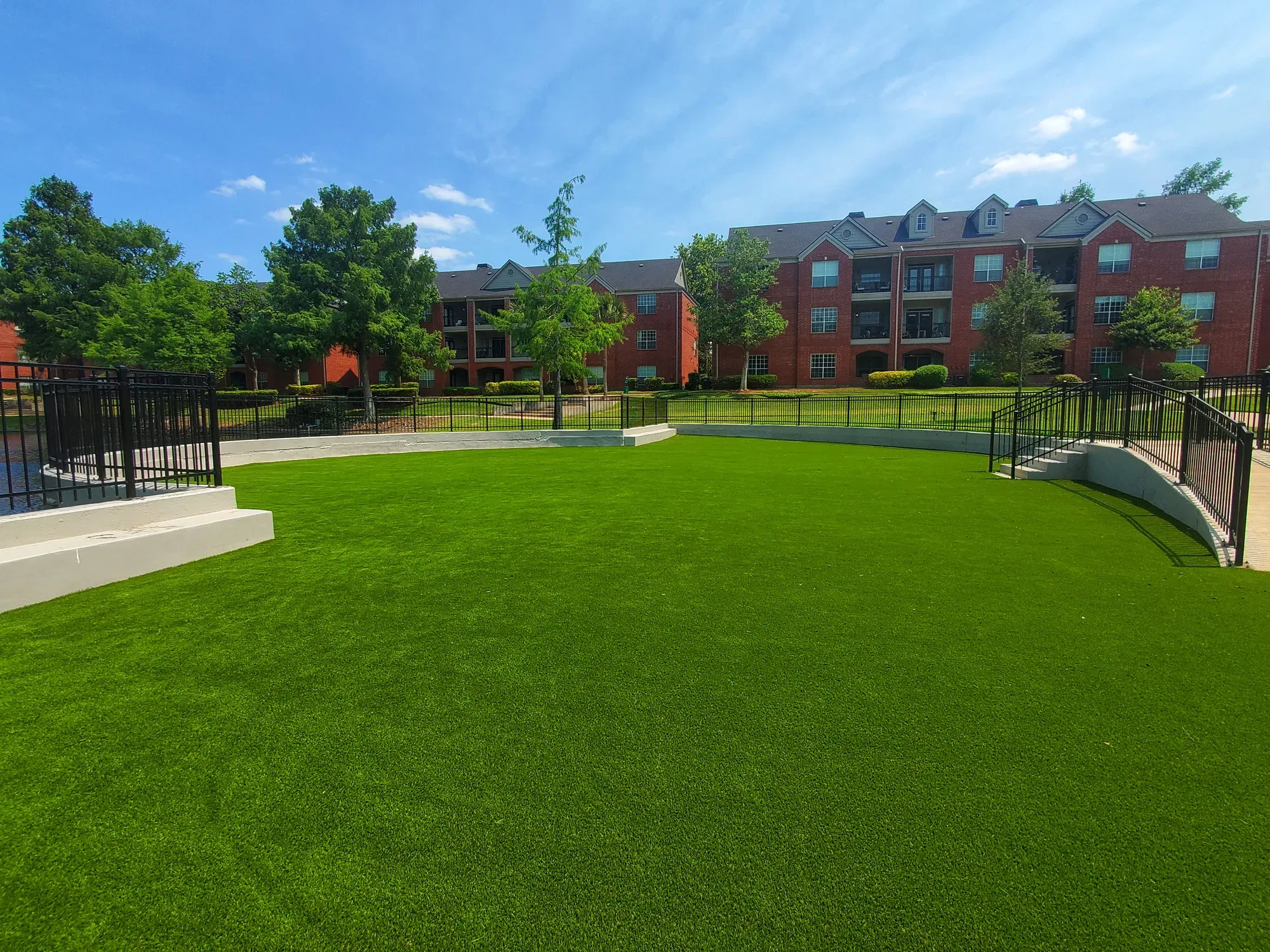
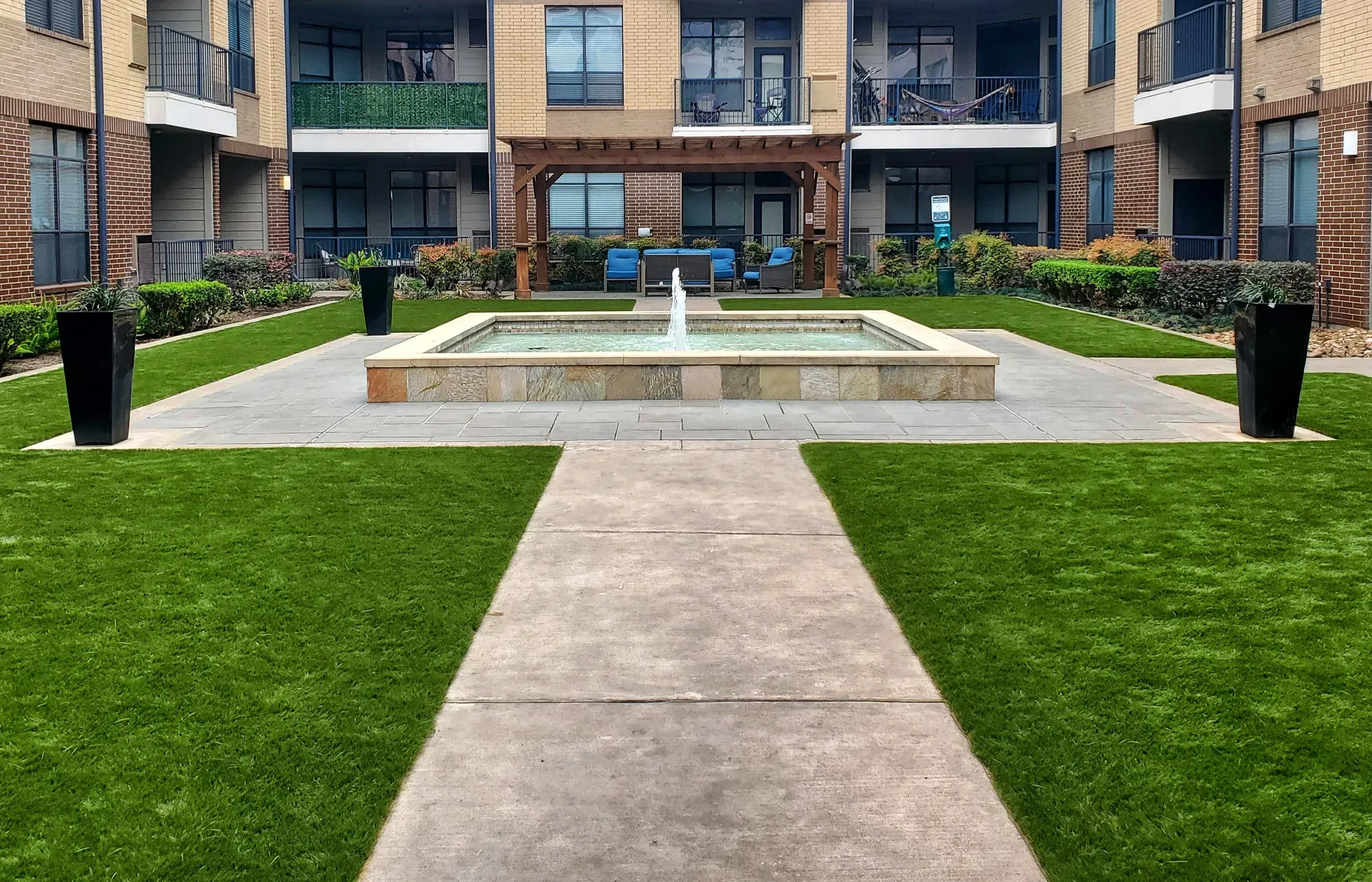
A large open artificial turf lawn in front of a multi-family building on Buffalo Speedway in Houston.
Our proven installation process ensures every project is completed efficiently with exceptional attention to detail.
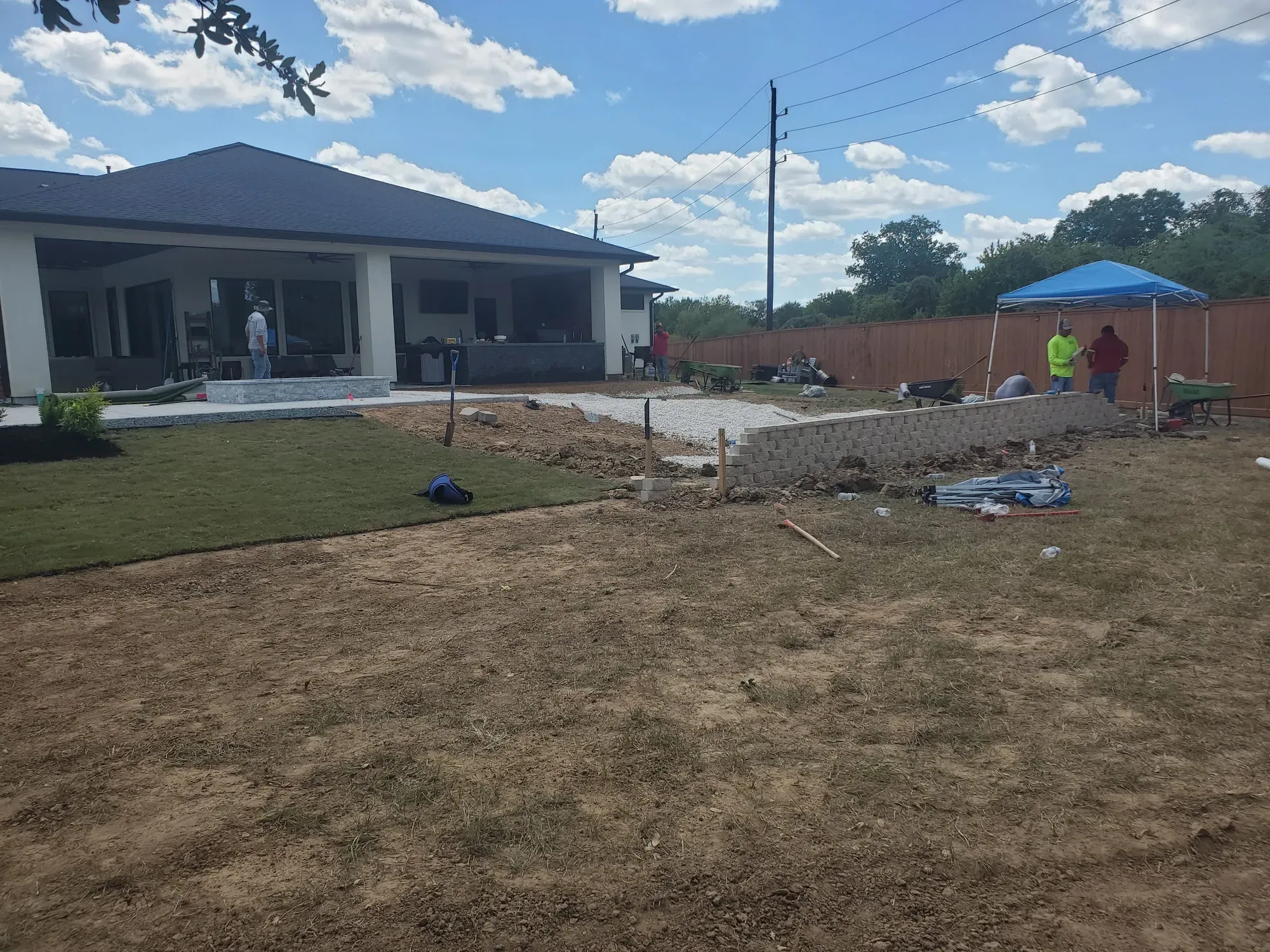
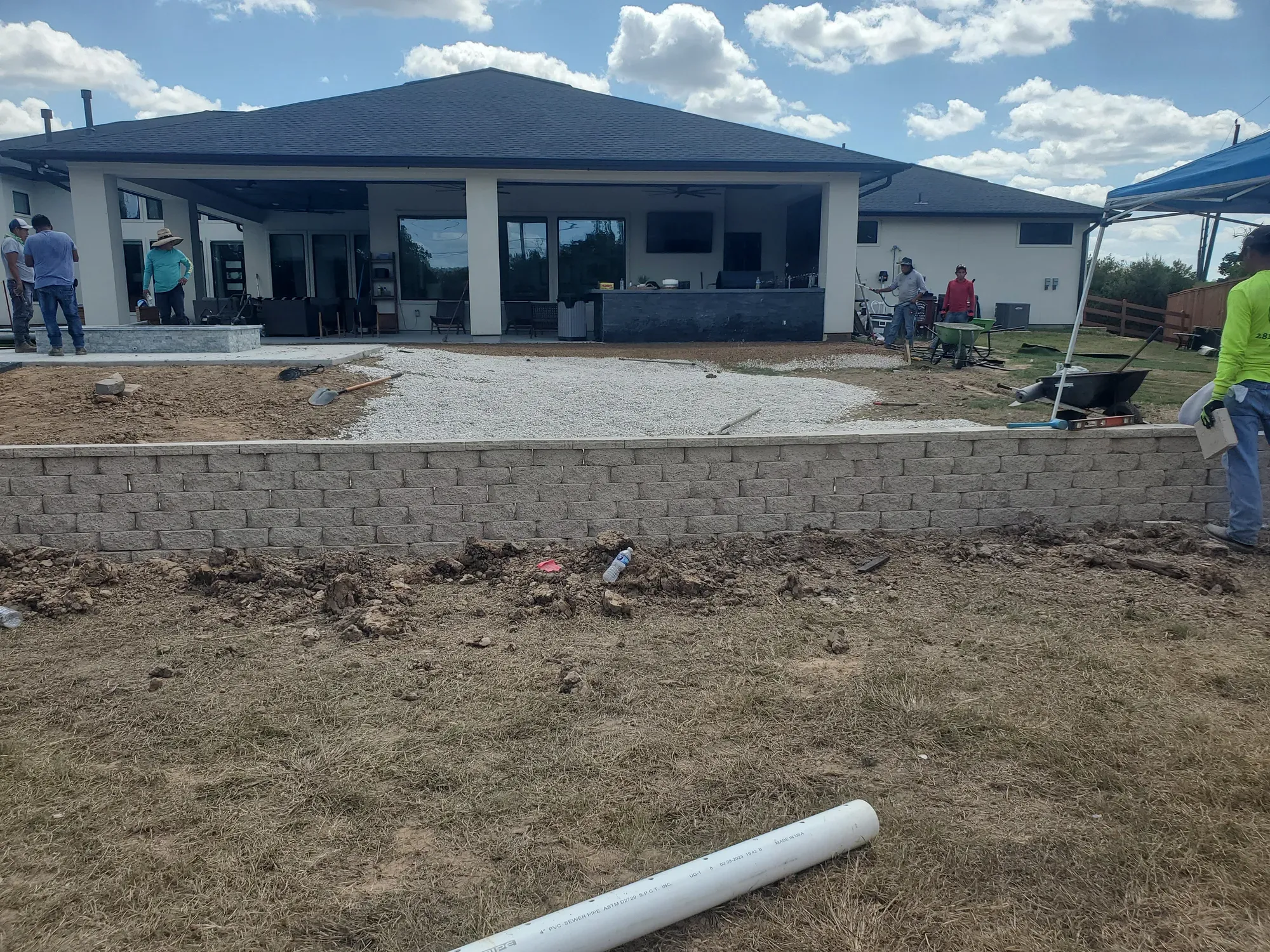
We strip the existing lawn and excavate down to a clean, stable sub-grade. Old roots, thatch, and loose topsoil all come out, because anything organic left behind will settle later and telegraph through the finished turf.
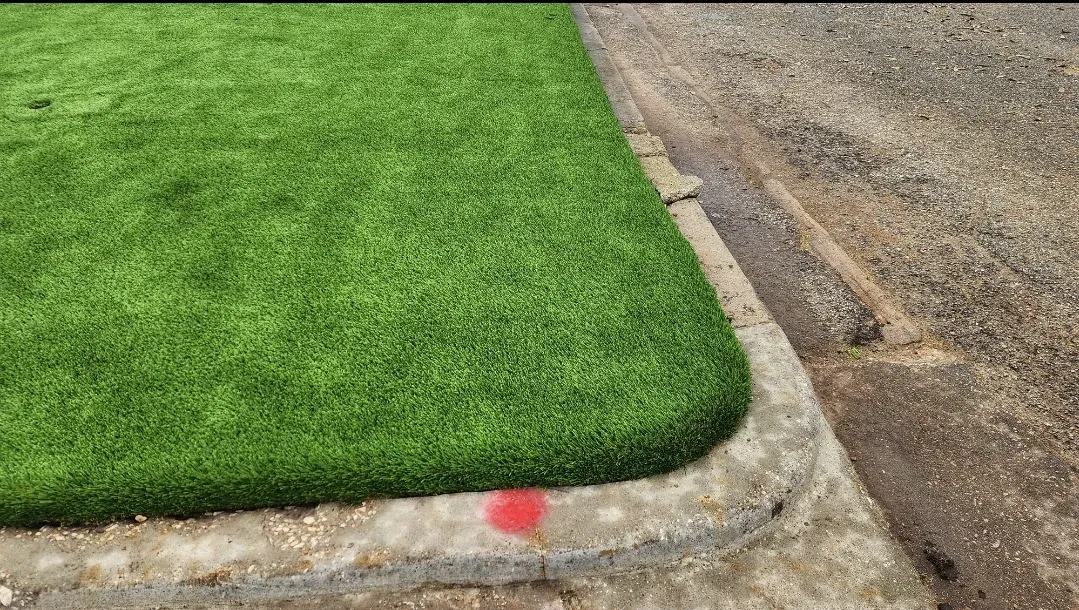
Flexible poly board is staked around the entire perimeter to lock the base in place. It holds your shape through curves and radii, keeps the aggregate from migrating into beds, and gives the turf a clean edge to be fastened to.
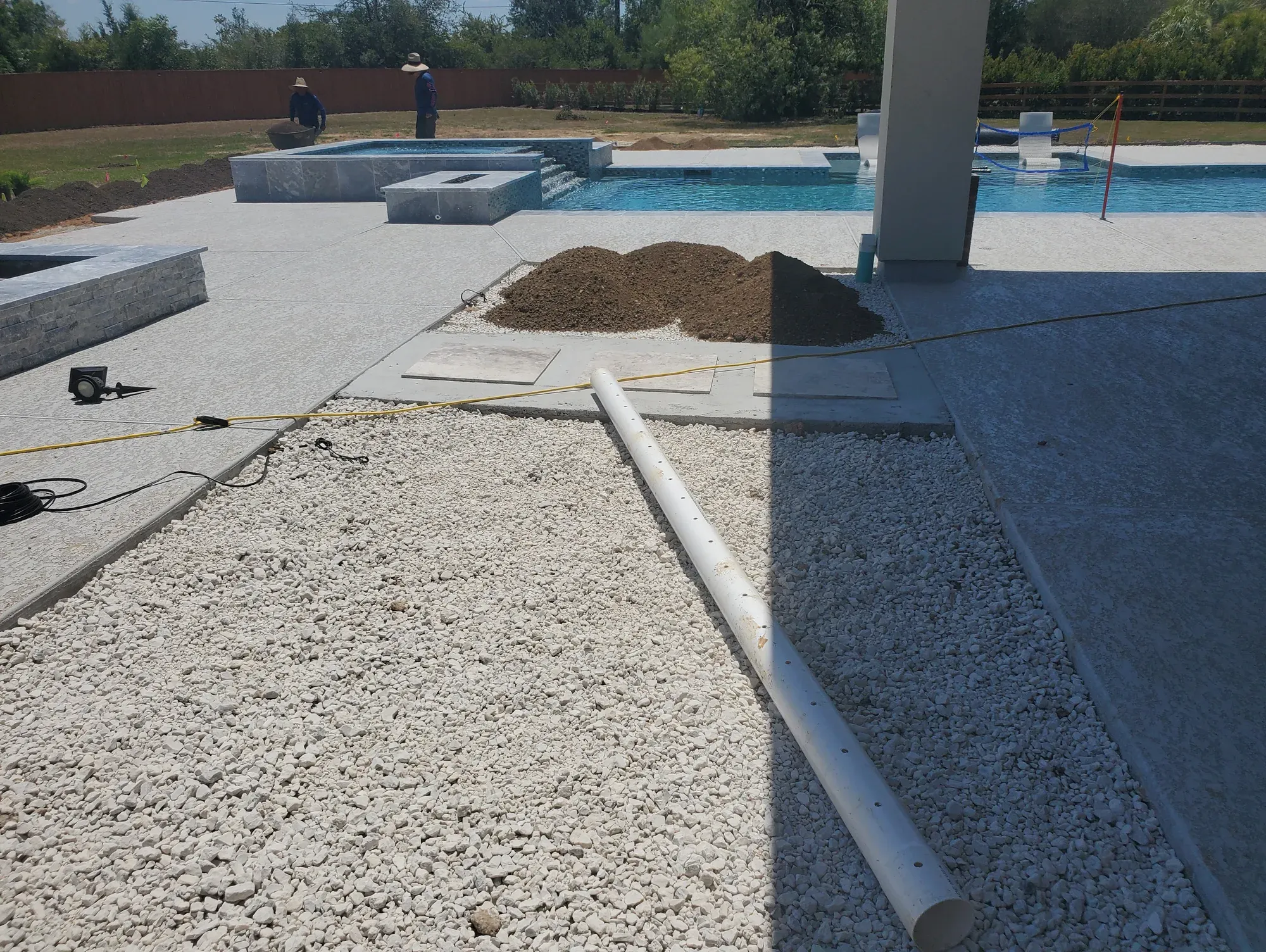
The first base layer goes down and is graded for drainage. This is the load-bearing course that carries foot traffic and keeps the surface from rutting, and it is where the finished contours of the yard are established.
A second, finer layer is screeded over the first to true the surface. Two layers instead of one is what separates a lawn that stays flat for years from one that dips and waves after the first wet season.
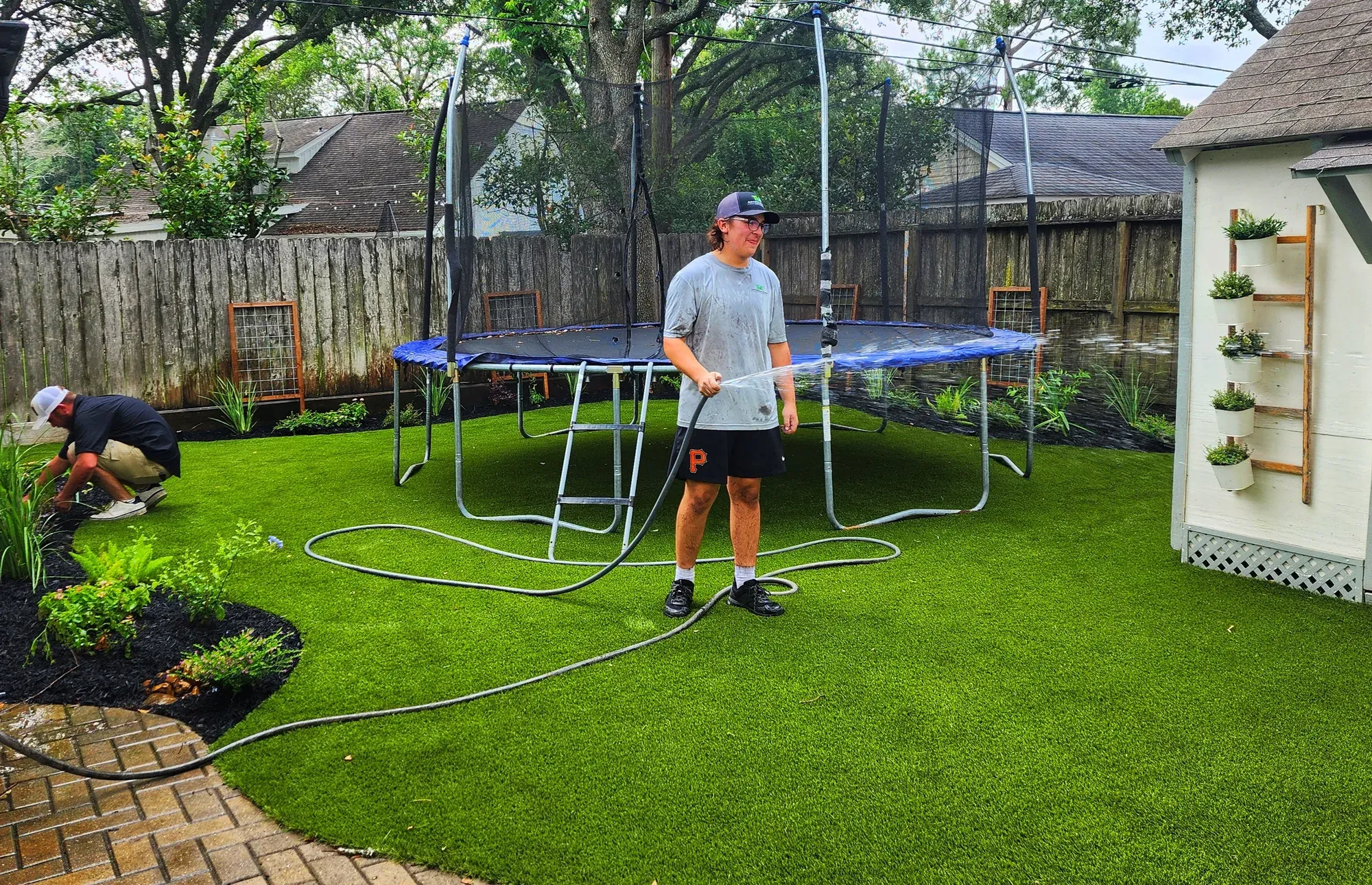
The base is plate-compacted to spec, then the turf is rolled out, allowed to relax, and cut to the yard. Seams are aligned to a single blade direction and joined so they disappear, and the turf is nailed off along every edge.
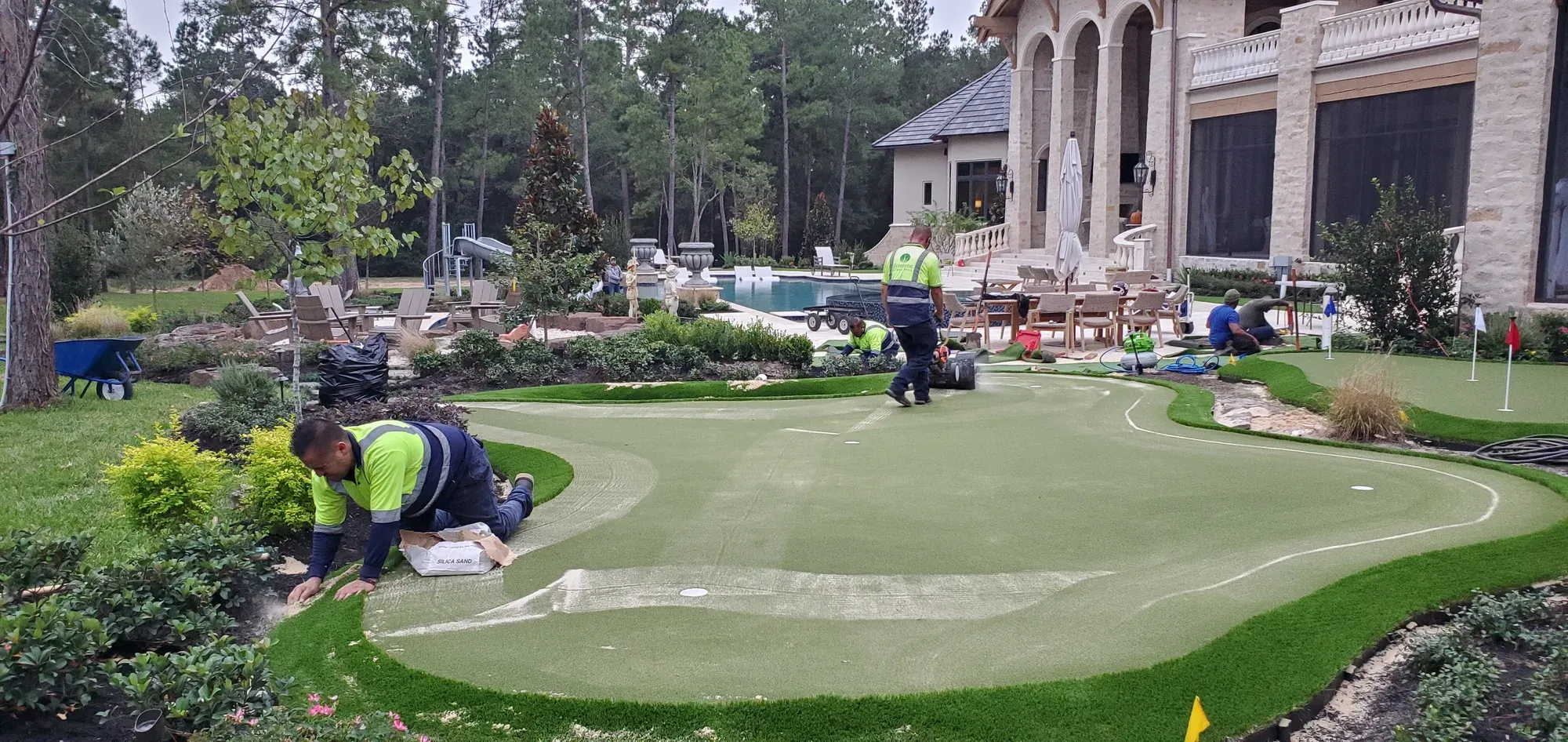
Silica infill is spread and worked in with a power broom, lifting every blade upright as it goes. Infill is what gives the lawn its ballast, its underfoot feel, and its ability to stand back up after traffic.
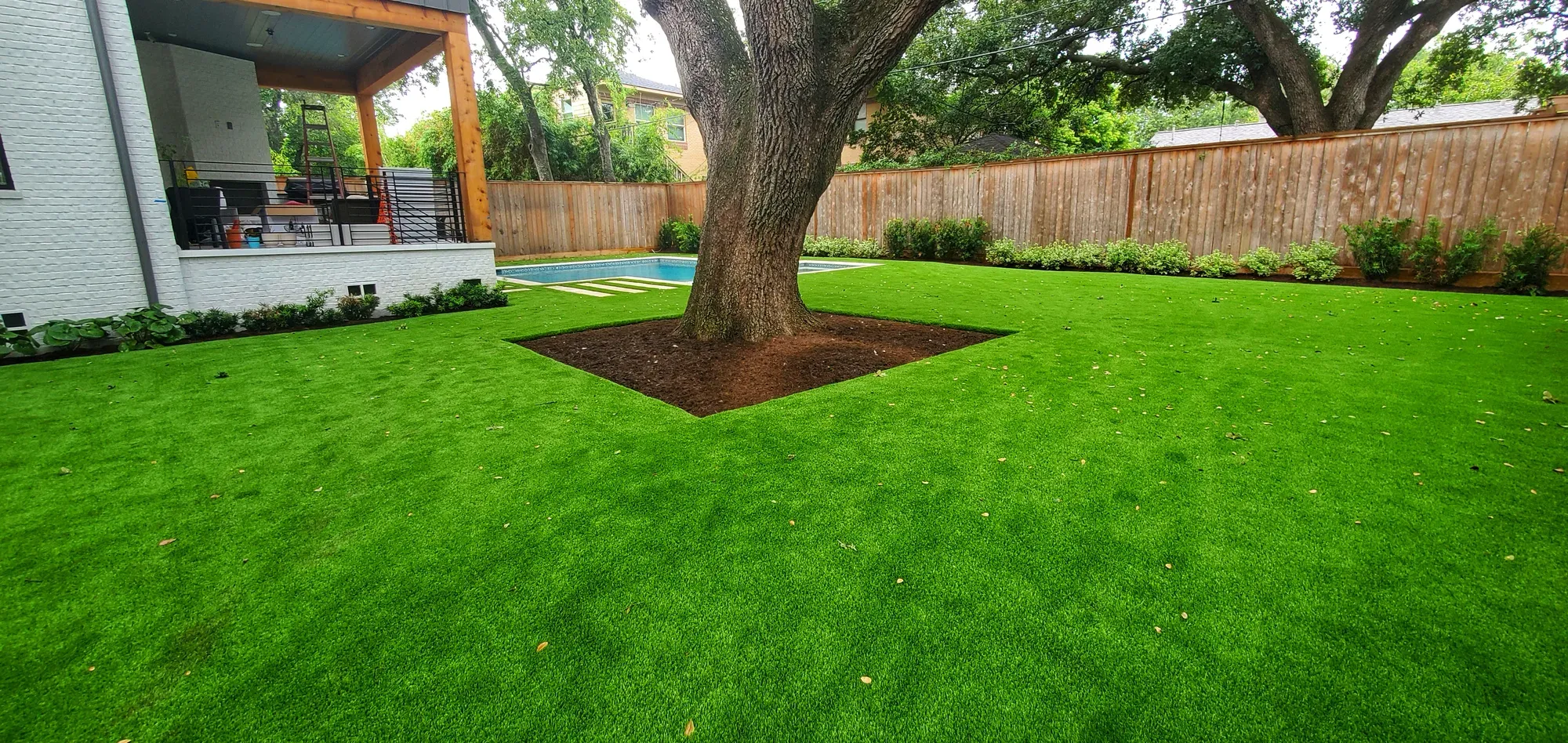
We do a final groom, clear the site, and walk the finished yard with you edge to edge. What you are left with is a lawn that looks cut every day of the year, with no mowing, watering, or seasonal brown-out.
TNT Turf is on a mission to transform Houston homes and businesses with premium synthetic turf, delivering lasting quality, honest service, and yards our customers are proud to look at everyday.
We started TNT Turf because Houston families deserve better than losing weekends to mowing and watering. Our mission is simple, give you a lawn you can enjoy every day, all year long, without the work that usually comes with it.
Every yard we install gets measured twice, leveled right, and finished like it’s our own backyard. If a job isn’t done the right way, it’s not a job we’re willing to put our name on, plain and simple.
By 2030, we want to help turn 10,000 Houston backyards into low-water, low-maintenance green spaces. It’s our way of making Houston greener and more sustainable, giving families more time to enjoy their yards instead of maintaining them.
From your first quote to the final walkthrough, we keep pricing fair, communication honest, and show up when we say we will. It’s our way of making sure every customer feels taken care of, not just sold to.
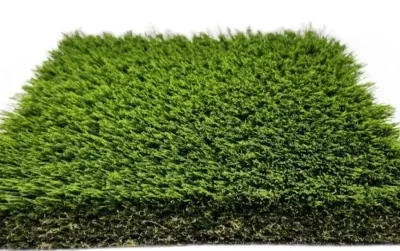
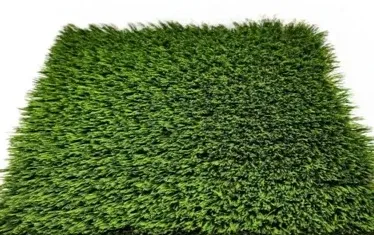
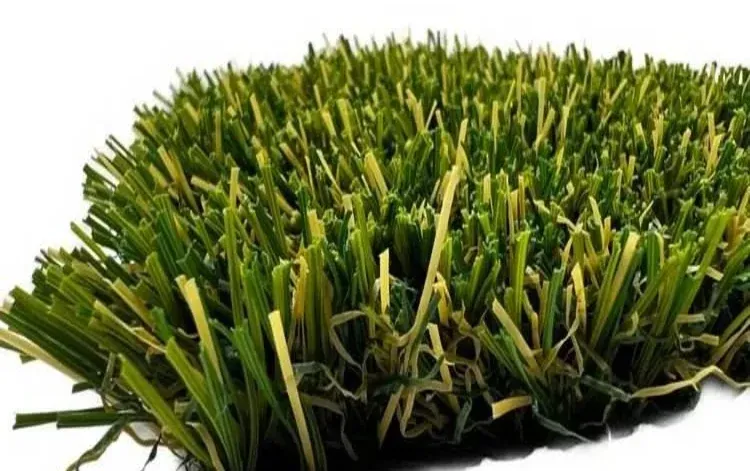
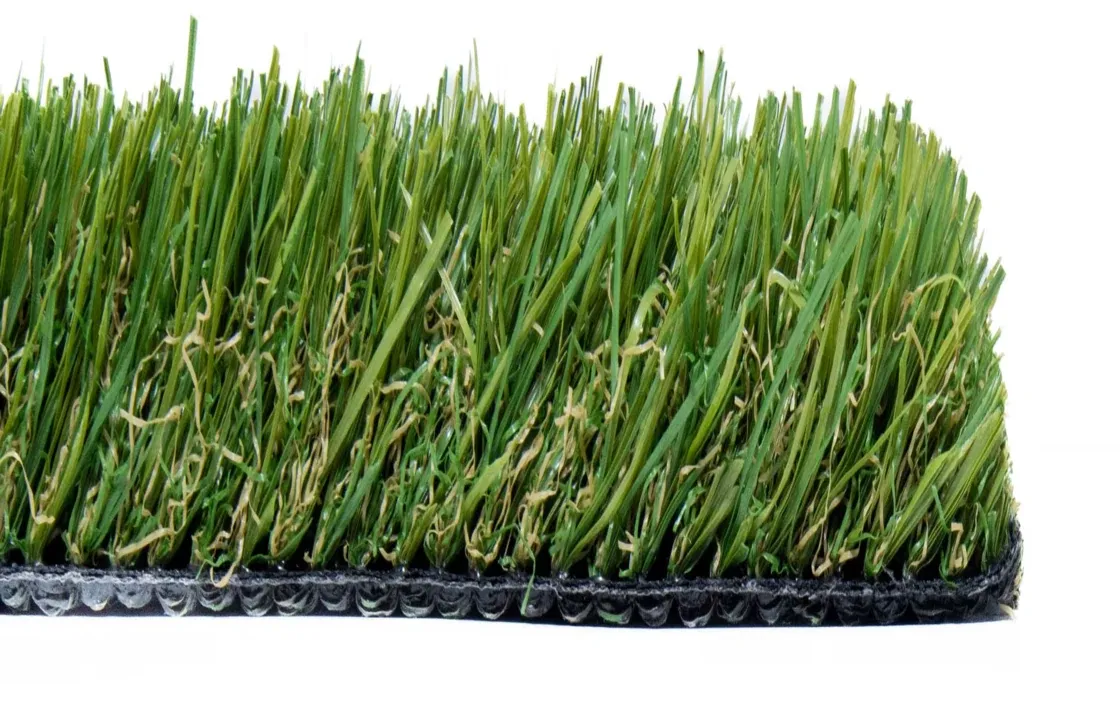
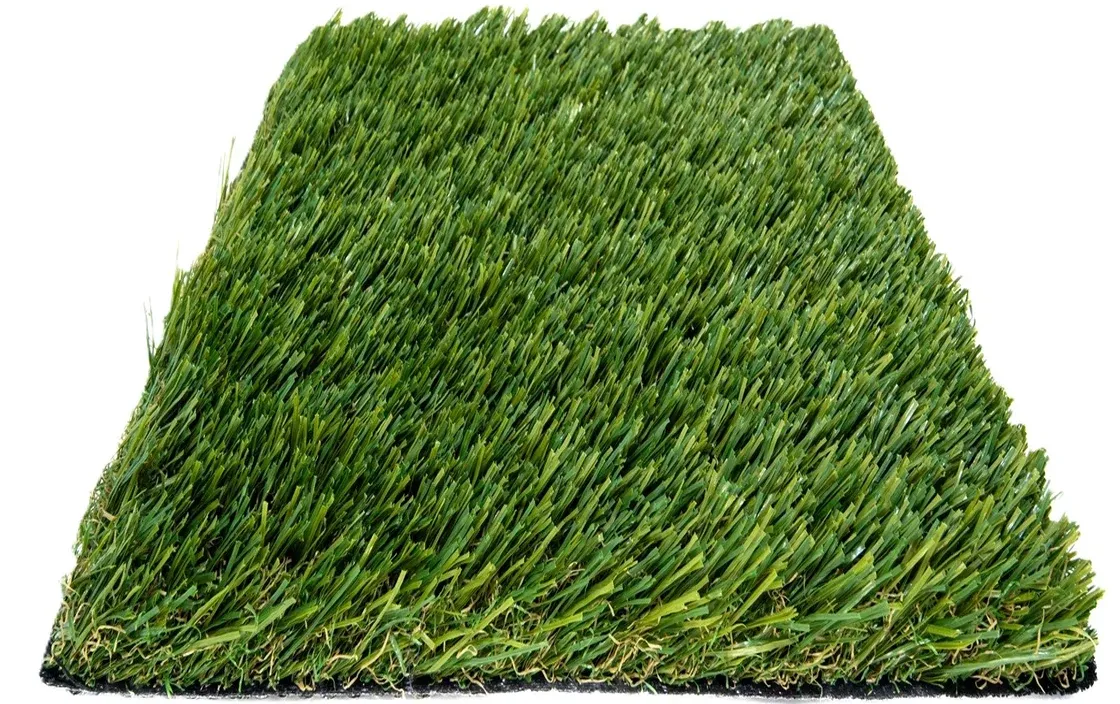
Explore a selection of our preferred artificial turf products, chosen for their appearance, durability, and performance across residential lawns, pet areas, playgrounds, and putting greens.
There is no honest flat price for a pickleball court, and a builder who quotes you one over the phone is guessing. The number comes from how many courts you want, what the ground underneath them needs, which surface you pick, and what goes around them in fencing, nets and lights. We walk the site, look at the soil and at where the water runs, and put a written number in front of you before any work starts.
A single backyard court and a four-court community complex are not the same job, and on Houston clay most of the difference lands in the base and the drainage rather than in the surface on top. If you are weighing a court against a field or another sport, our sports fields and courts page covers the wider range. Either way the site walk and the written quote cost you nothing.
Book a Free Site WalkFree
on-site measure and written quote
What drives your number
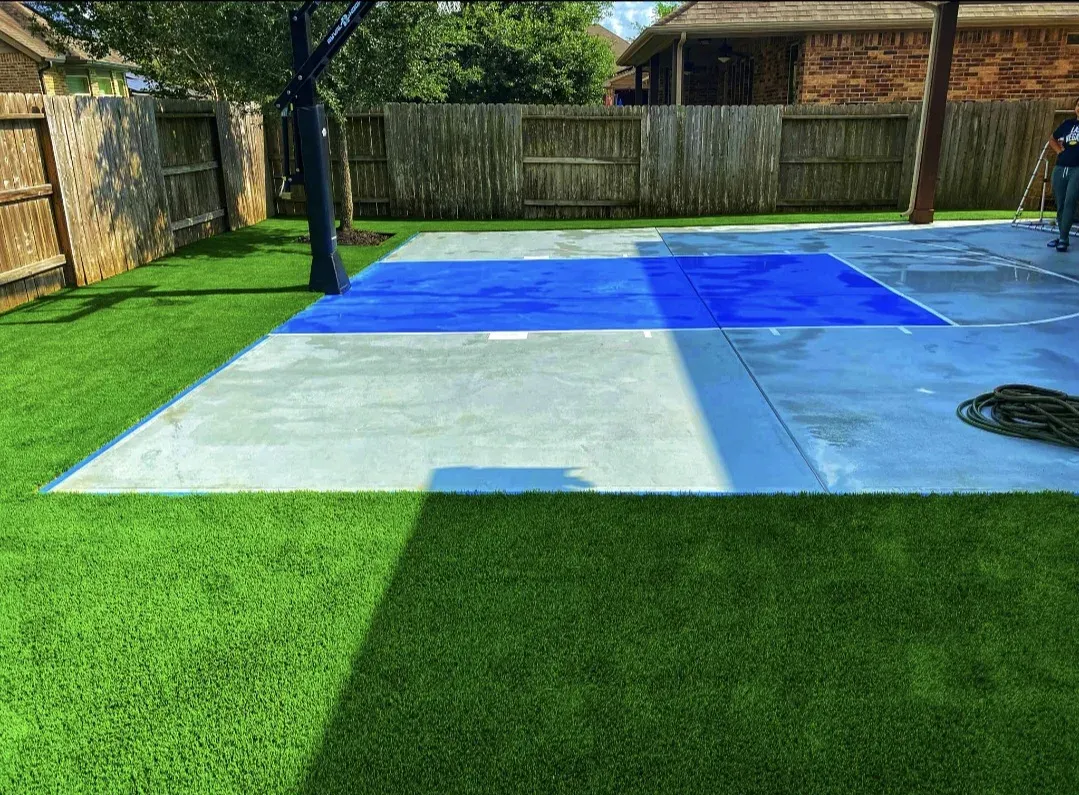
It comes down to who is playing and how often the court sits wet. Acrylic over concrete gives the truest and highest ball bounce, and it is what competitive play is generally held on, so choose it if sanctioned tournaments are the point of the court. Cushioned turf over an engineered base plays lower and slower, it is easier on knees and hips through a long session, and it drains through the surface after a storm instead of holding water on top. Both are real answers. We will tell you which one your players are better off with, even when it is not the one we lay.
Any playing surface in full Houston sun gets hot in July and August, and turf is no exception. It matters more on a pickleball court than on most surfaces, because a lot of the people booking your court are past 50 and handle heat less well than a teenager does. The useful part is that you can plan for it. Infill choice, shade, water and the hours you schedule play all bring the surface and the player load down, and every one of them costs less designed in from the start than added later.
Crumb rubber runs the hottest of the common infills. Light-colored coated sand and organic fills such as cork run cooler. We walk you through what each one does to cost, to feel underfoot and to how the ball plays.
Shade sails over the corners, existing tree cover on the west side, and covered seating between games all take the edge off. A pass with a hose before play brings the surface down for a while too.
Court lighting is the cheapest heat fix on this list, because it moves play to the cool part of the day. It also stretches a Gulf Coast court to most of the year, which is the number an HOA board tends to care about.
Sand-dressed court turf inside the glass and the cage, laid flat so the skid off the surface stays honest.
Full tennis surfaces and shared tennis and pickleball line layouts on a base built for Houston clay.
The full range: soccer and multi-sport fields, bocce, padel, tennis and every court we build in Houston.
Most residential projects are complete in 2–4 days. Larger commercial installs typically take 1–2 weeks.
Every install carries the manufacturer's product warranty against fading and wear, plus our own workmanship coverage on seams, edging, and base. Full terms come with your proposal.
Yes. We install lead-free, non-toxic turf over a permeable base that drains quickly, and we can add an antimicrobial infill for pet areas to keep odours down.
A rinse now and then and an occasional cross-brush of the high-traffic paths. No mowing, no watering, no fertiliser, and no seasonal brown-out.
Turf runs warmer than a natural lawn in direct sun. We specify cooler yarn and lighter infill where a yard gets full afternoon exposure, and a quick rinse brings the surface temperature straight back down.
Pricing depends on square footage, the turf you choose, and how much prep the site needs. We measure on site and give you a fixed written quote before any work starts.