
Turf Mission
We started TNT Turf because Houston families deserve better than losing weekends to mowing and watering. Our mission is simple, give you a lawn you can enjoy every day, all year long, without the work that usually comes with it.
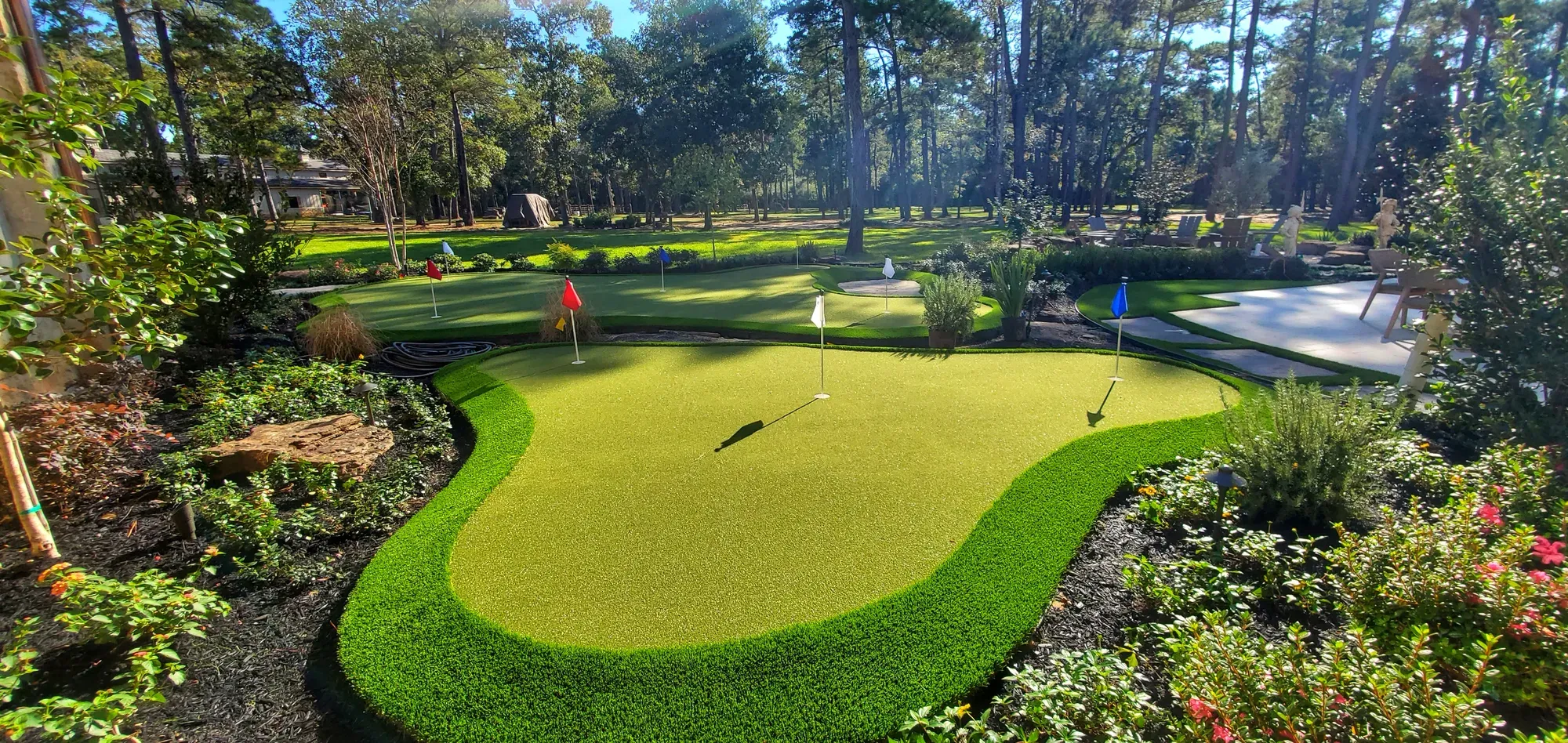
A par 3 or executive course is a land project, and the playing surfaces are the part that decides how it plays. We install synthetic tee decks, greens and green complexes for par 3, executive and short course builds across Greater Houston, on a base shaped and drained for clay and storm rain. Your course architect and civil contractor handle the routing and the earthworks. We build the surfaces they hand us.
Short course golf keeps growing because it fits where a regulation course cannot. Shorter holes, a smaller footprint, and a round that drops into a morning or a twilight window. What does not shrink is the cost of holding greens together on the upper Texas Gulf Coast. Bentgrass is a cool-season grass, and warm, humid nights here keep it stressed straight through the summer, which is why courses in this region run ultradwarf Bermudagrass greens such as TifEagle, Champion and MiniVerde. Those surfaces still want water, fungicide, daily mowing, and closed days for aeration and grow-in.
Our scope on a course project is the synthetic surfacing: tee decks, greens, green complexes, and the fringe, collar and surround turf seamed around them. Routing, earthworks, bunkers, irrigation mains, cart paths and natural-turf fairway agronomy belong to your course architect and civil contractor, and we work alongside them on the schedule they set. Contours, tiers and run-offs are shaped into the compacted base before any turf goes down, because the break lives in the base and not in the fiber. Green speed is specified up front and set with fiber type, fiber height and silica sand infill, then held with rolling and brushing. Cups are the regulation 4.25 inches, so the hole plays the way a golfer expects it to.
It needs a compacted aggregate base built to move water down and out, not a soil pad with grass carpet on it. We excavate to depth, shape the contours, tiers and run-offs into crushed aggregate, compact it, and lay a permeable-backed turf over a drainage layer so rain passes through the surface instead of standing on it. That matters more here than in most markets. Houston clay sheds a downpour rather than taking it, and Atlantic hurricane season runs June 1 through November 30, so the base has to carry heavy rain and give you a playable green soon after the storm clears. Perimeter anchoring and the edge detail get the same attention, because that is where a flooded green fails first.
On a par 3 course every hole is a par 3. An executive course mixes par 3 holes with a few par 4s, and sometimes a par 5, so it plays longer and asks the golfer for more clubs. Both sit under the wider heading of short course golf, along with pitch and putt layouts, and both are commonly built as nine or eighteen holes. The label matters to your build for two reasons: it sets how much land the routing needs, and it sets how many full-swing tee decks you are surfacing. The green work is similar either way, but an executive course usually carries longer tees and larger green complexes.
Less time than a regulation nine, because each hole is a tee shot and then putting. We will not print a set number, since group size, walking or riding, tee spacing and how busy you are move it more than the layout does. What you can control at build time is flow. Space the tees so a group is not standing on the one ahead, keep the walk from green to next tee short, and size the green complexes so play does not bunch up around the pin. Those are routing calls your course architect makes, and they are far cheaper to get right before any base goes in.
Yes, and the surfaces are different products from each other. Greens use a short, dense putting fiber with silica sand infill, tuned for a true roll. Tee decks use a tee-line turf built to take repeated divot-taking strikes without shredding, which is a heavier and more resilient construction. Fringe, collar and surround turf is a third spec again, taller than the putting surface and seamed to it so chips and run-ups behave correctly. Fairway areas are usually left in natural grass and looked after by your agronomy team. We surface the two parts of the hole that take the most wear and decide how it plays: the tee and the green.
These are the short course projects where a synthetic playing surface earns its place. If one of them matches what you are planning, we can price the tees and greens straight off your architect's drawings.
Serving homeowners, businesses, and property managers across Greater Houston with artificial turf built for our climate. From backyard putting greens and pet runs to courtyards, playgrounds, and commercial grounds, every install is measured on site, graded for drainage, finished by our own crew, and backed by a warranty we put in writing.
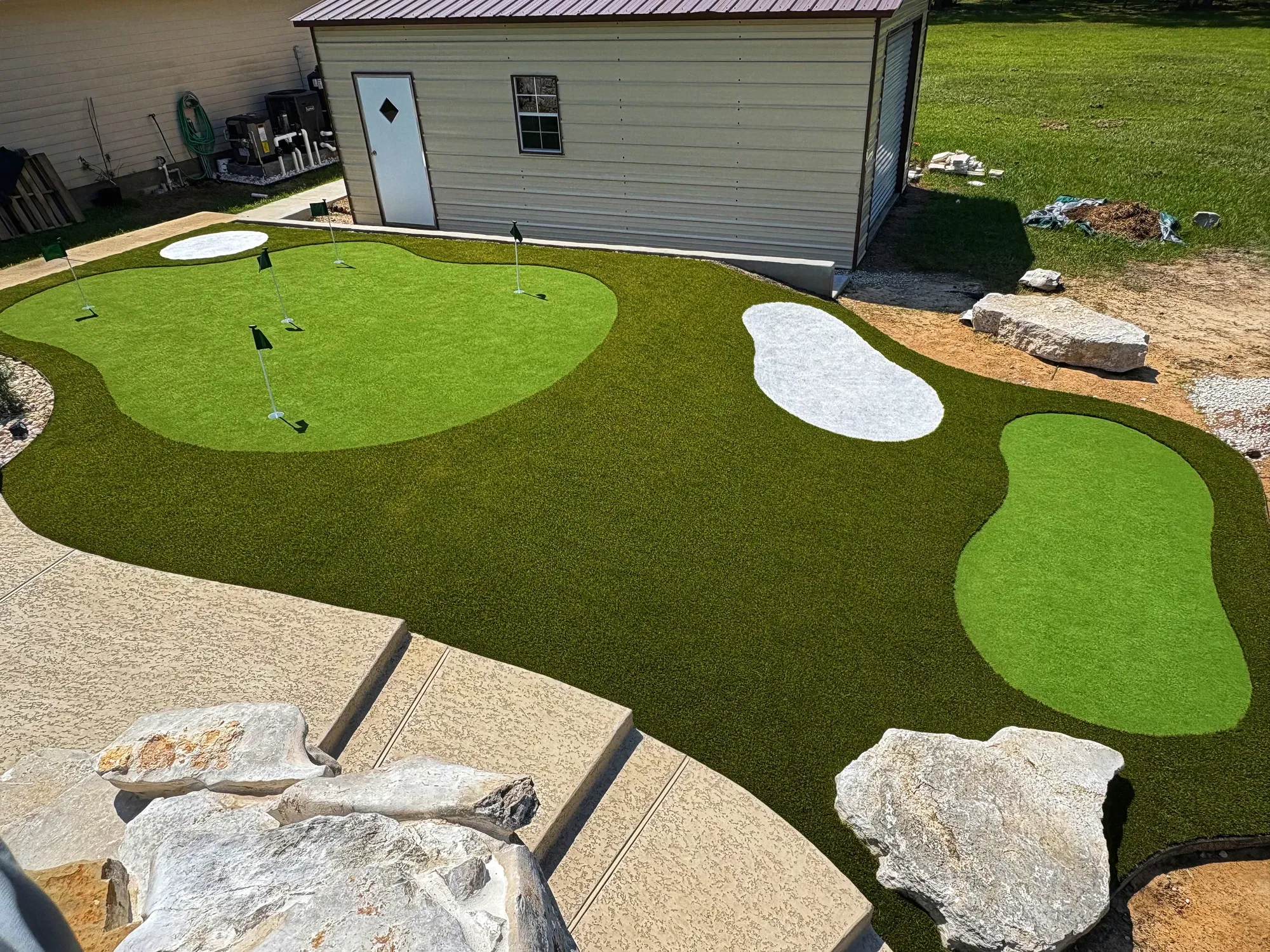
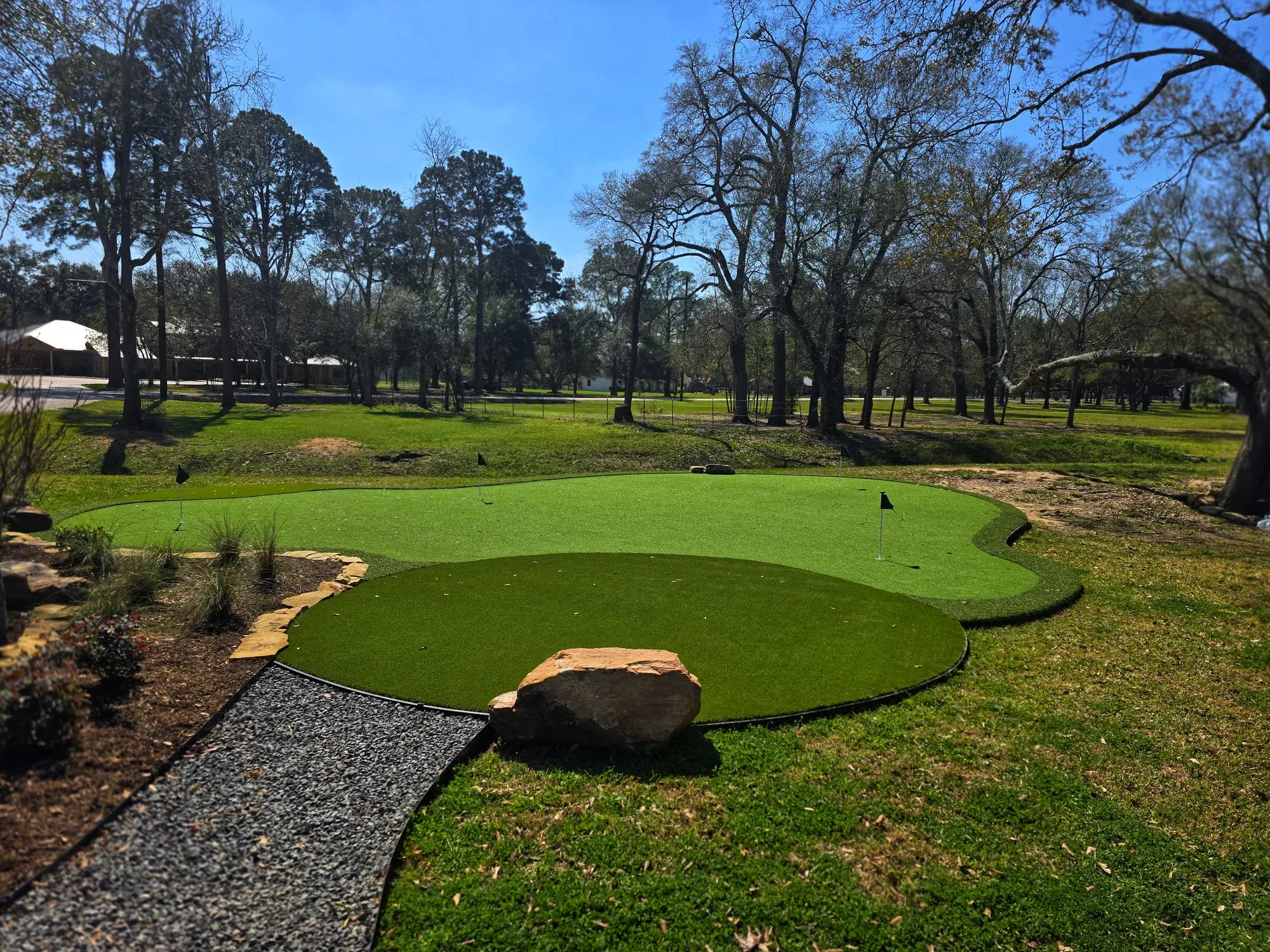
A free-form backyard practice green in Santa Fe with a cut-in sand bunker and a boulder-set border.
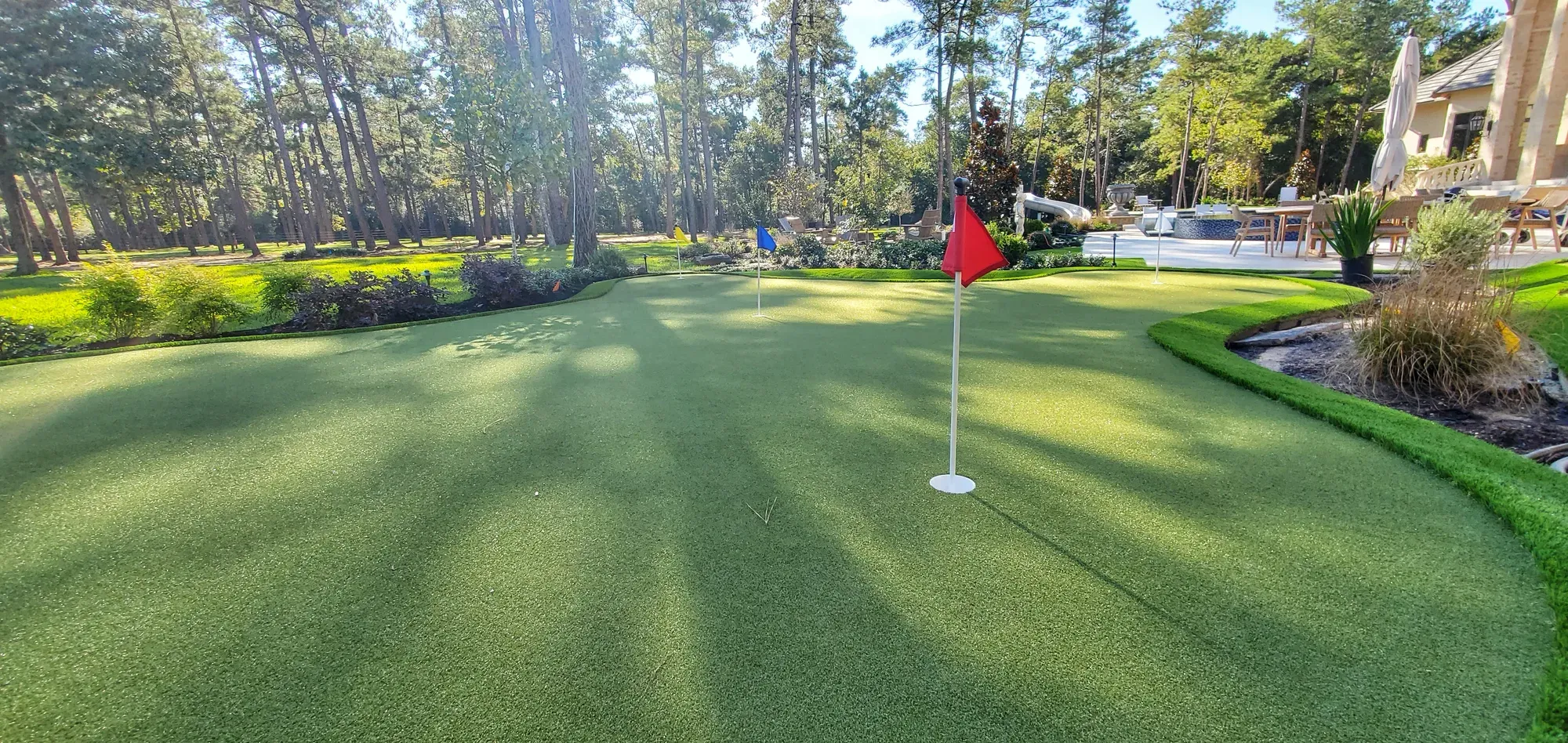
A contoured multi-hole practice green in Hockley with several cut-in cups, plus shaded courtyard turf around mature trees.
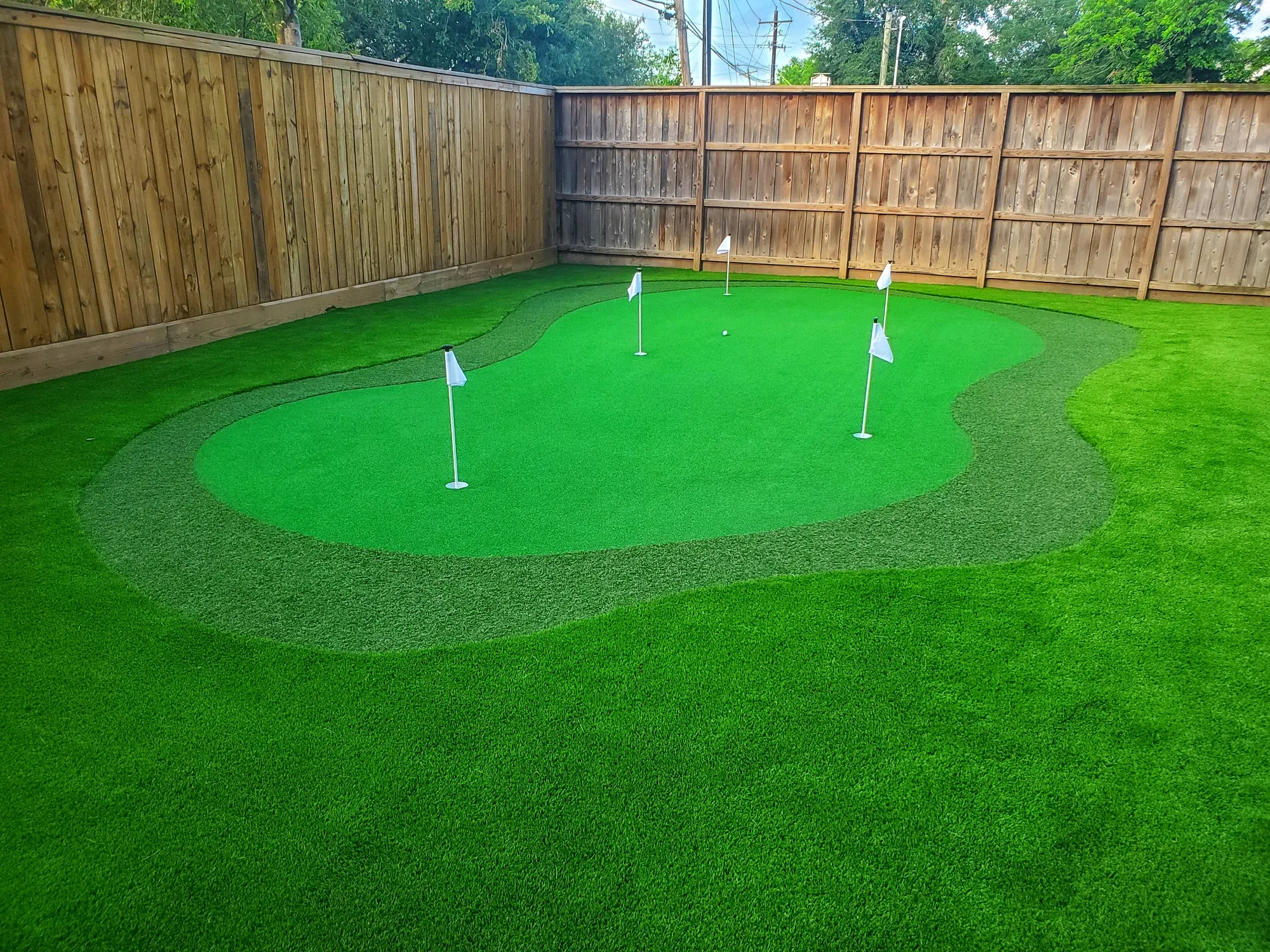
A four-hole practice green set into an artificial turf back lawn in Timbergrove, plus a side yard laid around a mature tree.
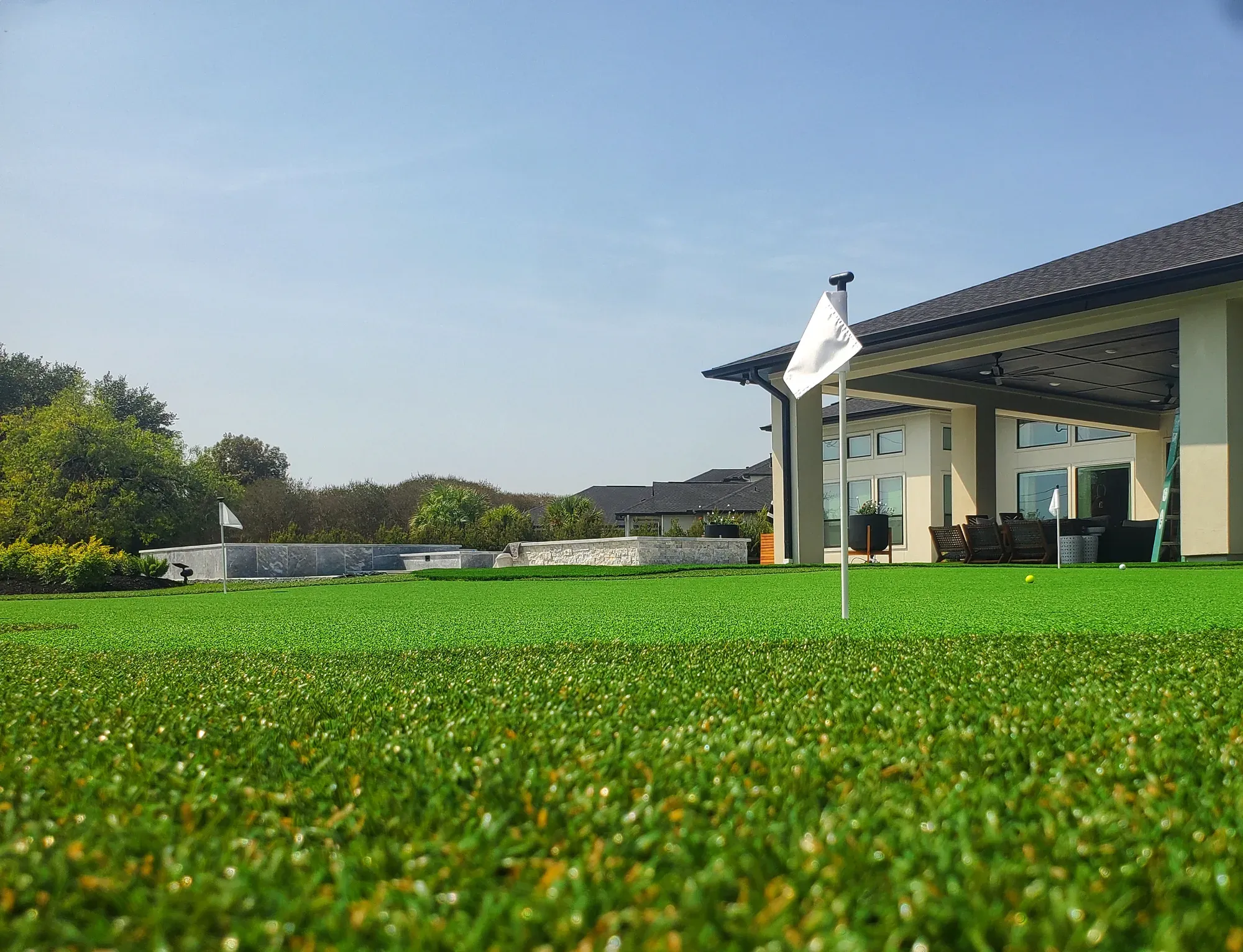
Backyard practice greens in Fulshear, including a raised green built out on a block retaining wall, plus pool-surround turf.
Our proven installation process ensures every project is completed efficiently with exceptional attention to detail.
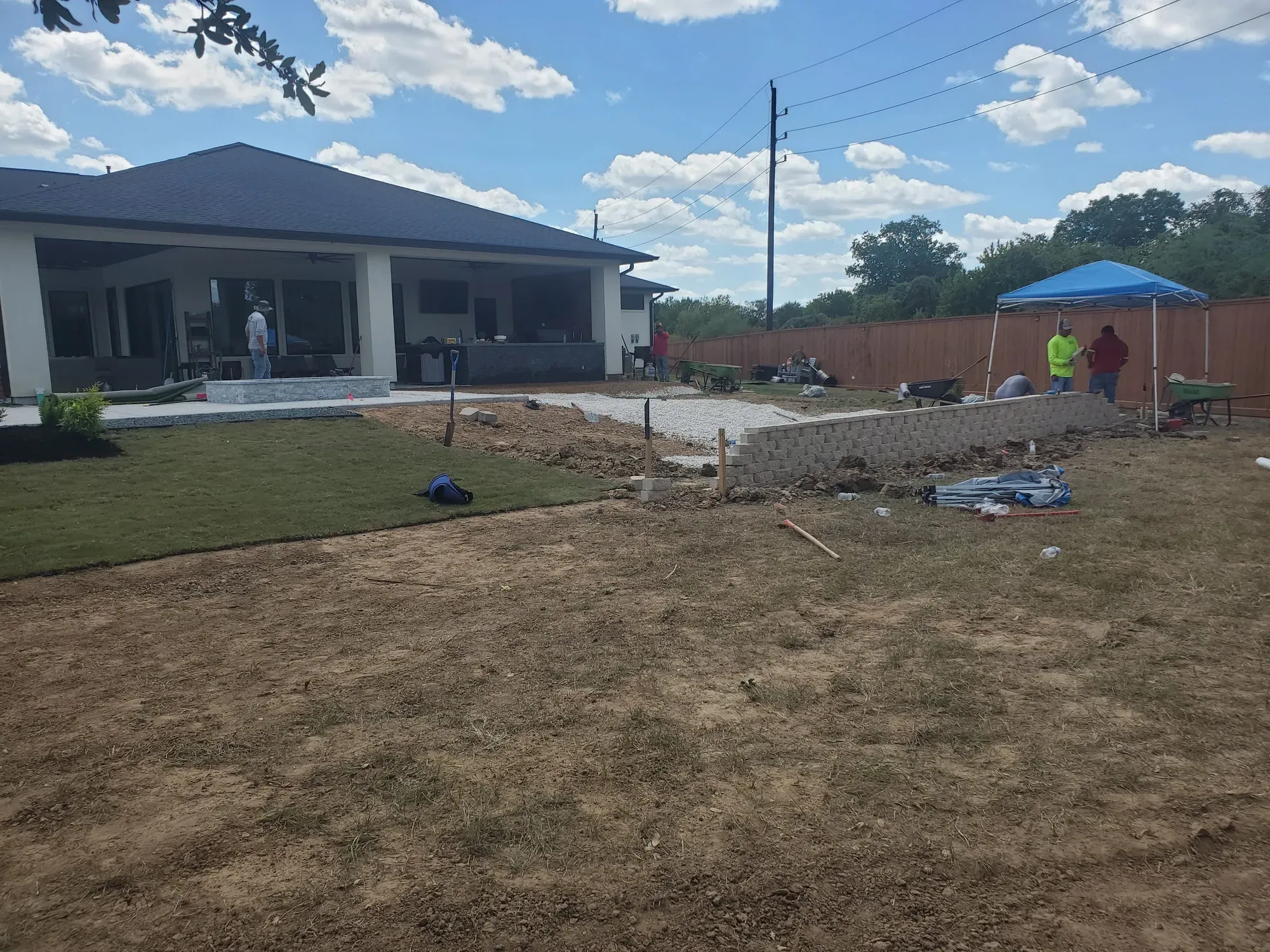
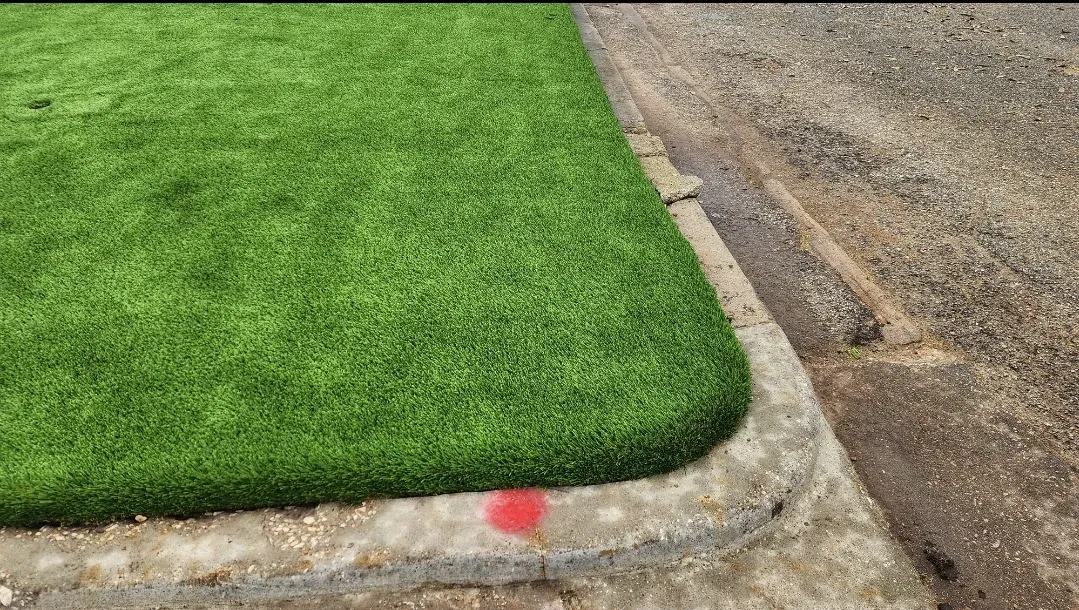
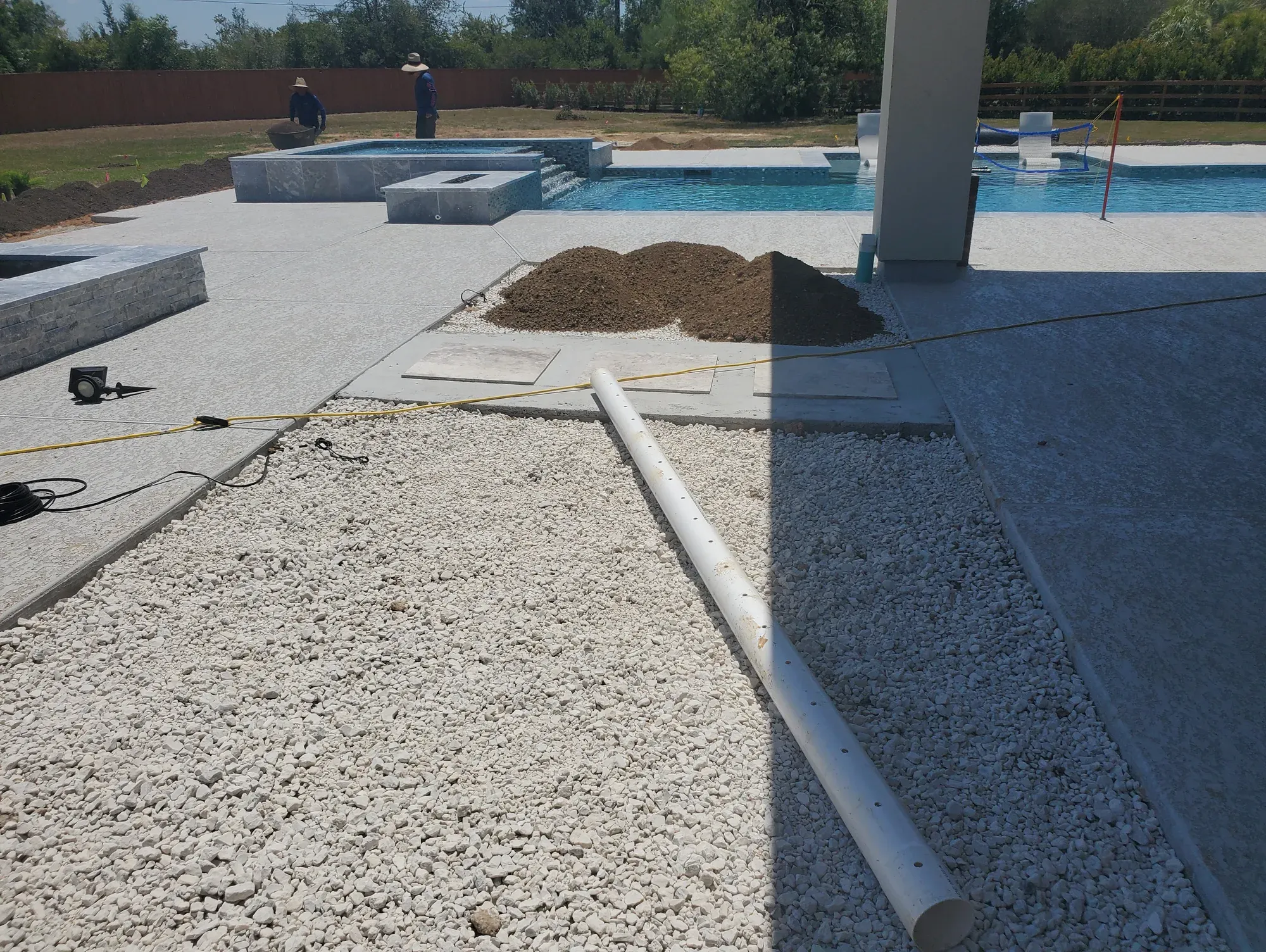
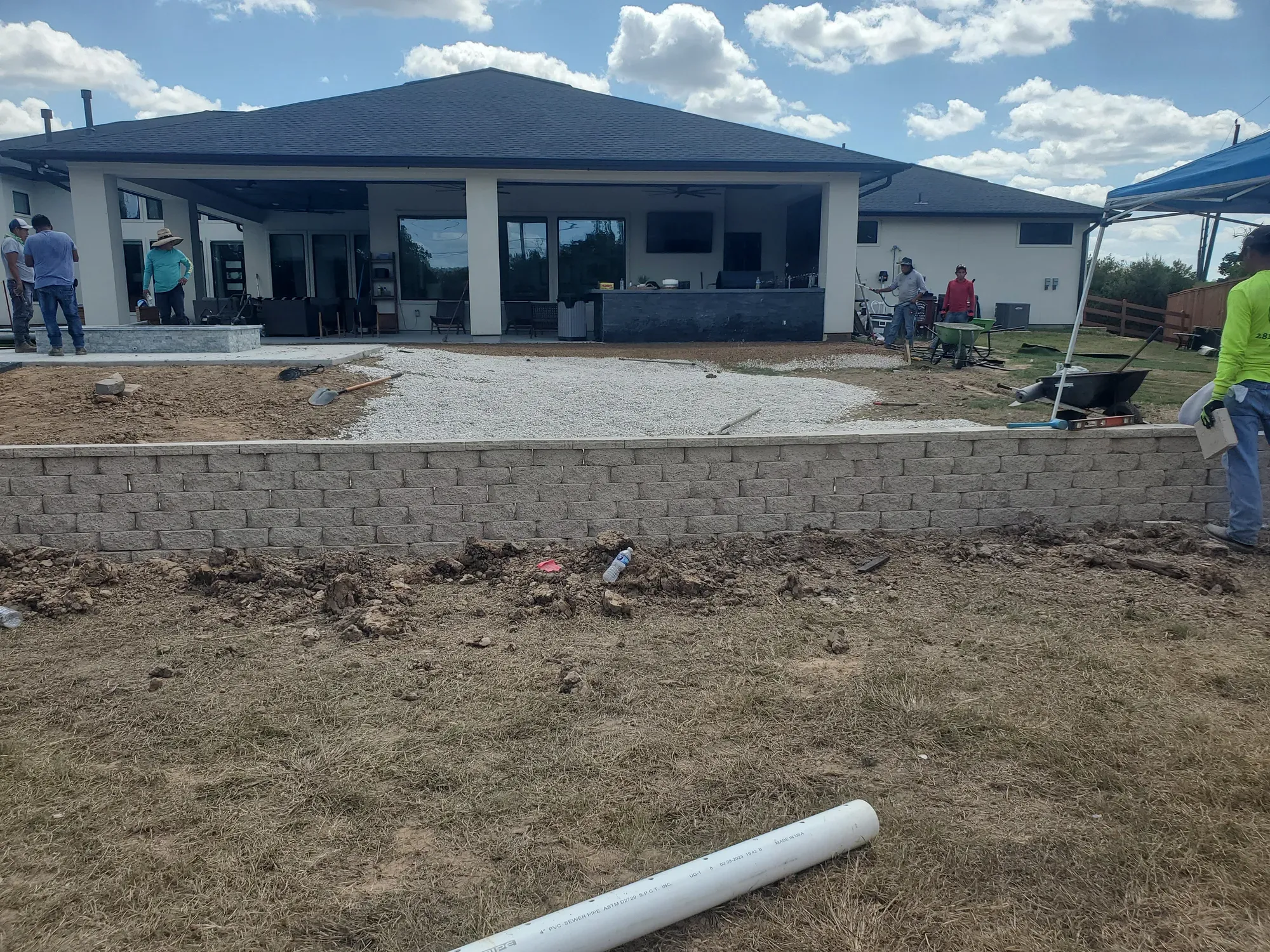
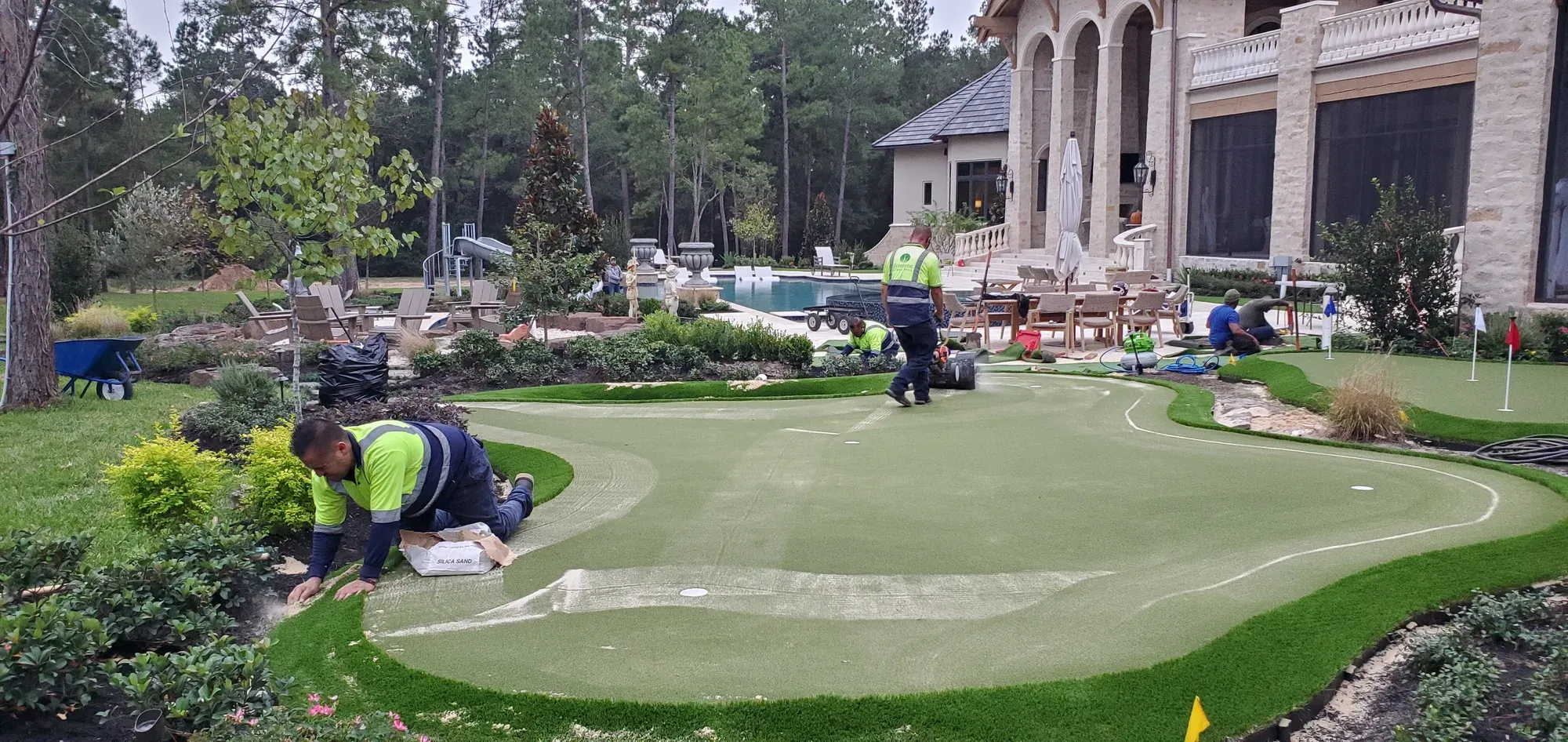
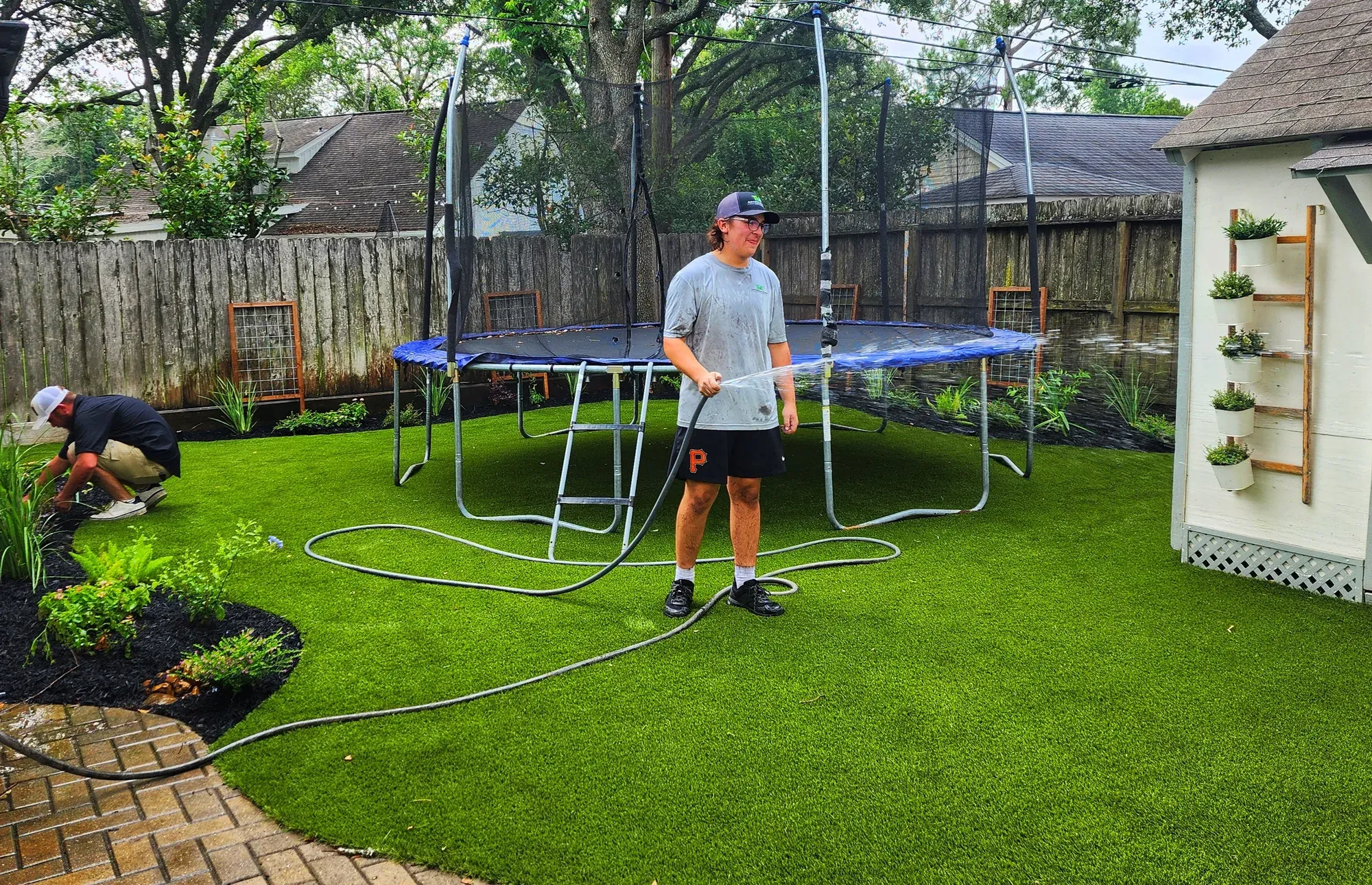
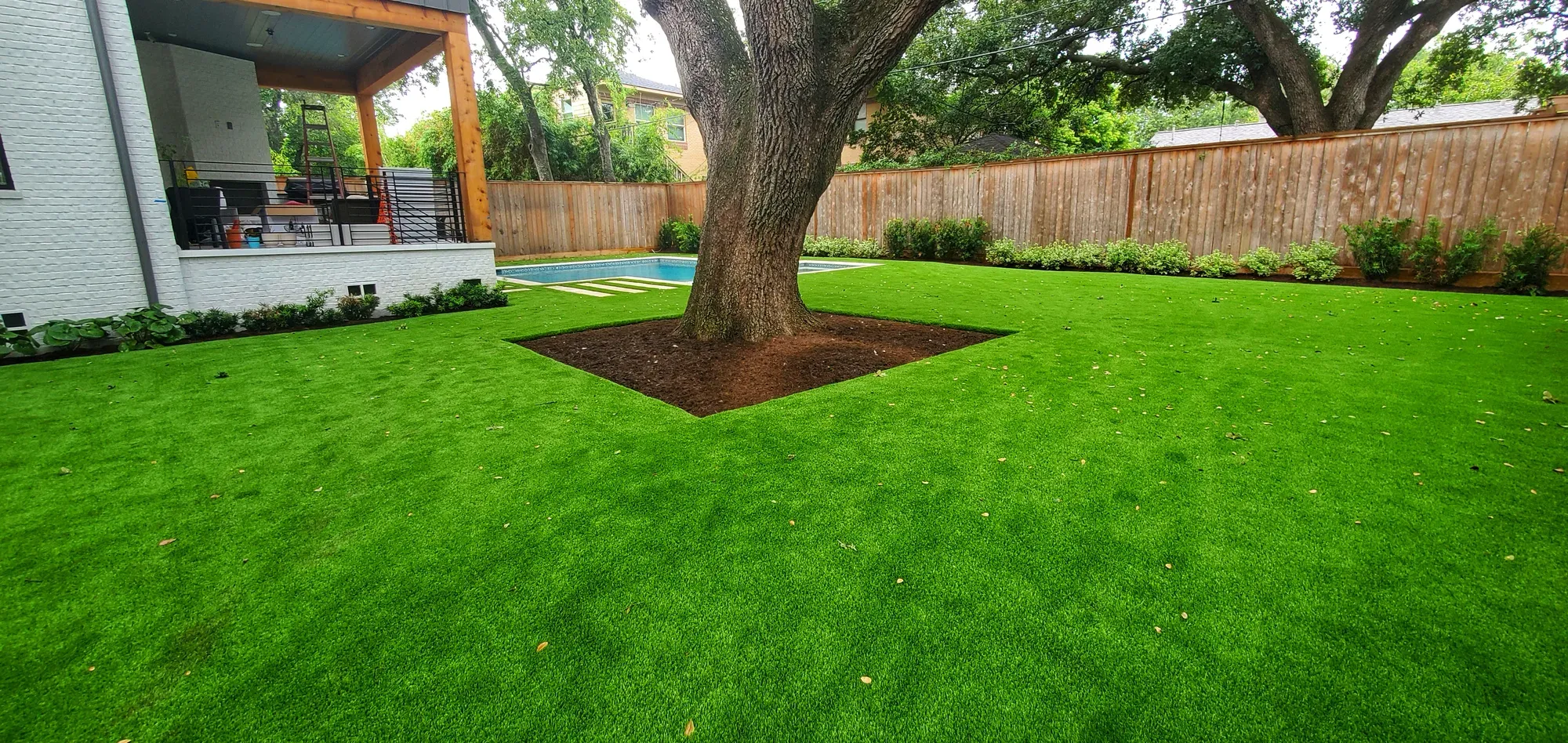
We strip the existing lawn and excavate down to a clean, stable sub-grade. Old roots, thatch, and loose topsoil all come out, because anything organic left behind will settle later and telegraph through the finished turf.
Flexible poly board is staked around the entire perimeter to lock the base in place. It holds your shape through curves and radii, keeps the aggregate from migrating into beds, and gives the turf a clean edge to be fastened to.
The first base layer goes down and is graded for drainage. This is the load-bearing course that carries foot traffic and keeps the surface from rutting, and it is where the finished contours of the yard are established.
A second, finer layer is screeded over the first to true the surface. Two layers instead of one is what separates a lawn that stays flat for years from one that dips and waves after the first wet season.
The base is plate-compacted to spec, then the turf is rolled out, allowed to relax, and cut to the yard. Seams are aligned to a single blade direction and joined so they disappear, and the turf is nailed off along every edge.
Silica infill is spread and worked in with a power broom, lifting every blade upright as it goes. Infill is what gives the lawn its ballast, its underfoot feel, and its ability to stand back up after traffic.
We do a final groom, clear the site, and walk the finished yard with you edge to edge. What you are left with is a lawn that looks cut every day of the year, with no mowing, watering, or seasonal brown-out.
TNT Turf is on a mission to transform Houston homes and businesses with premium synthetic turf, delivering lasting quality, honest service, and yards our customers are proud to look at everyday.
We started TNT Turf because Houston families deserve better than losing weekends to mowing and watering. Our mission is simple, give you a lawn you can enjoy every day, all year long, without the work that usually comes with it.
Every yard we install gets measured twice, leveled right, and finished like it’s our own backyard. If a job isn’t done the right way, it’s not a job we’re willing to put our name on, plain and simple.
By 2030, we want to help turn 10,000 Houston backyards into low-water, low-maintenance green spaces. It’s our way of making Houston greener and more sustainable, giving families more time to enjoy their yards instead of maintaining them.
From your first quote to the final walkthrough, we keep pricing fair, communication honest, and show up when we say we will. It’s our way of making sure every customer feels taken care of, not just sold to.
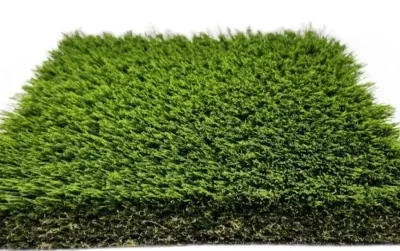
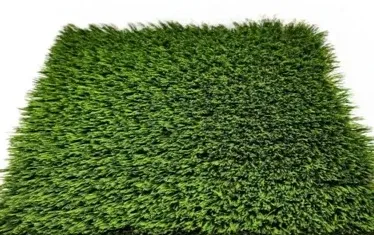
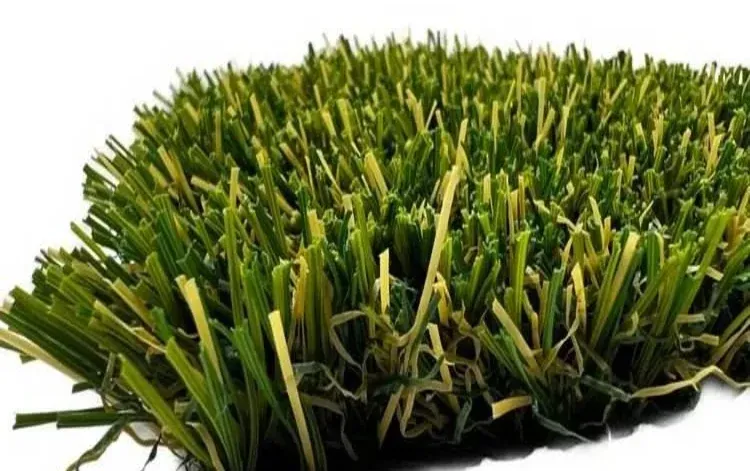
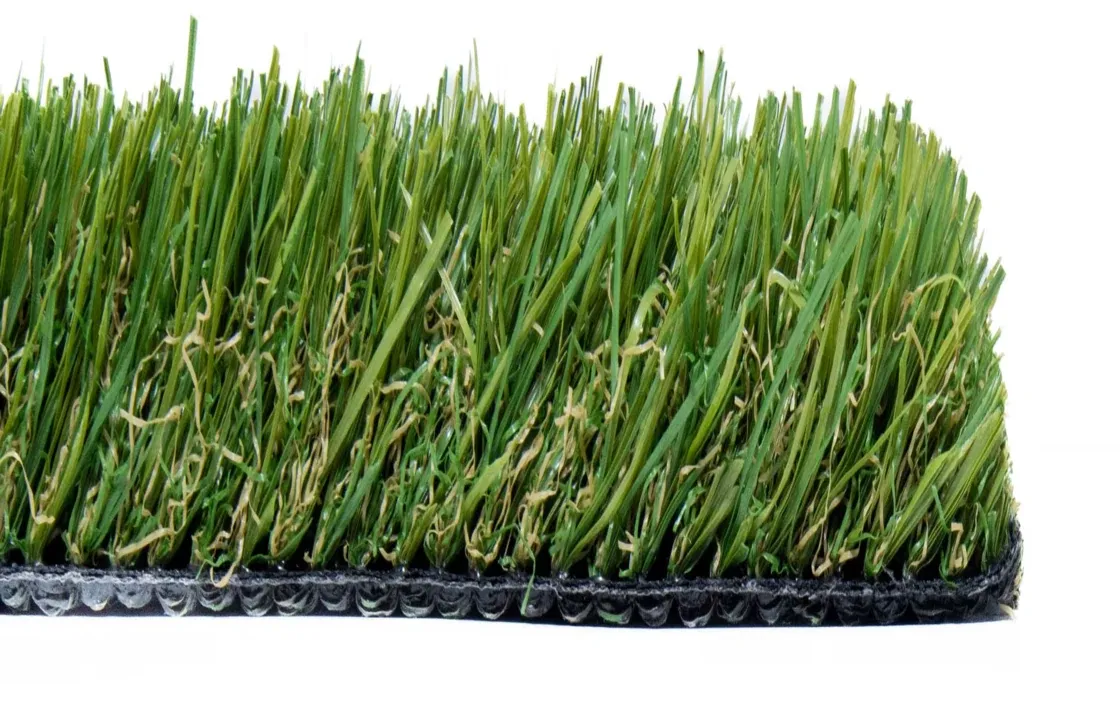
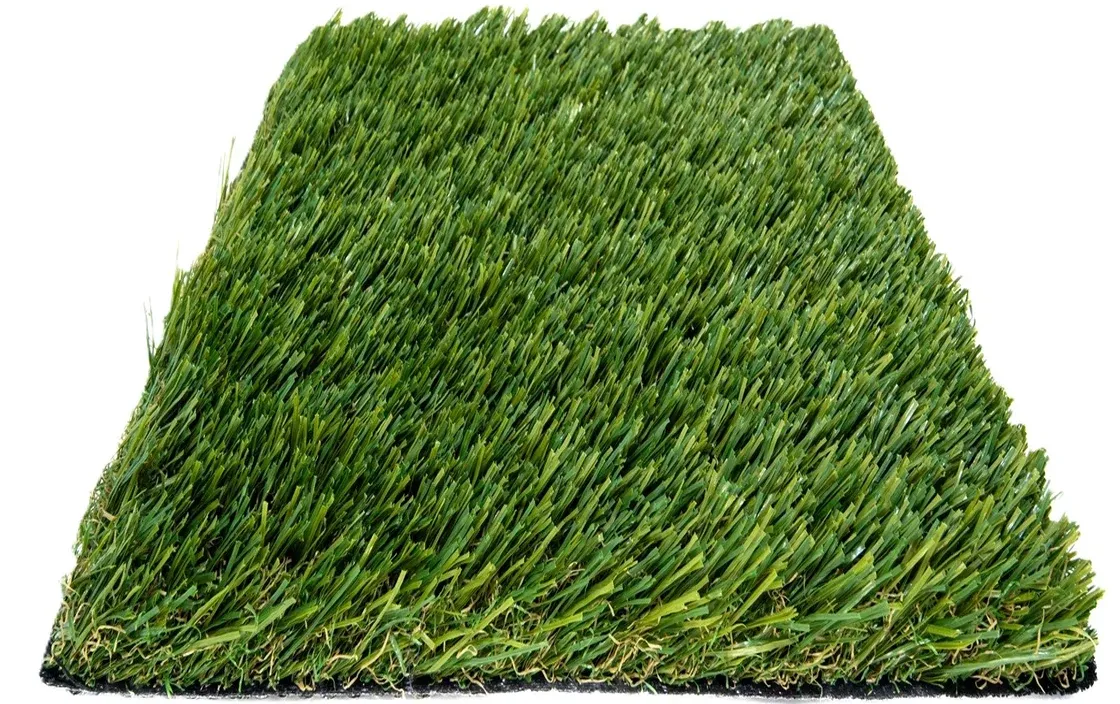
Explore a selection of our preferred artificial turf products, chosen for their appearance, durability, and performance across residential lawns, pet areas, playgrounds, and putting greens.
We will not put a course price on this page, and anyone who quotes you one before seeing the land is guessing. A par 3 course is a land project first, so routing, earthworks, drainage, irrigation and cart paths are priced by your course architect and civil contractor. Our part of the number is the synthetic tees, greens and surrounds, and we price that from measured areas once the layout is drawn.
We do not publish a course rate, because we would only be making one up. Bring us the architect's drawings or walk the site with us, and you get a written quote on the surfacing: greens, tees, fringe and surrounds, with the base work under them. Site work, irrigation and cart paths are not in our number, and we will tell you plainly which line items belong to your civil contractor. The estimate is free.
Get a Free On-Site QuoteFree
on-site measure and written quote
What goes into the surfacing quote
There is no single figure, and we will not print one. It depends on how long your holes play, how tightly the routing folds back on itself, and how much room the tees, greens and safety buffers need between holes. Your course architect sizes that against the land you actually have. What we can tell you is how much of it ends up as playing surface, because that is the part we build and price.
Still deciding whether you want a course, a practice complex, or a single green? Our commercial golf and putting greens page covers every golf surface we build in Greater Houston.
A good synthetic green rolls true and holds one speed all year, which is the part a living green cannot do. Houston-area courses run ultradwarf Bermudagrass greens such as TifEagle, Champion and MiniVerde, and in season those surfaces roll very well. Their speed moves with the weather, the mowing height, the topdressing cycle and winter dormancy. On synthetic, speed is set at build time by fiber type, fiber height and silica sand infill, then held with rolling and brushing.
Fiber type, fiber height, and the amount of silica sand infill set how the green rolls. We agree a target with you first, build to it, and check it before handover.
A synthetic green asks for no aeration, no topdressing recovery, no overseeding, and no dormancy period. On a daily-fee short course, every closed day is a day you cannot sell.
Water drains through the backing into the aggregate base below, so play comes back sooner after a Gulf Coast storm than it does on a push-up or sand-based green.
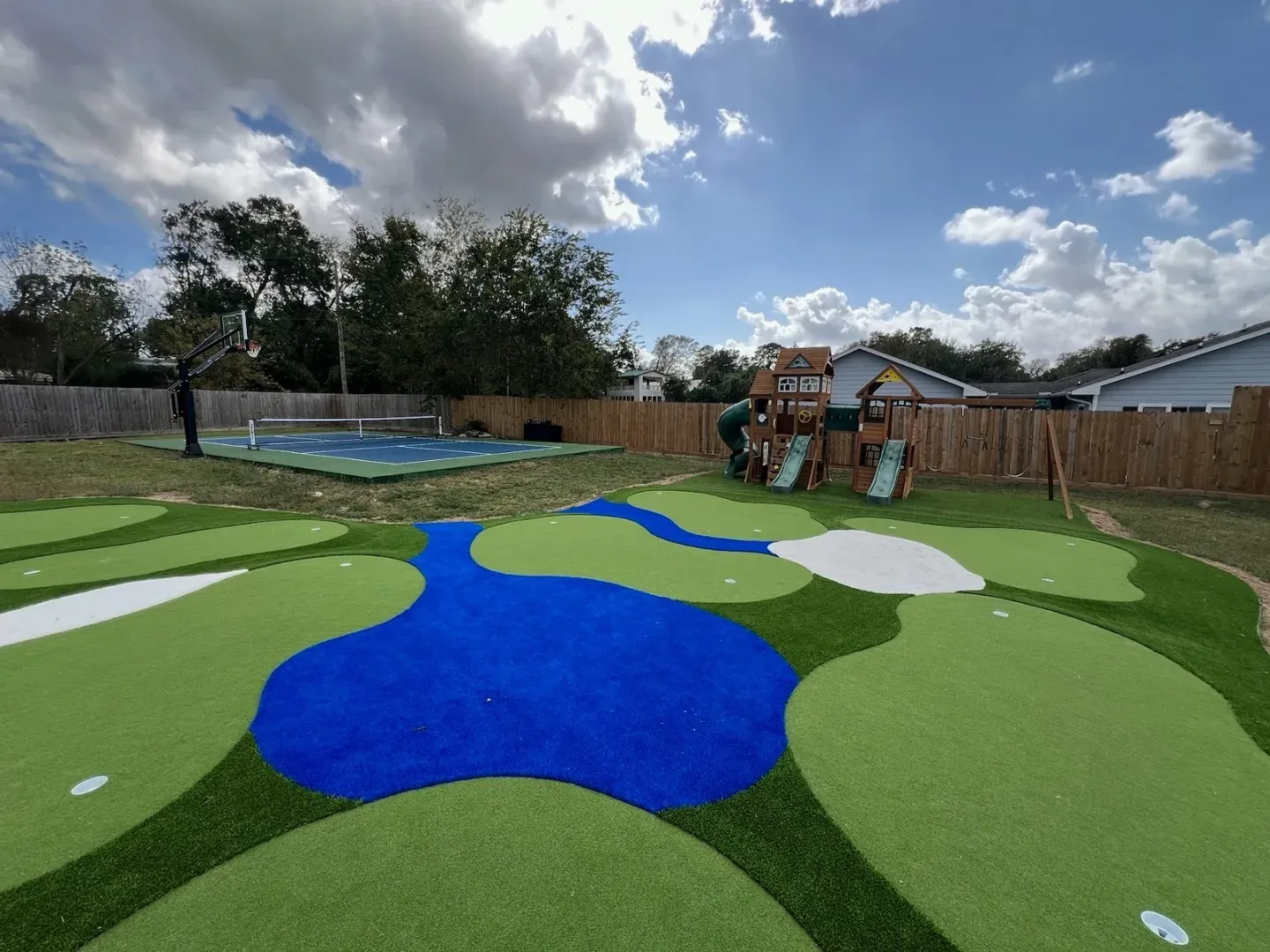
Nine and eighteen hole putt-only courses, with turf cut and seamed around every rail, curve, and obstacle.
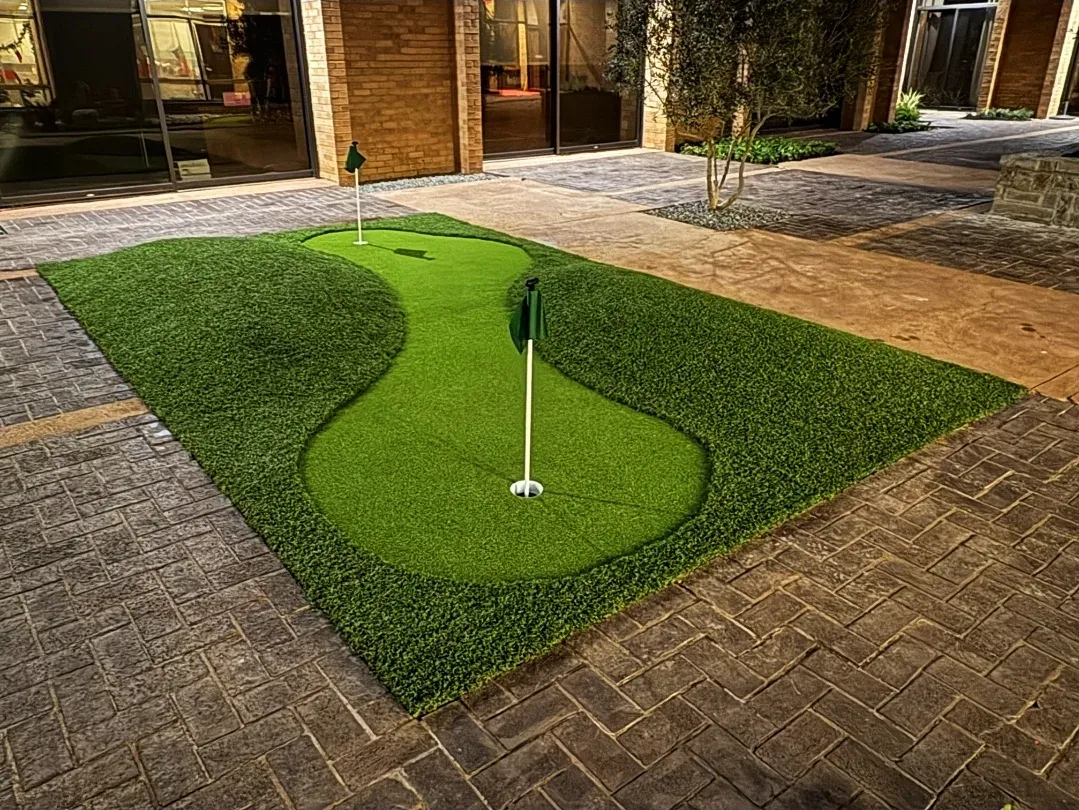
Single practice and amenity greens, indoors or out, with contours shaped into the base and speed set before handover.
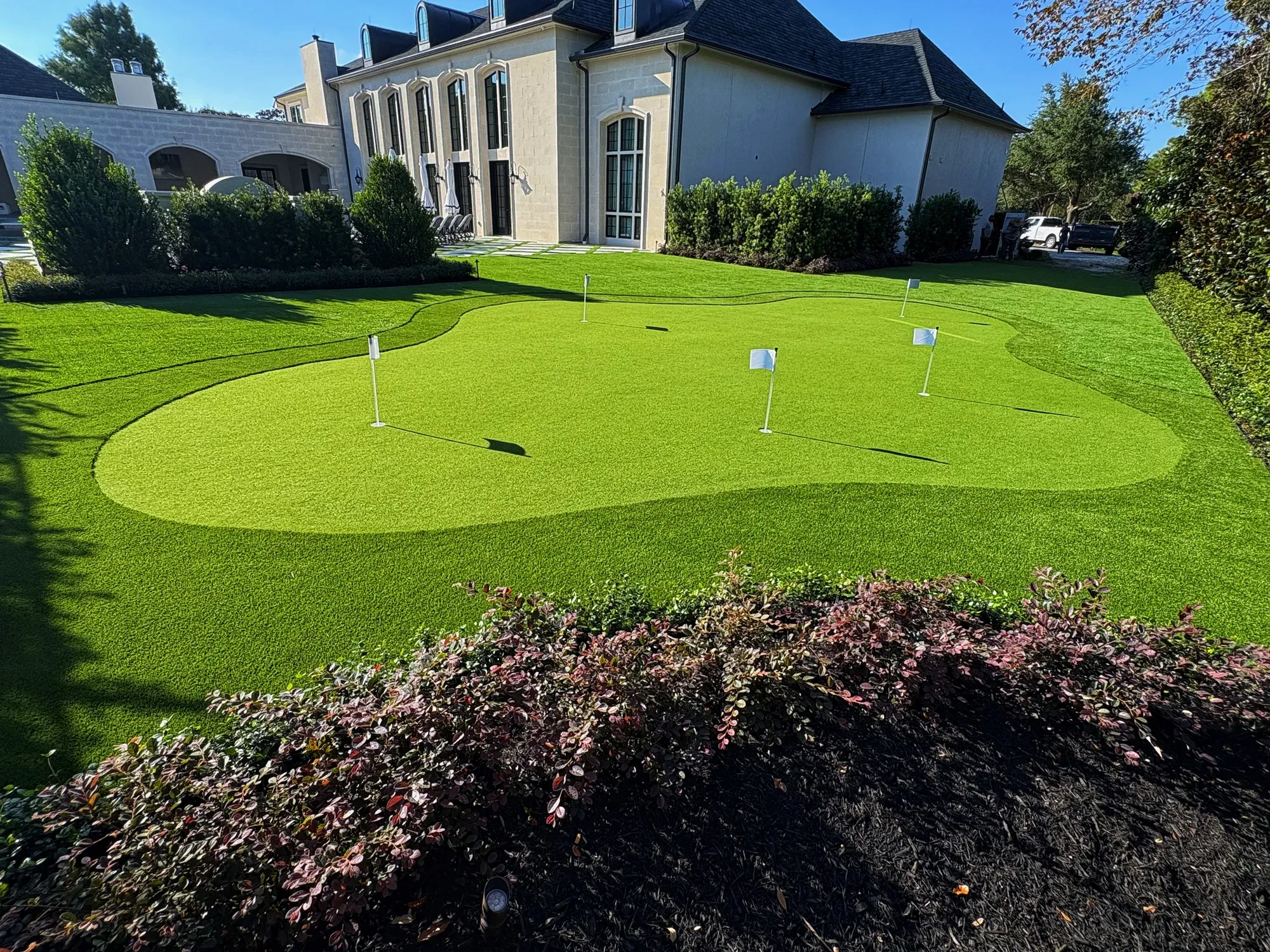
The full picture of the golf surfaces we build in Greater Houston, from a single green to a range tee line.
Most residential projects are complete in 2–4 days. Larger commercial installs typically take 1–2 weeks.
Every install carries the manufacturer's product warranty against fading and wear, plus our own workmanship coverage on seams, edging, and base. Full terms come with your proposal.
Yes. We install lead-free, non-toxic turf over a permeable base that drains quickly, and we can add an antimicrobial infill for pet areas to keep odours down.
A rinse now and then and an occasional cross-brush of the high-traffic paths. No mowing, no watering, no fertiliser, and no seasonal brown-out.
Turf runs warmer than a natural lawn in direct sun. We specify cooler yarn and lighter infill where a yard gets full afternoon exposure, and a quick rinse brings the surface temperature straight back down.
Pricing depends on square footage, the turf you choose, and how much prep the site needs. We measure on site and give you a fixed written quote before any work starts.